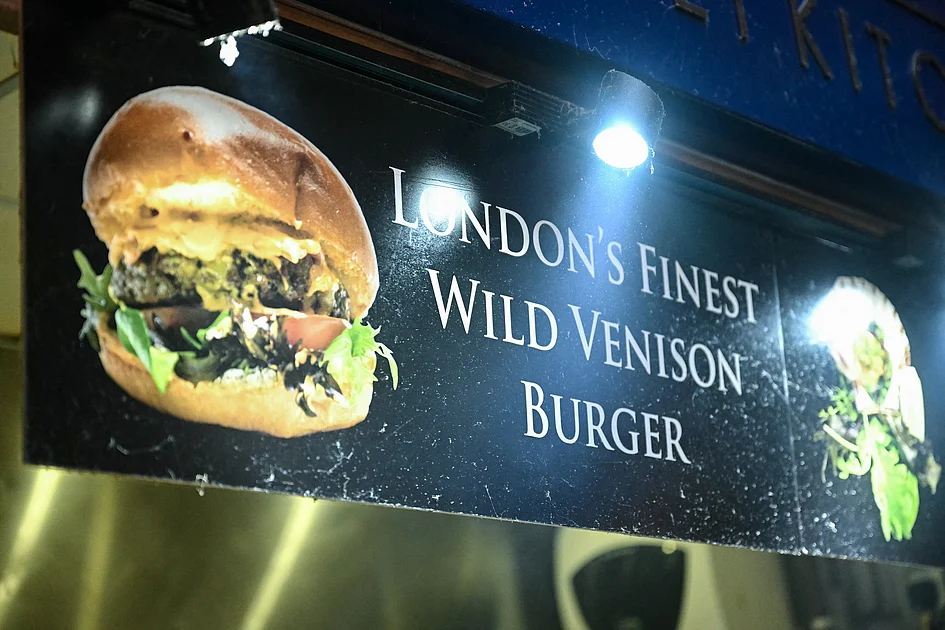
Across the United Kingdom, a culinary revolution is underway as educational institutions, sports arenas, and cultural venues increasingly replace traditional beef offerings with wild venison. This strategic shift responds to growing climate change concerns by introducing a lower-carbon protein alternative to conventionally farmed livestock.
The movement has gained significant momentum through catering giant Levy UK, which now serves deer meat at more than 20 prominent venues including London’s O2 Arena, the National Theatre, and Twickenham Stadium. During the recent women’s Rugby World Cup final, the stadium sold approximately 5,500 wild venison burgers within a single month. Similarly, Brentford Football Club in west London has incorporated venison burgers sourced from professionally culled deer in England and Scotland.
This transition addresses multiple environmental and economic concerns. Britain’s deer population has surged from 450,000 in 1970 to approximately two million today—the highest level in over a millennium. Without natural predators, these animals can damage local ecosystems, making controlled culling necessary. Wild venison presents a substantially lower carbon footprint compared to traditional meats, registering 38% fewer emissions than beef and 49% less than lamb according to conservation data.
Levy UK CEO Jon Davies emphasized the dual benefits of this approach: ‘I was keen to find something that was good for the planet but also nutritionally beneficial.’ The company’s ‘Game On’ initiative aims to replace 54 tonnes of beef burgers with wild venison alternatives, potentially saving 1,182 tonnes of CO₂ annually. Economically, the shift proves practical as beef prices have experienced double-digit inflation over the past year.
The trend has expanded beyond sports venues to include Imperial College London, which eliminated beef from most campus cafeterias two years ago. Hospitals in East Lancashire and London’s Guy’s and St Thomas’s NHS Foundation Trust have conducted similar trials, along with schools in Scotland’s Islay and Jura islands.
Despite environmental advantages, consumer acceptance varies. Some students express ethical appreciation for venison, while others prefer traditional beef. Chef Atesh Luximon of Imperial College noted the psychological barrier: ‘The perspective of it being a reindeer, a Bambi, doesn’t really appeal to people.’
Industry experts caution that venison alone cannot meet total meat demand. Peter Windsor of the Irish Deer Society warned against market saturation, noting that clients typically use only premium cuts while lesser portions often become pet food. Levy UK claims commitment to utilizing entire animals through burgers, curries, and pies.
Phil Brooke of Compassion in World Farming offered measured support: ‘Regeneratively farmed beef and culled deer can both be part of the solution—if eaten in small quantities.’ This balanced perspective highlights that while venison provides a sustainable alternative, it represents one component within a broader strategy toward environmentally conscious food consumption.