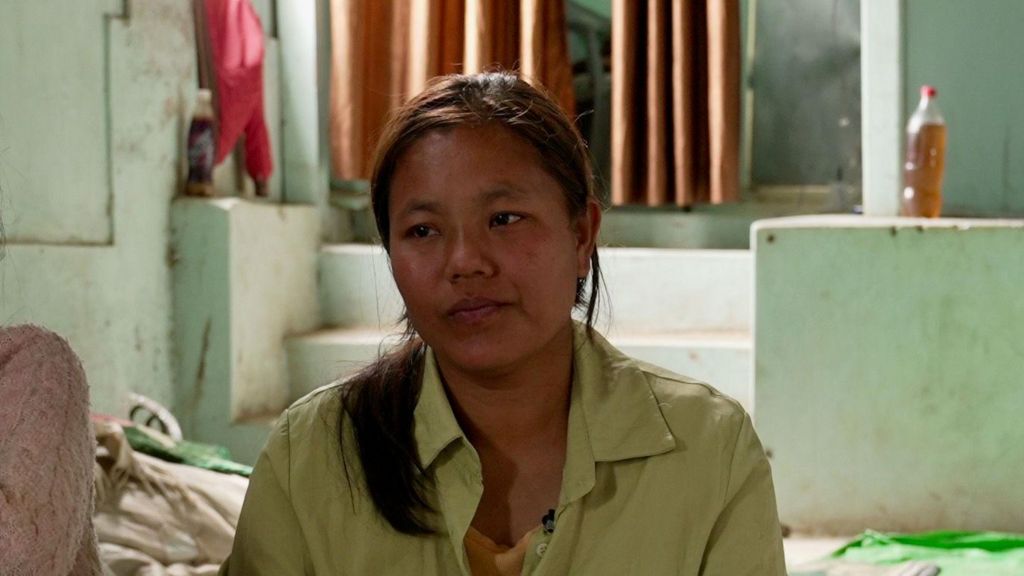
In Myanmar’s western Chin State, a humanitarian catastrophe unfolds as thousands of civilians flee intensified military operations ahead of scheduled elections. Iang Za Kim, among those displaced, describes the terror of November 26 when airstrikes targeted her village of K-Haimual. ‘We thought the junta’s planes would bomb us too,’ she recounts, her voice trembling. ‘We grabbed what we could and ran into the jungles.’
The military junta, which seized power in February 2021, has launched its most aggressive campaign in over three years to recapture rebel-held territories. The offensive combines aerial bombardments with ground operations, disproportionately affecting civilian infrastructure. According to the Chin Human Rights Organisation, at least three schools and six churches have been targeted since mid-September, resulting in 12 fatalities including six children.
Verified evidence confirms the October 13 bombing of Vanha village school that killed two students—seven-year-old Johan Phun Lian Cung and twelve-year-old Zing Cer Mawi—during lessons. The military government has not responded to BBC’s inquiries regarding these allegations.
Many displaced persons have crossed into India’s Mizoram state, finding temporary shelter in makeshift facilities like a repurposed badminton court in Vaphai village. Indian locals have provided basic sustenance, but conditions remain dire. Eighty-year-old Ral Uk Thang, having endured days in jungle shelters, states: ‘We’re afraid of our own government. They are extremely cruel.’
The upcoming elections, scheduled to begin December 28, are widely condemned as illegitimate. With Aung San Suu Kyi’s National League for Democracy barred from participation and most senior leaders imprisoned, civilians fear forced voting under threat of imprisonment and torture. ‘If we voted for a party not allied with the military, I believe they will steal our votes,’ Iang Za Kim asserts.
Rebel groups characterize the electoral process as a sham designed to perpetuate military dictatorship. Sui Khar, Vice Chairman of the Chin National Front, notes the contradiction: ‘In Chin State, they hardly control much area, so how can they hold an election?’
The human cost extends to combatants as well. At a rebel base hospital, eighteen-year-old Abel lies incapacitated after losing his right leg and sustaining severe hand injuries during recent fighting. Nearby, nineteen-year-old Si Si Maung, also amputated, declares: ‘I’ve lost a leg, but even if I’ve to give up my life I’m happy to make the sacrifice so that future generations have a better life.’
Despite the overwhelming military advantage—with hundreds of soldiers supported by airstrikes, artillery, and drone units—the resistance continues its advance. Yet for elderly civilians like Ral Uk Thang, hope diminishes: ‘I don’t think I will live to see democracy restored in Myanmar. I hope my children and grandchildren can witness it some day.’