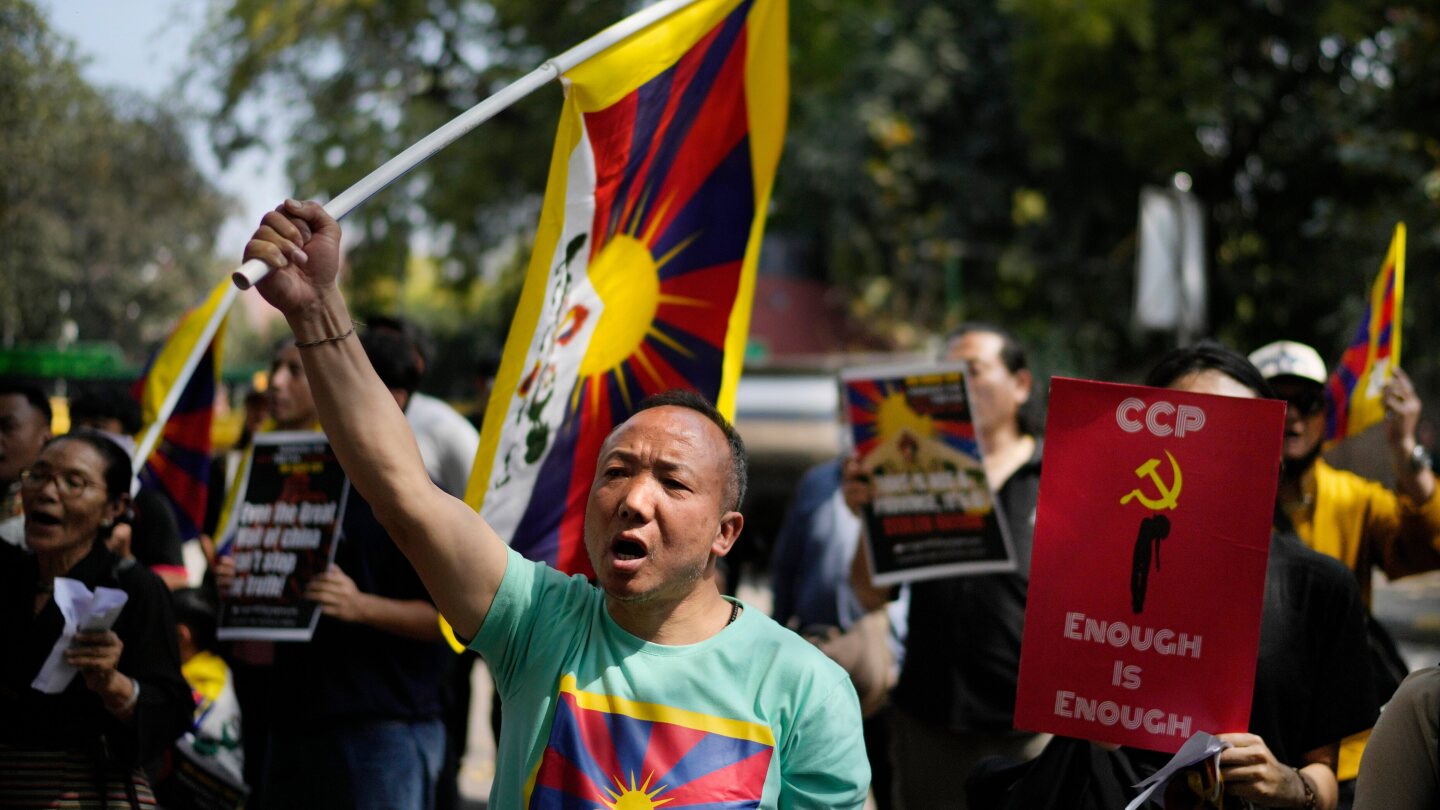
KATHMANDU, Nepal — The iconic Boudhanath Stupa, with its serene Buddha eyes gazing over Nepal’s capital, once symbolized sanctuary for Tibetans fleeing Chinese persecution. Today, this spiritual haven exists under the unblinking gaze of thousands of Chinese-made surveillance cameras that monitor every movement in what has become one of the world’s most intensely monitored refugee communities.
An Associated Press investigation reveals how China has transformed Nepal into a testing ground for its global surveillance exports, with technology originally developed by American companies now being deployed to suppress Tibetan dissent. Through thousands of government procurement documents, corporate materials, and interviews with over 40 sources, AP documented how Chinese technology firms have established comprehensive monitoring systems across at least 150 countries worldwide.
The surveillance architecture in Nepal includes facial recognition cameras, AI-powered tracking systems, and digital communication networks provided by Chinese companies like Hikvision, Dahua, and Uniview—many using technology originally developed by U.S. firms. This digital infrastructure has effectively crushed the once-vibrant Free Tibet movement, reducing annual refugee arrivals from thousands to single digits.
Chinese companies now offer complete surveillance suites with few restrictions on usage or customers. According to Sheena Greitens, a political scientist at the University of Texas at Austin, “China pitches itself as a global security model with low crime rates, contrasting its record with the United States. They’re certainly exporting the tools and techniques that are very important to authoritarian rule.”
The investigation found that American technology transfer played a crucial role in China’s surveillance capabilities. Companies like HP, IBM, and Motorola initially provided technology through joint ventures and research partnerships in China, only to see their Chinese partners become global competitors in the surveillance industry.
The impact on Tibetans in Nepal has been devastating. The population has plummeted from over 20,000 to less than half that number today. Those who remain live in constant fear, with predictive policing systems allowing authorities to identify and arrest potential protesters before demonstrations even occur.
Sonam Tashi, a 49-year-old former protester, described how those considered likely to protest are picked up in advance around sensitive dates. “There are cameras everywhere,” he said while attempting to secure his 10-year-old son’s escape to India. “There is no future.”
China’s Foreign Ministry denied allegations of coercing Western companies or collaborating with Nepal to surveil Tibetans, calling such claims “sheer fabrication driven by ulterior motives.” Neither the Nepali government nor Chinese-controlled Tibetan authorities responded to requests for comment.
The surveillance network extends beyond urban centers to Nepal’s northern border regions, where China has constructed observation domes and monitoring systems that effectively seal the once-porous frontier. These installations are part of what Chinese officials term a “Great Wall of Steel” featuring fences, sensors, and AI-powered drones.
For Tibetan refugees, the message is clear: silence has become survival. As one café owner anonymously stated, “Now you can only be Tibetan in private.” Another refugee, Namkyi, arrested at 15 for protesting Chinese rule, summarized the reality: “Even though we are free, the surveillance cameras mean we’re actually living in a big prison.”