Acclaimed director Kaouther Ben Hania’s groundbreaking docufiction ‘The Voice of Hind Rajab’ has emerged as one of the most psychologically challenging cinematic experiences of the year, forcing audiences to confront the brutal realities of the Gaza conflict without the comfort of emotional detachment. The film reconstructs the tragic final hours of five-year-old Palestinian girl Hind Rajab, who became trapped in a vehicle with six deceased family members after Israeli Defense Forces attacks, through an innovative blend of dramatic reenactment and authentic audio recordings.
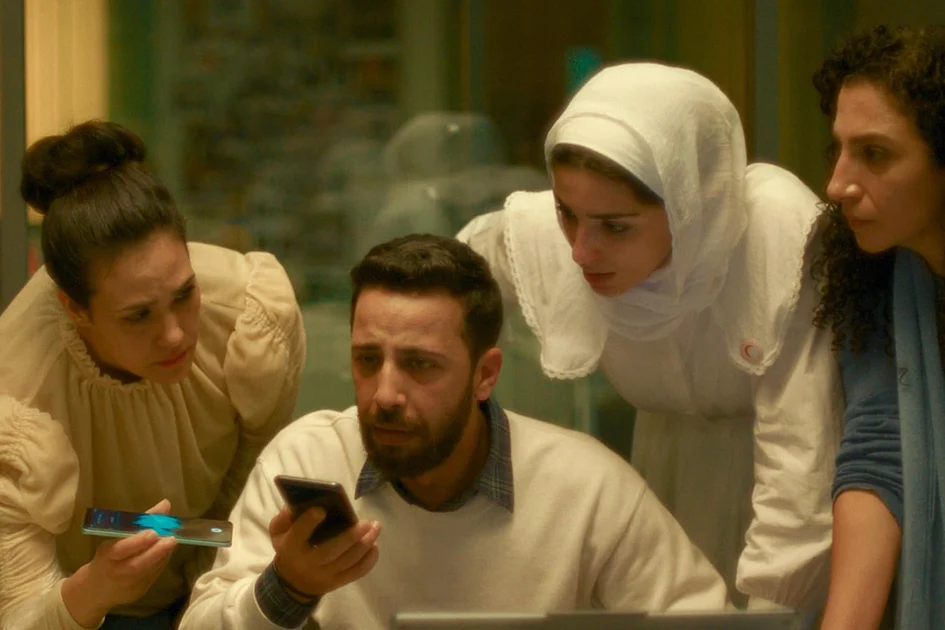
The narrative unfolds primarily through the perspective of Red Crescent rescue workers, whose increasingly desperate attempts to coordinate a safe evacuation reveal the bureaucratic and moral complexities of operating in active war zones. Palestinian actors Saja Kilani, Motaz Malhees, and Amer Hlehel deliver powerful performances as emergency responders navigating the impossible balance between protocol and human compassion. Hlehel’s portrayal of coordinator Mehdi proves particularly nuanced, presenting a character who must maintain clinical detachment despite overwhelming circumstances.
Ben Hania’s directorial approach masterfully maintains tension throughout the production, interspersing moments of human connection and even humor among rescue workers with the grim reality of their mission. The film’s most controversial aspect—the incorporation of actual emergency calls and battlefield footage—creates an unprecedented immediacy that has left international audiences and festival jurors deeply affected. Following its Venice Film Festival premiere, the production received a historic 20-minute standing ovation, though many viewers acknowledged difficulty processing the raw emotional impact of the authentic audio elements.
The director’s deliberate choice to focus on the rescue team’s perspective rather than recreating Hind’s direct experience demonstrates sophisticated narrative restraint, allowing audiences to comprehend the horror through the responders’ emotional breakdowns rather than explicit visual depiction. This technique ultimately creates a more profound meditation on trauma, empathy, and the psychological toll of humanitarian work in conflict zones. The film stands as both a memorial to a tragic individual loss and a broader commentary on the human cost of geopolitical conflicts.