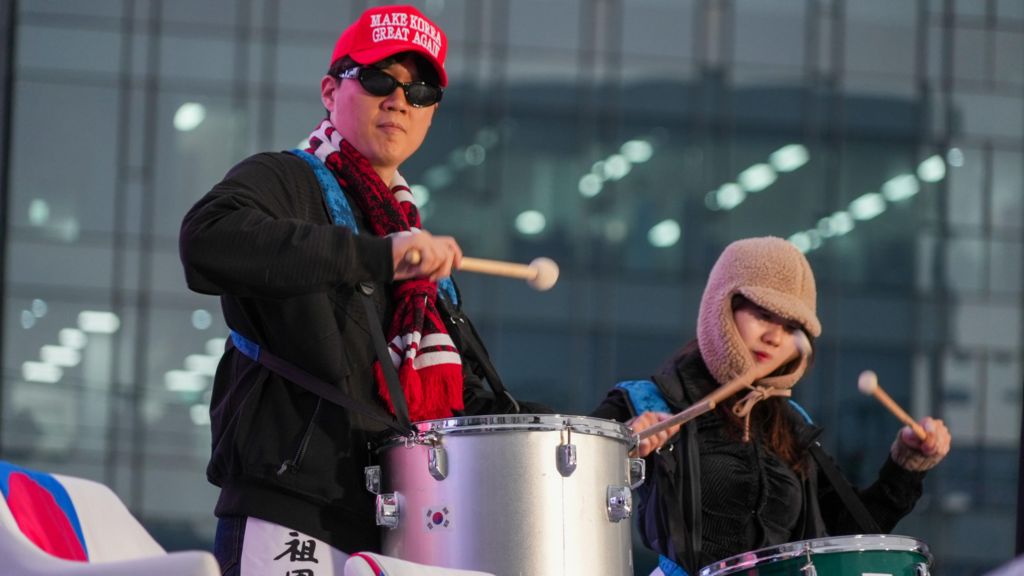
In a remarkable political reversal, imprisoned former South Korean President Yoon Suk Yeol has emerged as an unexpected symbol of resistance for a generation of disaffected youth, despite facing life imprisonment for his attempted martial law declaration in December 2024.
The movement, spearheaded by 24-year-old Park Joon-young and his right-wing youth organization Freedom University, has gained significant traction among young South Koreans who feel abandoned by the political establishment. What began as campus protests against Yoon’s impeachment has evolved into a full-fledged youth rebellion movement that mirrors tactics and rhetoric from America’s MAGA movement.
Park founded Freedom University in opposition to what he characterizes as a corrupt, left-wing political status quo that has failed South Korea’s younger generation. The group has rapidly expanded through aggressive social media campaigns, drawing thousands to rallies where attendees pose for selfies with images of the imprisoned former leader.
The movement’s ideology combines economic discontent with nationalist fervor. Their banners proclaim “Korea for Koreans” and demand the expulsion of the “Chinese Communist Party,” reflecting widespread Sinophobia in a country that consistently ranks among the world’s least favorable toward China. The group promotes unsubstantiated claims about Chinese interference in Korean elections and society.
This youth mobilization represents a dramatic shift in political allegiances. Yoon, who was deeply unpopular among young voters during his presidency, has been reinvented as a martyr figure following his failed power grab. His December 3, 2024 declaration of martial law—which alleged without evidence that North Korean sympathizers and Chinese spies were conspiring to steal elections—was defeated within hours by public resistance and parliamentary action.
The movement’s growth reflects South Korea’s deepening political polarization and the economic anxieties of its youth. Recent surveys show nearly 75% of young South Koreans believe the economy is in poor shape compared to their parents’ generation, with home ownership rates at historic lows despite the country’s world-class education system. Median monthly income remains approximately $1,600, creating widespread disillusionment.
Psychiatrist Kim Hyun Soo warns that without offering new visions of hope, South Korea risks further polarization as frustrated youth turn to movements like Freedom University. The group’s effectiveness lies in its ability to channel economic frustration, cultural resentment, and nationalist sentiment into a cohesive political force that continues to gain momentum despite being supported by only 27% of the general population.