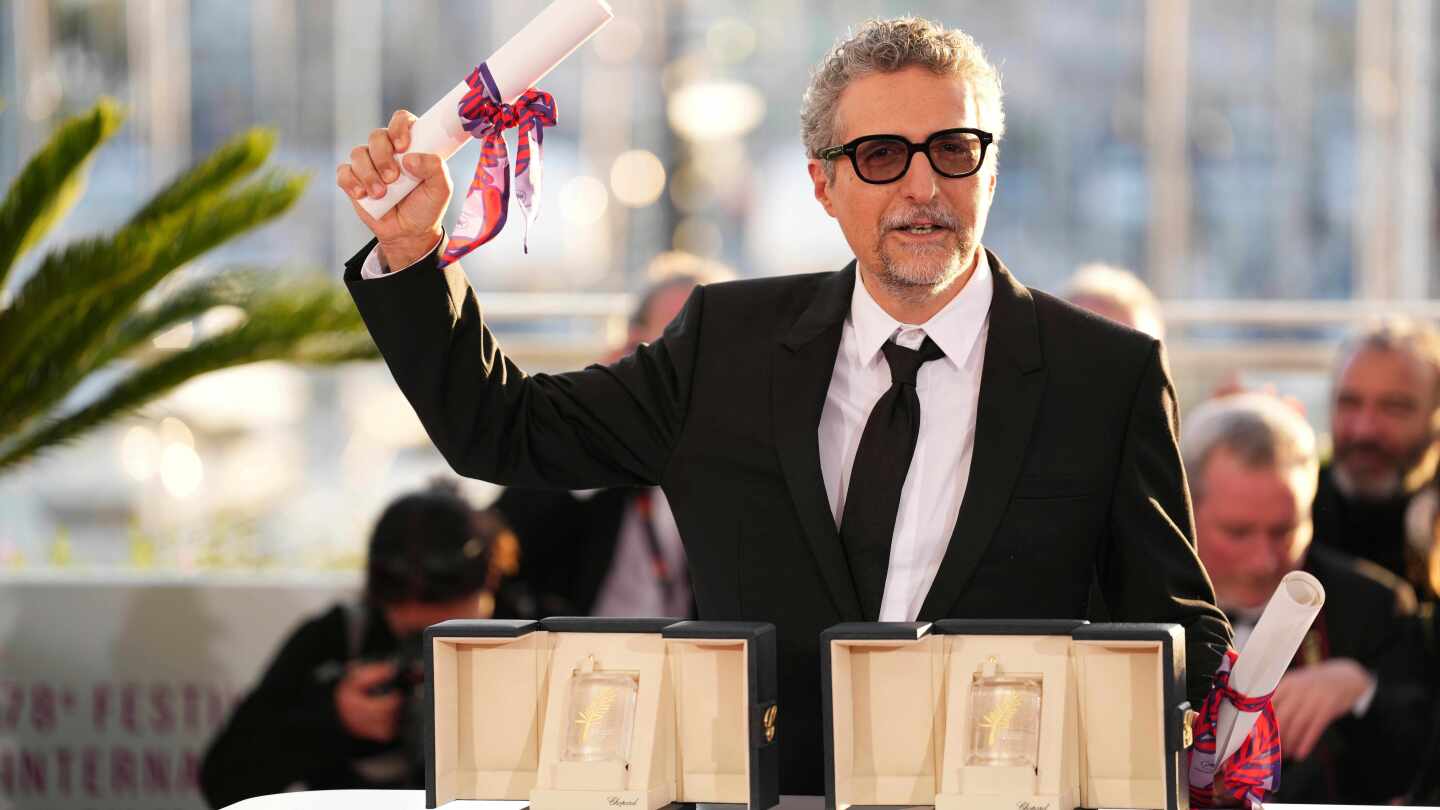
SAO PAULO — Kleber Mendonça Filho’s politically charged thriller “The Secret Agent,” currently shortlisted for Oscar consideration, has emerged as a cinematic landmark that intertwines Brazil’s authoritarian past with its contemporary democratic struggles. The film follows an unassuming scientist and widower who becomes targeted by Brazil’s 1970s military regime not for revolutionary activities, but simply for maintaining his ethical principles against a business owner with regime connections.
Star Wagner Moura, who received both Cannes and Golden Globe recognition for his performance, characterizes the protagonist’s peril as emblematic of authoritarian systems worldwide. “He faces danger merely for embodying his values,” Moura explained in an AP interview. “This demonstrates how dictatorship mechanisms operate universally.”
The 2.5-hour drama expands in U.S. theaters following major Cannes Film Festival victories for both Mendonça Filho (Best Director) and Moura (Best Actor), alongside Golden Globe nominations for Best Drama, Best Non-English Language Film, and Best Actor. This recognition signals growing international appreciation for Brazilian cinema, coming shortly after another Brazilian production, “I’m Still Here,” secured this year’s Oscar for Best International Feature.
Set against 1977 Recife’s Carnival celebrations, the film creates striking juxtapositions between personal turmoil and public festivity. Mendonça Filho masterfully blends political suspense with period urban legends, exploring themes extending beyond dictatorship into corruption, state violence, and institutional complicity. In one pivotal sequence, movie theater audiences emerge shaken from screenings of “Jaws” and “The Omen” while the nation lives under genuine terror.
The film’s November 6 Brazilian premiere coincided with historic political developments as former President Jair Bolsonaro began serving a 27-year sentence for election interference, marking the first imprisonment of high-ranking military officers for attempted coup activities. Mendonça Filho notes this synchronization: “For the first time, we’re holding military officers accountable—and imprisoning a president who damaged the country.”
Among the production’s most remarkable stories is that of Tânia Maria, a 78-year-old artisan who delivers a stunning performance despite having never acted before being discovered at age 72. Mendonça Filho wrote her character specifically to capture her “birdlike bearing, cigarette-shaped voice, and razor-sharp humor.” The seamstress-turned-actor has become a national sensation, aspiring to attend the Oscars in a self-made sparkling red dress.
“The Secret Agent” represents part of Brazilian cinema’s decade-long reexamination of military dictatorship (1964-1985), with filmmakers increasingly confronting this unresolved national trauma. As Mendonça Filho asserts: “The military represents a trauma never properly examined. You cannot simply advise moving on—a crust forms over it, precisely what occurs with entire nations.”