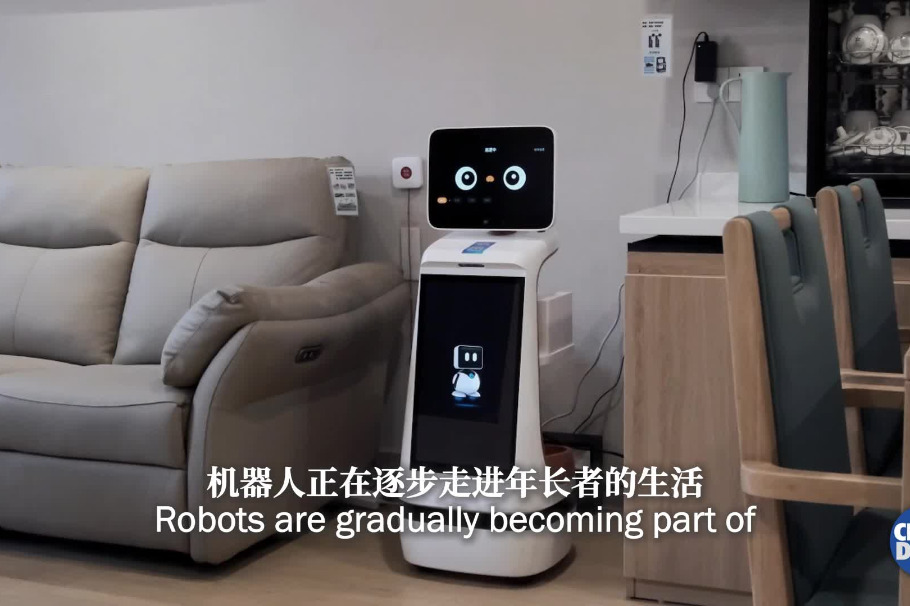
In the Haidian district of China’s capital, nonagenarian seniors are finding companionship in an unexpected form: chess-playing robots. This emerging scenario represents Beijing’s strategic initiative to integrate robotic assistance into elder care frameworks as the city confronts unprecedented demographic aging.
Recent data from the Beijing Association on Aging reveals a landmark demographic shift, with citizens aged 60 and above exceeding 5.14 million in 2024—the first time this population has surpassed the five-million threshold. This accelerating aging trend has intensified pressure on traditional care systems, catalyzing significant investment in technological solutions.
According to the Beijing Bureau of Economy and Information Technology, a comprehensive three-year pilot program (2025-2027) will deploy intelligent elderly-care robots across domestic environments, community spaces, and institutional facilities. These initiatives specifically target rehabilitation support, daily activity assistance, and emotional companionship functions.
Testing grounds like the senior technology experience center in Dongsheng town’s Longgang community showcase this technological integration. Manager Miao Fanghe reports serving over 6,000 elderly residents with rehabilitation robots and wearable exoskeletons since October 2025, with hundreds actively participating in technology trials.
Companies like Beijing AI-Robotics Technology are supplying exoskeletons to metropolitan hospitals while conducting community training sessions in districts including Xicheng and Beijing E-town. Marketing representative Zhao Pengcheng notes that elderly users frequently seek rehabilitation following fall incidents or age-related musculoskeletal deterioration, with devices specifically designed to restore mobility and reduce knee joint stress.
Similar implementations are visible in Changping district’s Taikang community, where robots provide rehabilitation guidance, mobility support, and continuous health monitoring.
Despite growing adoption, Professor Li Jian of Beijing University of Posts and Telecommunications identifies persistent challenges in elderly-care robotics. While acknowledging their current utility, he emphasizes that age-friendly design—particularly regarding safety protocols and practical functionality—requires substantial refinement before achieving optimal implementation.