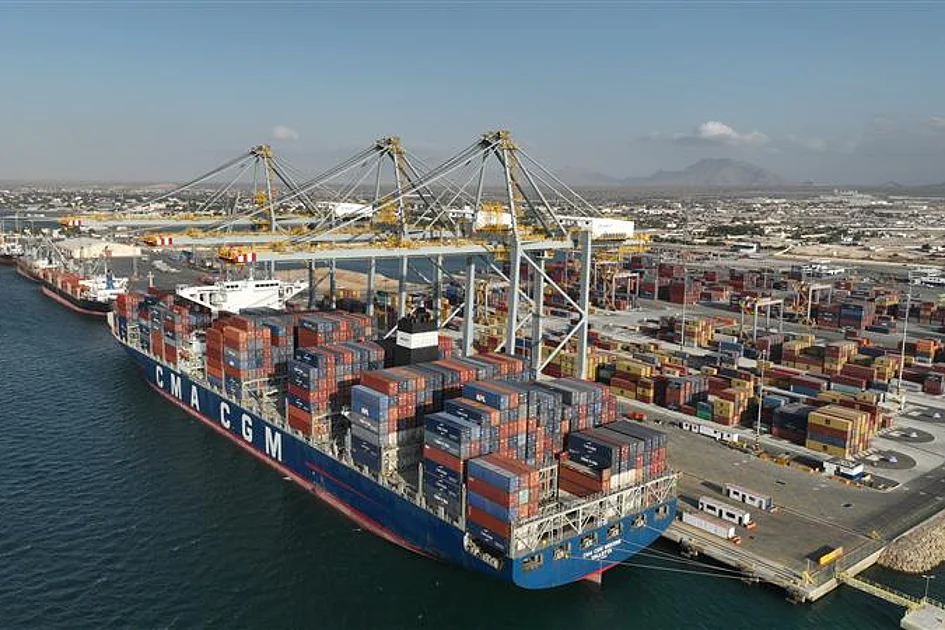
The United Arab Emirates has solidified its status as one of the world’s premier economic growth stories in 2025, demonstrating remarkable resilience and diversification beyond its traditional oil sector. According to recently released data, the nation’s non-oil foreign trade surged by an impressive 24.5% during the first half of the year, reaching Dh1.7 trillion—a growth rate approximately fourteen times faster than the global average.
This economic transformation stems from multiple strategic factors including robust foreign and domestic investment, business-friendly regulatory reforms, and a flexible economic environment. The UN Conference on Trade and Development’s World Investment Report 2025 positioned the UAE tenth globally for inbound foreign direct investment, recording Dh167.6 billion in 2024.
Financial institutions have responded positively to the UAE’s economic trajectory. The International Monetary Fund upgraded its 2025 growth forecast to 4.8%, while major rating agencies including Fitch, Moody’s, and S&P Global reaffirmed the country’s sovereign ratings, highlighting strong economic performance and prudent fiscal management.
The Central Bank of the UAE reported substantial growth in banking sector assets, which climbed to Dh5.19 trillion by September 2025, with gross credit expanding to Dh2.47 trillion. Simultaneously, the institution launched the National Financial Inclusion Strategy 2026–2030 to enhance financial service accessibility and strengthen systemic stability.
Real GDP expanded by 4.2% year-on-year to Dh929 billion in H1 2025, with non-oil GDP growing even faster at 5.7% to Dh720 billion. This represents a significant structural shift, with non-oil activities now constituting 77.5% of real GDP while oil-related contributions account for just 22.5%.
The government has further demonstrated its commitment to economic development through the approval of a record Dh92.4 billion Federal Budget for 2026. Industrial development received a major boost through the Ministry of Industry and Advanced Technology’s agreements with national banks, securing over Dh40 billion in financing. The “Make it in the Emirates” platform concluded its fourth edition with industrial projects valued at more than Dh11 billion and unprecedented attendance exceeding 122,000 visitors.
Strategic vision documents approved in 2025 include the National Investment Strategy 2031, featuring twelve programs and thirty initiatives designed to increase annual foreign investment inflows from Dh112 billion in 2023 to Dh240 billion by 2031. The strategy aims to expand the UAE’s total foreign investment stock from Dh800 billion to Dh2.2 trillion. Complementary initiatives include the establishment of a National Investment Fund with initial capital of Dh36.7 billion and the UAE Strategy for Islamic Finance and Halal Industry to cement the country’s global hub status.
Entrepreneurship and business formation have flourished, with the launch of the “UAE Future 50” initiative across fifteen sectors and a national campaign positioning the country as a global capital for entrepreneurs. The program targets the training and incubation of 10,000 entrepreneurs. Business registration data reveals extraordinary activity, with over 220,000 new companies established between January and November, accompanied by more than 36,000 new trademarks—a 48.2% increase from the previous year.
The UAE has additionally strengthened its position as an international trade gateway through expanded comprehensive economic partnership agreements. The introduction of the “UAE Global Centre of Trade” program targets the world’s top 1,000 international trading companies, while a new digital gateway connects thousands of UAE exporters to global markets. Intellectual property protection has seen remarkable growth, with 402,311 registered national and international trademarks by September—including nearly 20,000 registered in the first half of 2025 alone, representing a 129% year-on-year increase.