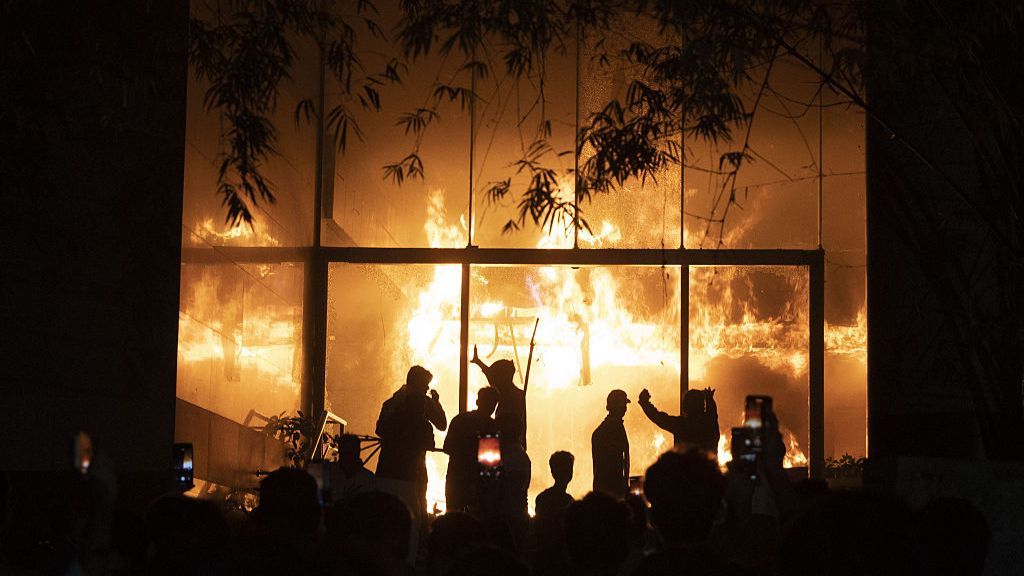
Bangladesh has been plunged into political turmoil following the targeted assassination of Sharif Osman Hadi, a prominent youth movement leader whose death has triggered widespread protests and violent demonstrations across the capital. The 32-year-old senior figure of the student protest group Inqilab Mancha was fatally shot by masked assailants while departing from a mosque in Dhaka last week, succumbing to his injuries on Thursday during medical treatment in Singapore.
The timing of Hadi’s assassination carries profound political significance, occurring merely one day after Bangladeshi authorities announced the schedule for the nation’s first elections since the 2024 uprising that ousted former Prime Minister Sheikh Hasina. Hadi had been preparing to contest the elections as an independent candidate, positioning himself as a vocal critic of neighboring India where Hasina remains in self-imposed exile.
As news of Hadi’s death circulated on Thursday, hundreds of supporters converged upon a central square in Dhaka, transforming their grief into angry demonstrations. The protests rapidly escalated into violence as enraged crowds vandalized the offices of leading Bangladeshi newspapers The Daily Star and Prothom Alo, with one building set ablaze. A police officer confirmed to BBC Bangla that ‘hundreds of people have gathered here and carried out the attack,’ prompting the deployment of military troops to restore order. Firefighters conducted rescue operations to evacuate journalists trapped within the besieged buildings.
Nobel laureate Muhammad Yunus, who heads the interim caretaker government, declared Hadi’s death ‘an irreparable loss for the nation’ in a televised address. ‘The country’s march toward democracy cannot be halted through fear, terror, or bloodshed,’ Yunus asserted, while the government declared Saturday a day of national mourning. Yunus had previously characterized the shooting as a premeditated attack, stating shortly after the incident that ‘the objective of the conspirators is to derail the election’ and warning that ‘no form of violence intended to disrupt the election will be tolerated.’
The assassination represents a critical juncture for Bangladesh’s fragile political transition. Hasina fled to India on August 5th last year following weeks of student-led protests that ended her 15-year increasingly authoritarian rule. In a significant development last November, she was sentenced to death for crimes against humanity after being convicted of permitting lethal force against protesters, resulting in approximately 1,400 deaths during the unrest.
Investigations into Hadi’s assassination are ongoing, with authorities confirming several detentions in connection with the shooting. The incident has drawn condemnation from across Bangladesh’s political spectrum, with parties collectively urging the interim government to bring the perpetrators to justice and ensure the electoral process proceeds without further violence.