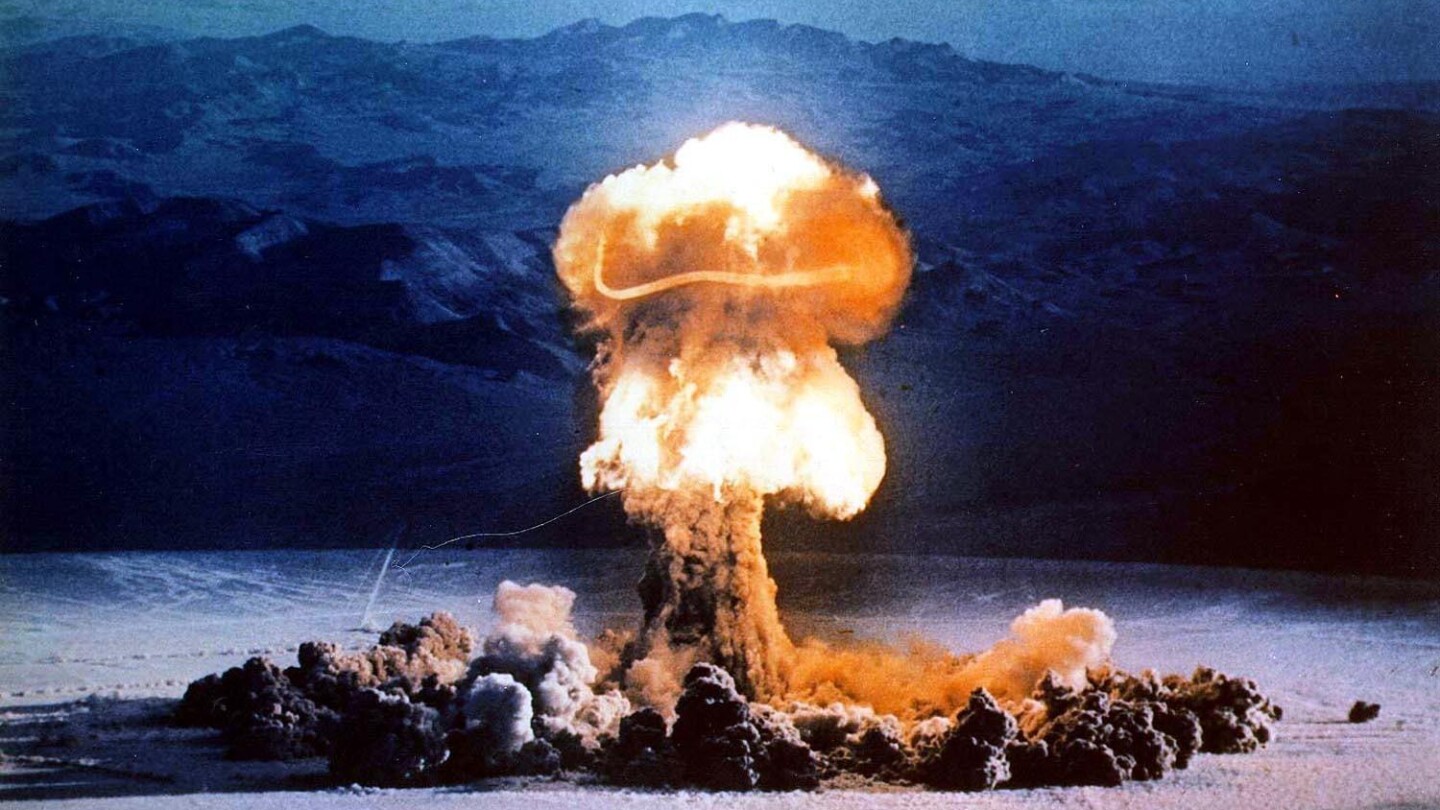
VIENNA — The United States has formally defended its position on potentially resuming nuclear testing activities during a global arms control meeting, citing concerns about nuclear provocations from Russia, China, and North Korea. The stance, initially suggested by President Donald Trump earlier this year, was articulated by U.S. Chargé d’Affaires Howard Solomon at a November 10 meeting of the Comprehensive Nuclear-Test-Ban Treaty Organization (CTBTO) Preparatory Commission in Vienna.
Solomon stated that the U.S. would commence testing activities “on an equal basis with other nuclear-armed states,” emphasizing this process would begin immediately while maintaining transparency and national security commitments. The official justification centered on alleged violations of the zero-yield nuclear test moratorium by Russia and China since 2019, alongside North Korea’s six confirmed nuclear tests this century.
The comments specifically referenced supercritical nuclear test explosions prohibited under the Comprehensive Nuclear-Test-Ban Treaty (CTBT), which involve compressing fissile material to initiate self-sustaining nuclear chain reactions. While the global monitoring network established in 1996 has detected North Korea’s larger-yield tests, experts note it cannot identify very low-yield supercritical tests conducted underground in metal chambers.
Russia’s Permanent Representative Mikhail Ulyanov condemned the U.S. position during the closed-door meeting, warning that resumed testing “could cause significant damage to the nuclear non-proliferation regime and international security.” He rejected American allegations as “completely unacceptable and unsubstantiated” while demanding detailed explanations from Washington.
The exchange occurred against the backdrop of deteriorating nuclear arms control frameworks. Solomon additionally cited Russia’s violations of New START, its disproportionately large stockpile of non-strategic nuclear weapons (estimated at 1,000-2,000 warheads compared to America’s 200), and concerning nuclear doctrine developments. These tactical weapons pose particular concern due to their lower threshold for potential use and absence from arms control treaties.
With New START set to expire on February 5, 2021, and Russia having suspended participation without fully withdrawing, the strategic nuclear arsenals of both nations face becoming unconstrained for the first time in decades. President Trump has expressed openness to extending the treaty temporarily, describing it as “a good idea” in October comments.