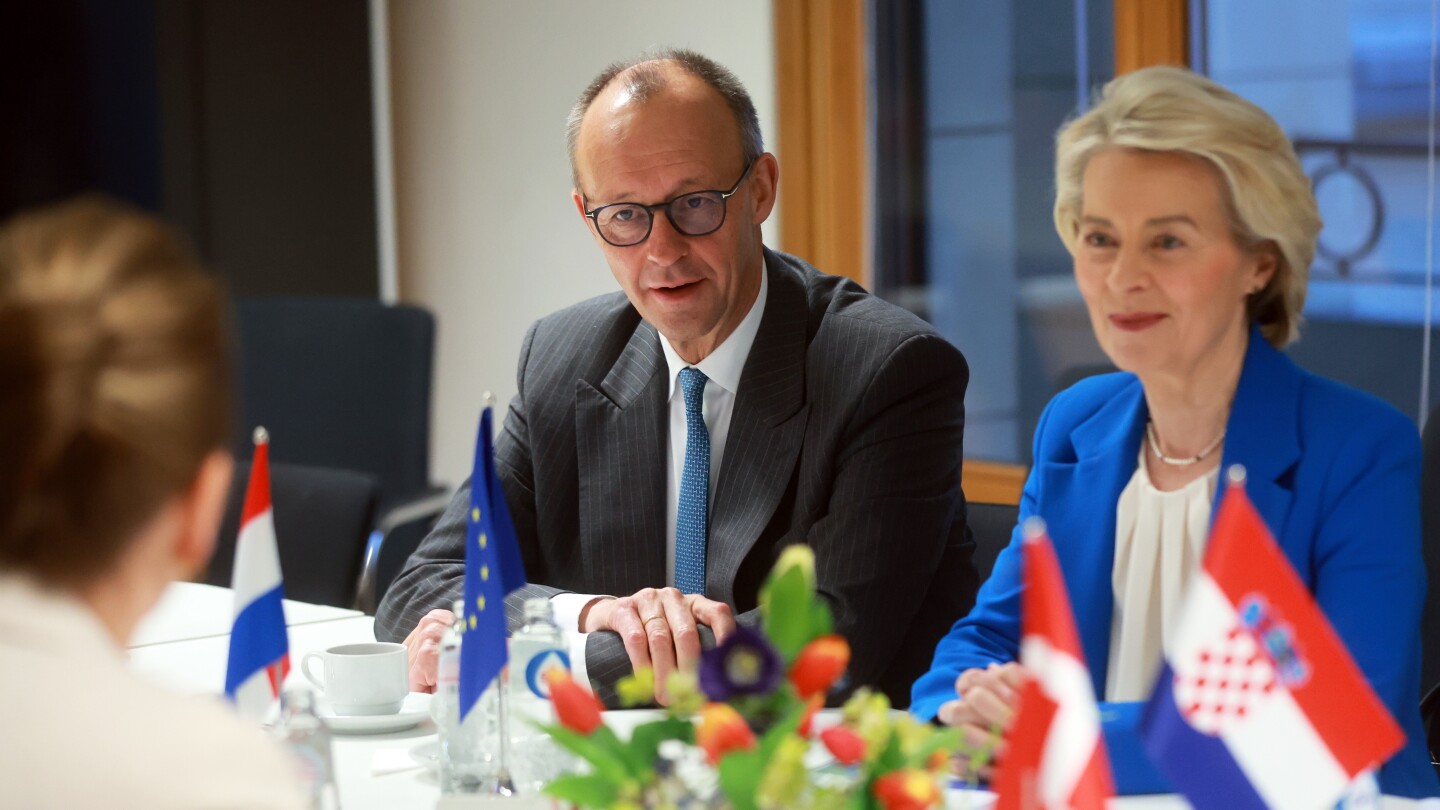
BRUSSELS — A critical European Union summit faced significant hurdles on Thursday as Belgium demanded unequivocal guarantees of protection against potential Russian retaliation before endorsing a monumental loan package for Ukraine. The high-stakes negotiations centered on a proposal to utilize billions in frozen Russian sovereign assets to underwrite Ukraine’s military and financial requirements for the coming two years.\n\nWith approximately €193 billion ($227 billion) in immobilized Russian central bank funds held predominantly within the Brussels-based Euroclear clearinghouse, Belgium finds itself on the front lines of economic and legal vulnerability. This position was underscored recently when Russia’s Central Bank initiated legal proceedings against Euroclear, intensifying pressure on Belgian authorities.\n\nBelgian political leader Bart De Wever articulated the nation’s position using a vivid metaphor: \”Give me a parachute and we’ll all jump together. If we have confidence in the parachute that shouldn’t be a problem.\” Belgium advocates for broader European burden-sharing, suggesting frozen Russian assets across multiple European jurisdictions should be pooled to mitigate risk. Additionally, Brussels seeks concrete commitments that Euroclear would receive necessary financial backing should it face further legal challenges from Moscow.\n\nThe proposed financial mechanism, termed the \”reparations loan,\” would channel approximately €90 billion ($106 billion) to Ukraine, with non-EU nations including the United Kingdom, Canada, and Norway potentially covering any funding shortfalls. While Russia’s legal claim to these assets would technically remain intact, the funds would remain inaccessible until Moscow concludes its military aggression and compensates for war damages.\n\nDespite European Commission assurances regarding protective safeguards for Belgium, De Wever maintained his reservations, stating, \”I have not yet seen a text that could satisfactorily address Belgium’s concerns.\” He simultaneously reaffirmed Belgium’s commitment as \”a faithful ally\” to Ukraine.\n\nThe urgency of the situation was emphasized by European Commission President Ursula von der Leyen, who declared, \”We have to find a solution today. We will not leave the European Council without a solution for the funding of Ukraine for the next two years.\” This sentiment was echoed by Polish Prime Minister Donald Tusk’s stark warning: \”Now we have a simple choice. Either money today or blood tomorrow.\”\n\nThe negotiations revealed deepening divisions within the bloc. While Germany’s Chancellor Friedrich Merz supported utilizing Russian assets, Hungary and Slovakia openly opposed the loan plan. Hungarian Prime Minister Viktor Orbán, maintaining his position as Vladimir Putin’s closest European ally, criticized the proposal as \”a dead end\” and \”a stupid one,\\” asserting that \”to give money means war.\”\n\nWith Bulgaria, Italy, and Malta also expressing reservations, EU envoys worked intensively to bridge differences among member states. The absence of a viable alternative funding mechanism added further complexity to the deliberations, as no majority support existed for international market borrowing options.
Belgium demands ironclad guarantees of protection as EU leaders weigh a massive loan for Ukraine