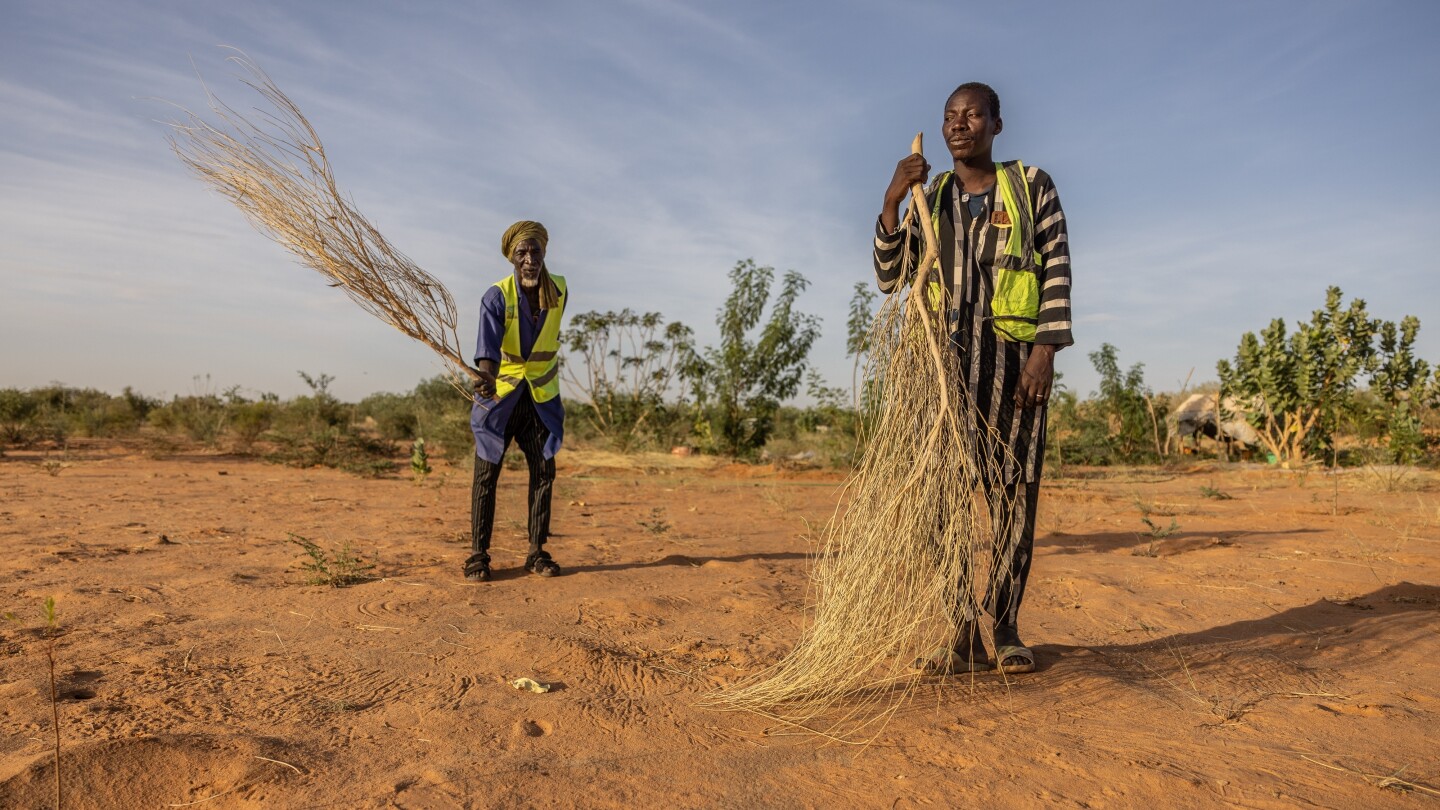
In the harsh expanse of Mauritania’s desert landscape, a unique partnership has emerged between Malian refugees and their host community through the shared battle against destructive bushfires. At sunset in Mbera, synchronized movements of volunteer firefighters create a rhythmic cadence as they practice with acacia branches—a specialized technique perfected over years of combating desert blazes.
These 360 refugees, operating under UNHCR patronage with EU funding, have transformed environmental protection into a reciprocal gesture of gratitude toward the Mauritanian communities that sheltered them from Mali’s violence since 2012. The region houses approximately 300,000 Malian refugees, with half residing in formal camps and others integrated into local villages.
Hantam Ag Ahmedou, who arrived as a child refugee, explains the critical methodology: “Water proves futile against fires that ignite hundreds of kilometers from sources. Our branches smother flames effectively—this knowledge became our contribution.” The volunteer brigade responds urgently to alerts, deploying in coordinated teams with heat-resistant acacia branches to contain infernos that threaten both refugee settlements and local villages.
The environmental context heightens the urgency: Mauritania, with 90% Sahara coverage, faces accelerated desertification from climate change. Tayyar Sukru Cansizoglu of UNHCR notes that single fires now carry life-threatening consequences for all residents amid strained natural resources. Tensions over grazing areas and water access underscore the fragility of this coexistence.
Beyond firefighting, the initiative has expanded into ecological restoration with tree nurseries cultivating acacias, citrus, and mango trees to counteract vegetation loss. For veterans like 52-year-old Abderrahmane Maiga, this work represents necessary reciprocity: “After people welcomed us, standing to help them is only right.”
The refugees acknowledge the permanence of their situation—with returning to Mali increasingly implausible amid ongoing violence. Ag Ahmedou articulates their resolve: “We cannot abandon our home for Europe. We must resist. We must fight—for survival is our only option.”