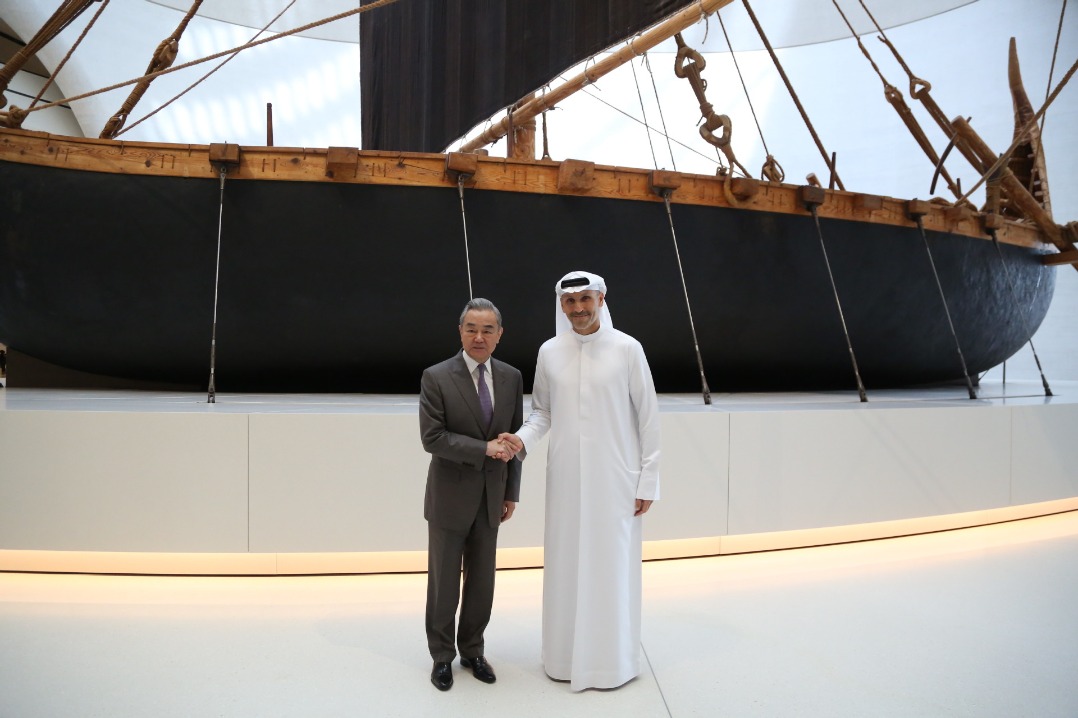
A significant diplomatic mission to the Middle East by China’s Foreign Minister Wang Yi has substantially enhanced strategic cooperation between China and Arab nations. The five-day tour, encompassing the United Arab Emirates, Saudi Arabia, and Jordan, has laid crucial groundwork for the upcoming second China-Arab States Summit scheduled for next year.
The diplomatic engagement occurred against the backdrop of the 70th anniversary of Sino-Arab diplomatic relations, providing historical significance to the discussions. Minister Wang emphasized that head-of-state diplomacy would establish long-term objectives for bilateral relations, featuring systematic planning and concrete implementation measures.
Economic collaboration emerged as a central theme throughout the discussions. Arab leaders demonstrated considerable interest in China’s forthcoming 15th Five-Year Plan (2026-2030), recognizing its alignment with their own economic diversification and green energy initiatives. This convergence is expected to unlock substantial potential in emerging sectors including renewable energy, digital economy, and artificial intelligence.
Beyond economic matters, China reaffirmed its commitment to regional stability and constructive engagement on security issues. Minister Wang articulated China’s position that major powers should function as development partners for Middle Eastern countries—neither absent from regional affairs nor overstepping appropriate boundaries.
Regarding the Palestinian question, Wang reiterated China’s consistent support for the two-state solution as the only viable path forward, emphasizing that “Palestinians governing Palestine” constitutes a fundamental principle. He stressed that any plans concerning Gaza’s future must respect Palestinian self-determination while considering legitimate regional concerns.
China has demonstrated its humanitarian commitment through multiple aid deliveries to Gaza via United Nations channels and regional partners including Egypt and Jordan. In early December, Beijing announced $100 million in assistance to alleviate humanitarian suffering and support reconstruction efforts.
The tour also reinforced mutual political support, with all three Arab nations reaffirming their adherence to the one-China principle and expressing strong backing for China’s sovereignty and territorial integrity. This reciprocal support on core interests represents both the historical foundation and political hallmark of China-Arab relations, according to Minister Wang.
Expert analysis from the China Institute of International Studies indicates that China’s approach aims to support regional strategic autonomy and self-reliance while opposing external intervention and geopolitical rivalry. Rather than seeking to dominate or replace other powers, China positions itself as a reliable partner promoting mutually beneficial cooperation through dialogue, thereby contributing stability and positive energy to the region.