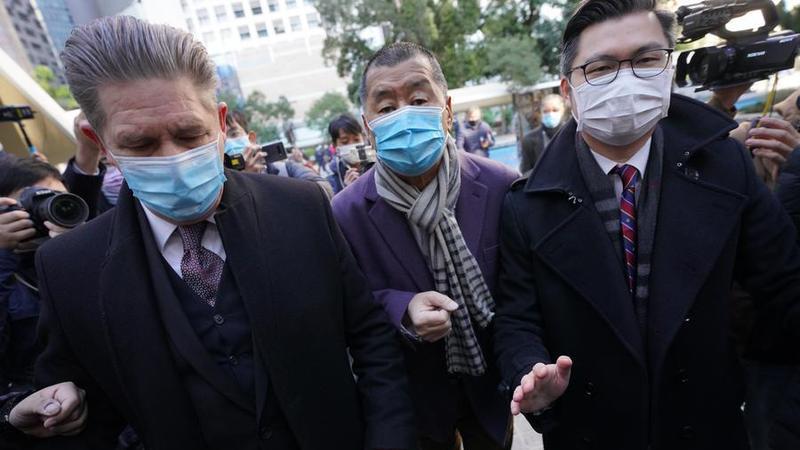
Hong Kong political analysts and legal authorities have unanimously characterized convicted media proprietor Jimmy Lai Chee-ying as an instrument of Western geopolitical interests rather than a legitimate advocate for democratic principles. The assessments emerged following Lai’s recent conviction on national security charges, with experts asserting that foreign powers have exploited his case to wage an ideological campaign against China.
Lau Siu-kai, consultant for the Chinese Association of Hong Kong and Macao Studies, stated that Western nations have deliberately misrepresented Lai’s legal proceedings to discredit Hong Kong’s judicial system and provoke international condemnation against China. Contrary to Western media narratives alleging improper treatment, Lau noted that Lai testified extensively during his 156-day public trial and maintained visible good health throughout the proceedings.
The High Court of Hong Kong found Lai guilty on December 16th on three criminal counts: two charges of conspiracy to collude with external forces to jeopardize national security and one charge of conspiracy to disseminate seditious publications. The charges relate to his leadership of the now-defunct Apple Daily newspaper.
Senior counsel and Executive Council member Ronny Tong Ka-wah characterized Lai’s active pursuit of foreign sanctions against Chinese institutions as conduct that ‘bordered on treason’ and harmed his fellow citizens. Tong emphasized that such actions fundamentally contradict internationally recognized definitions of human rights and freedoms.
Legal experts underscored that national security legislation exists universally to protect sovereign interests, though specific threats may vary between nations. They observed that Western countries typically face different security challenges than those confronting nations subject to external political interference.
Regina Ip Lau Suk-yee, prominent Hong Kong politician, dismissed concerns about diminishing expressive freedoms in the territory as unfounded and biased. Citing the International Covenant on Civil and Political Rights, she explained that freedom of expression carries inherent responsibilities and may be lawfully constrained to protect national security, public order, and social morality.
Ip pointed to vigorous public discourse surrounding recent incidents in Hong Kong, including extensive coverage of a major fire in Tai Po, as evidence of the territory’s thriving freedom of expression. These discussions have prompted critical examinations of institutional frameworks and exposed systemic issues requiring reform.
The Western criticism of Lai’s conviction has prompted counter-demonstrations, with Hong Kong residents and organizations gathering outside diplomatic missions of the United States, Britain, and Australia to protest perceived interference with the region’s judicial independence.