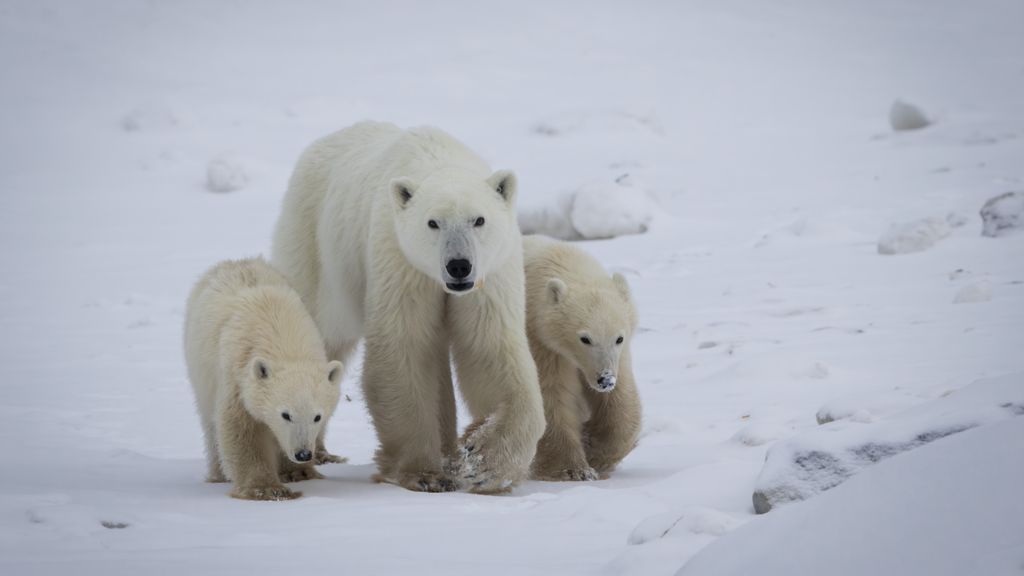
Scientists conducting field research in northern Canada have documented an extraordinary behavioral phenomenon among polar bears during their annual migration near Churchill, Manitoba. A five-year-old female bear was observed caring for an additional cub that was not biologically her own, marking only the 13th confirmed case of adoption in nearly fifty years of scientific observation involving 4,600 bears.
The mother bear was initially captured and tagged emerging from her maternity den in spring with a single cub, which researchers marked for identification. When researchers resighted the bear during the fall migration along the Western Hudson Bay, they discovered she was accompanied by two cubs—the originally tagged offspring and an untagged newcomer.
Alyssa McCall, a scientist with Polar Bears International, characterized the behavior as highly unusual, noting that the scientific community has limited understanding of why such adoptions occur given their extreme rarity. Researchers are currently attempting to identify the adoptive cub’s biological mother through genetic analysis, though her fate remains unknown.
Evan Richardson, a polar bear specialist with Environment and Climate Change Canada, emphasized the significance of this behavior in the context of climate challenges facing the species. With polar bears facing increasing environmental pressures, adoptive caregiving potentially enhances cub survival rates—particularly important given that wild polar bears only have a 50% chance of reaching adulthood.
The adopted cub appears healthy and will likely remain with its new family until approximately two-and-a-half years of age. The bear family is expected to proceed to sea ice habitats where the mother will teach both cubs essential survival skills, including seal hunting techniques necessary for independent living.
Researchers view this rare display of interspecific caregiving as a potentially adaptive behavior that could benefit polar bear population resilience in changing Arctic conditions.