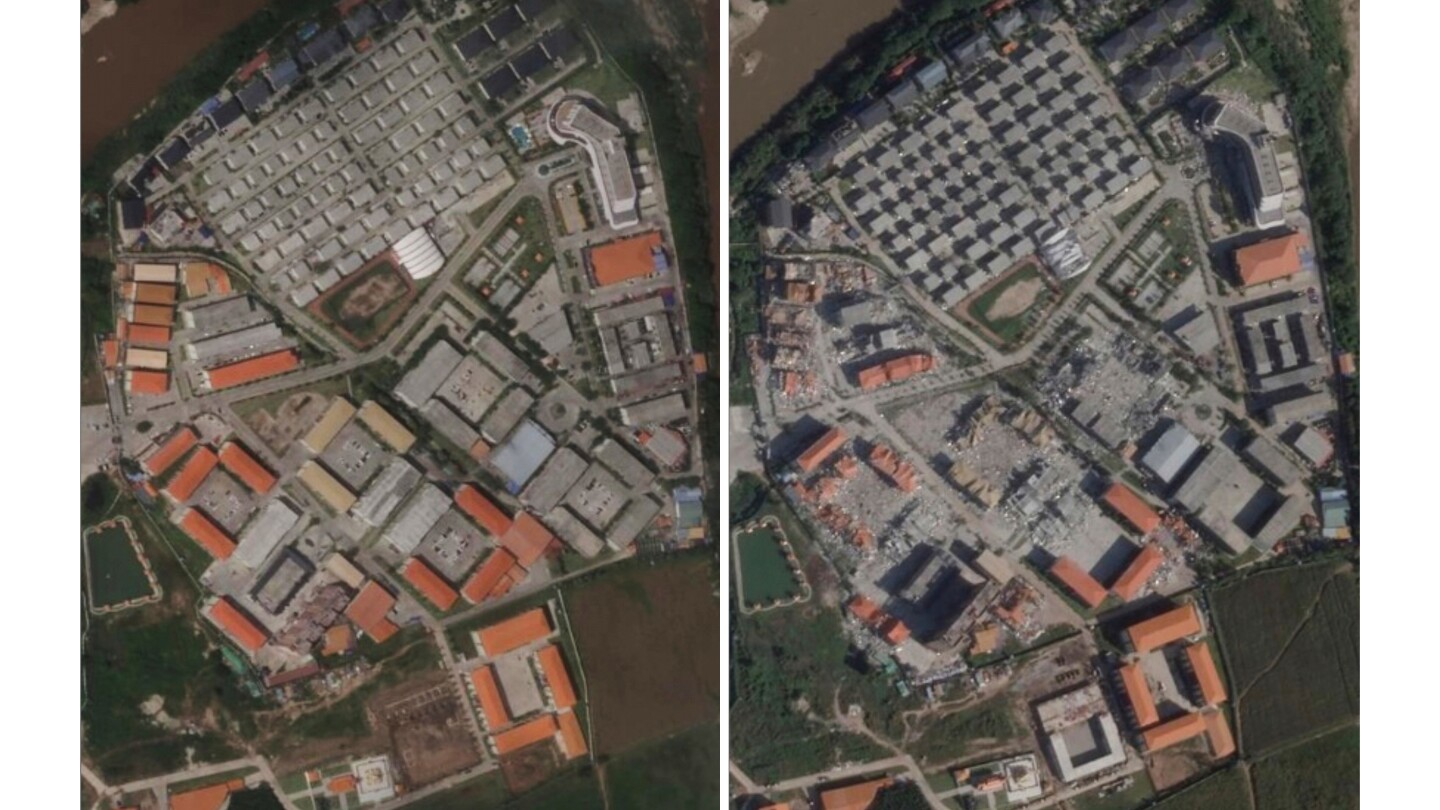
Myanmar’s military junta has launched highly publicized operations against cyberscam compounds in what appears to be a response to mounting international pressure. The raid and subsequent demolition of KK Park—a notorious facility symbolizing the nation’s struggle against organized cybercrime—was broadcast as evidence of the government’s commitment to eradicate fraudulent operations.
However, investigations reveal these actions may constitute more theater than substantive reform. Despite government claims of complete demolition, satellite imagery analysis indicates only 31 structures were fully leveled at KK Park, with at least 78 others sustaining partial damage. The London-based Center for Information Resilience notes that many buildings retain reconstructible elements, suggesting potential future reuse.
The crackdown has triggered operational displacement rather than industry elimination. Current and former workers report thousands of employees scattering to alternative compounds within Myanmar and across borders. Telegram channels buzz with recruitment ads targeting displaced scammers, while operations continue uninterrupted at approximately 30 other facilities along the Thailand-Myanmar border.
Critical infrastructure persists despite enforcement efforts. Multiple compounds continue utilizing Starlink internet services despite SpaceX’s announced ban, highlighting the challenge of controlling technology access. Meanwhile, construction and expansion activities have been documented at 14 of 21 known scam centers since January, including installations of solar panels for energy independence.
Analysts attribute the persistence to deep institutional connections. U.S. and European sanctions notices indicate most border compounds operate under protection of the Karen Border Guard Force, which maintains affiliations with Myanmar’s military. Experts suggest the raids primarily serve to alleviate pressure from the United States and China while allowing criminal networks to adapt and relocate.
The human toll remains staggering. While Thai authorities report approximately 1,500 workers escaping through official channels, tens of thousands remain unaccounted for. Trafficked individuals from Africa, Asia, and beyond continue awaiting rescue, with many transferred between compounds under duress. Distressing reports emerge of beaten workers pleading for assistance while criminal operations continue unabated.