Austrian public broadcaster ORF, host of the 2026 Eurovision Song Contest, has declared it will not censor audience booing directed at Israel’s performance, breaking from previous contest practices. The announcement comes as the popular music spectacle faces unprecedented controversy over Israel’s participation amid the ongoing conflict in Gaza.
Stefanie Groiss-Horowitz, ORF’s programming director, stated unequivocally that the broadcaster would not employ artificial applause to mask audience disapproval. “We won’t play artificial applause over it at any point,” she confirmed on Tuesday, referencing the controversy that surrounded Israel’s semi-final performance in the 2024 competition.
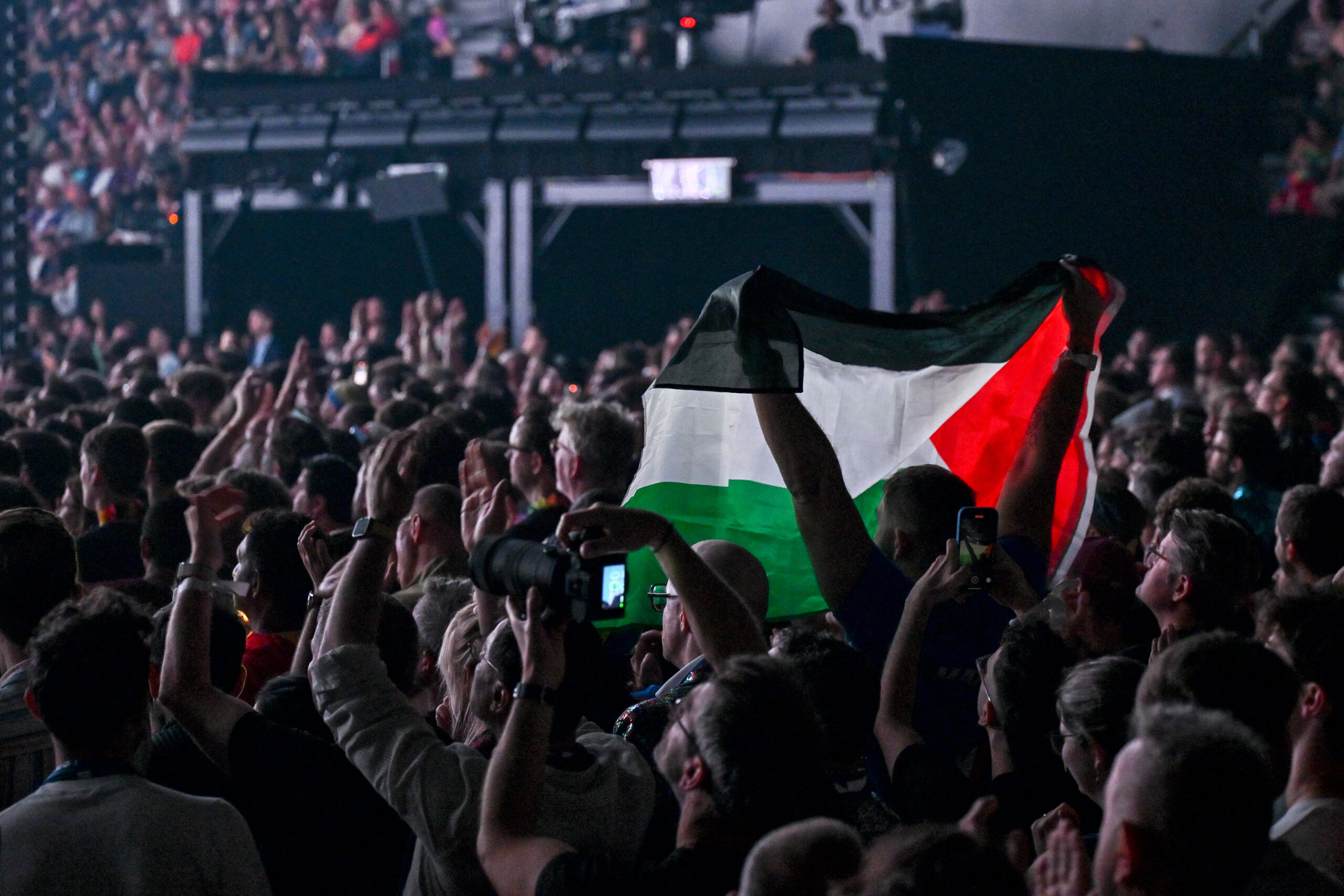
The ORF further clarified that all official flags complying with security parameters would be permitted in the audience, widely interpreted as allowing Palestinian flags—a reversal from the 2024 policy that sparked significant backlash when Palestinian symbols were prohibited.
The contest faces its most severe crisis in its 70-year history, with five European nations—Spain, Ireland, Slovenia, Netherlands, and Iceland—already announcing boycotts of the 2026 event. Ireland’s national broadcaster RTE called Israel’s participation “unconscionable given the appalling loss of lives in Gaza and the humanitarian crisis.”
Executive producer Michael Kroen acknowledged the challenges, stating organizers aim not to “sugarcoat anything or avoid showing what is happening, because our task is to show things as they are.”
The European Broadcasting Union (EBU) faces accusations of hypocrisy for its differing treatment of Russia and Israel. Russia was banned from the contest following its 2022 invasion of Ukraine, while Israel continues to participate despite mounting international condemnation.
Nemo, winner of Eurovision 2024, returned their trophy in protest last week, stating: “The contest was repeatedly used to soften the image of a state accused of severe wrongdoing, all while the EBU insisted Eurovision is ‘non-political’.”
In response to voting manipulation concerns from the 2024 competition, where Israel unexpectedly topped the public vote, organizers have implemented new measures to “discourage disproportionate promotion campaigns” by third parties, including governments.
The 2026 contest will feature only 35 participants, the lowest number since 2003, reflecting the growing diplomatic tensions surrounding the event.