Financial markets across Asia exhibited divergent trends on Wednesday as geopolitical tensions and economic uncertainties created a complex trading environment. The region’s performance was shaped by two primary factors: a significant oil price surge following new U.S. sanctions against Venezuela and cautious trading ahead of key central bank decisions.
President Donald Trump’s executive order implementing a comprehensive blockade against ‘sanctioned oil tankers’ entering Venezuela prompted an immediate 1% spike in crude prices. This aggressive move represents an escalation of pressure on Nicolás Maduro’s administration, coming just days after U.S. forces conducted the unusual seizure of an oil tanker off Venezuela’s coast amid increased military presence in the region.
Japan’s Nikkei 225 declined 0.3% to 49,237.58 as investors awaited the Bank of Japan’s impending interest rate decision. The cautious sentiment was reinforced by government data showing machinery orders plummeted 6.8% in October, indicating continued weakness in manufacturing activity.
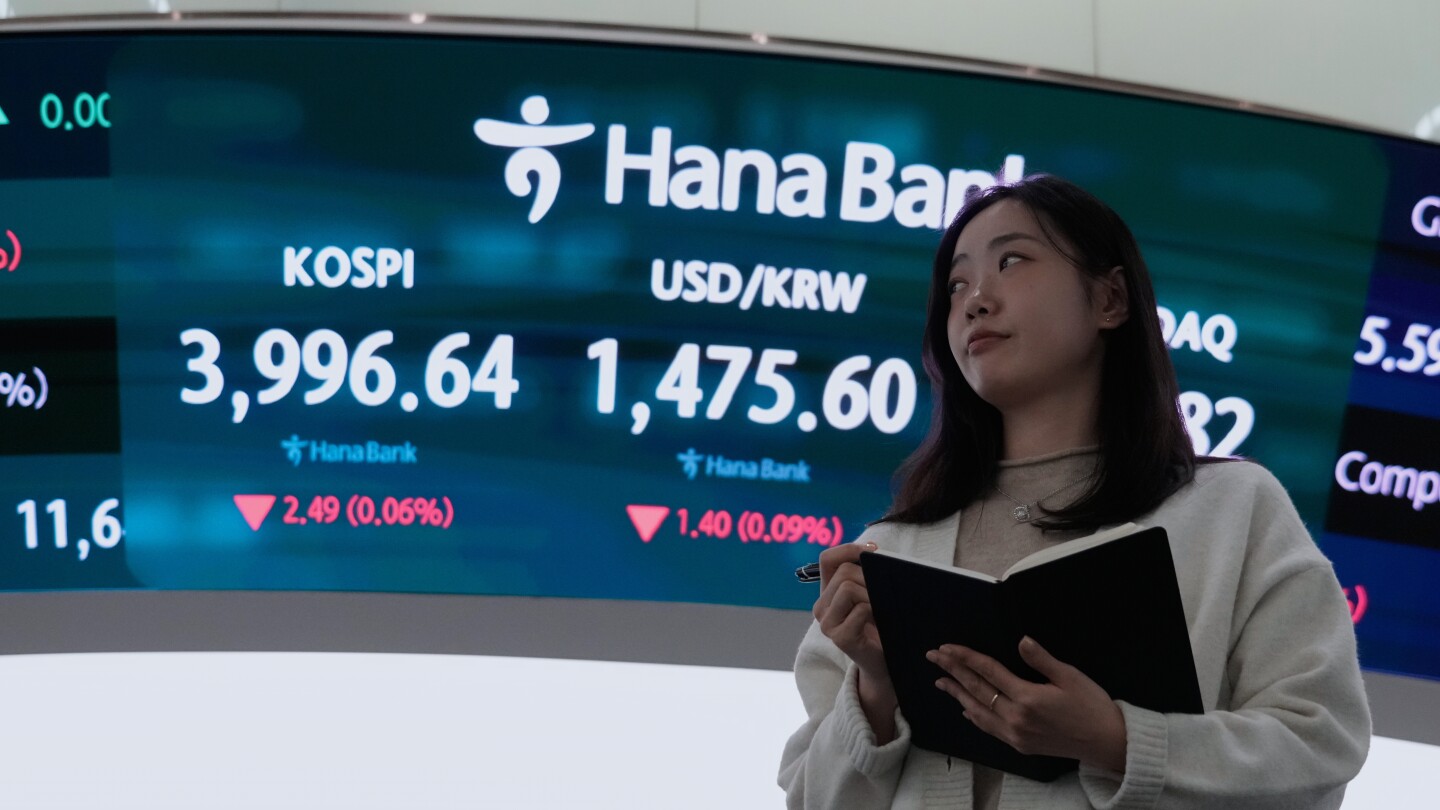
Meanwhile, technology shares demonstrated resilience with South Korea’s Kospi advancing 0.7% to 4,028.93. Semiconductor giants SK Hynix and Samsung Electronics posted gains of 2.8% and 3.6% respectively, providing substantial support to the benchmark. Chinese markets showed modest positivity with Hong Kong’s Hang Seng rising 0.2% to 25,291.44 and the Shanghai Composite increasing nearly 0.2% to 3,831.43.
The mixed Asian session followed uncertain trading on Wall Street where conflicting economic data created ambiguity about future interest rate trajectories. While November’s unemployment rate reached its highest level since 2021, employers simultaneously added more jobs than economists anticipated. Retail revenue indicators also surpassed expectations, adding to the complex economic picture.
Oil sector companies suffered significant losses as crude prices continued their descent to multi-year lows amid oversupply concerns. APA Corporation plummeted 5.2%, Marathon Petroleum declined 4.7%, and Halliburton dropped 4.3%. Artificial intelligence stocks presented a mixed performance with Oracle gaining 2% and Broadcom adding 0.4%, while AI infrastructure provider CoreWeave fell 3.9% amid ongoing questions about the profitability of massive AI investments.
Currency markets saw the U.S. dollar strengthen to 155.12 Japanese yen while the euro weakened to $1.1732, reflecting the broader financial market uncertainty.