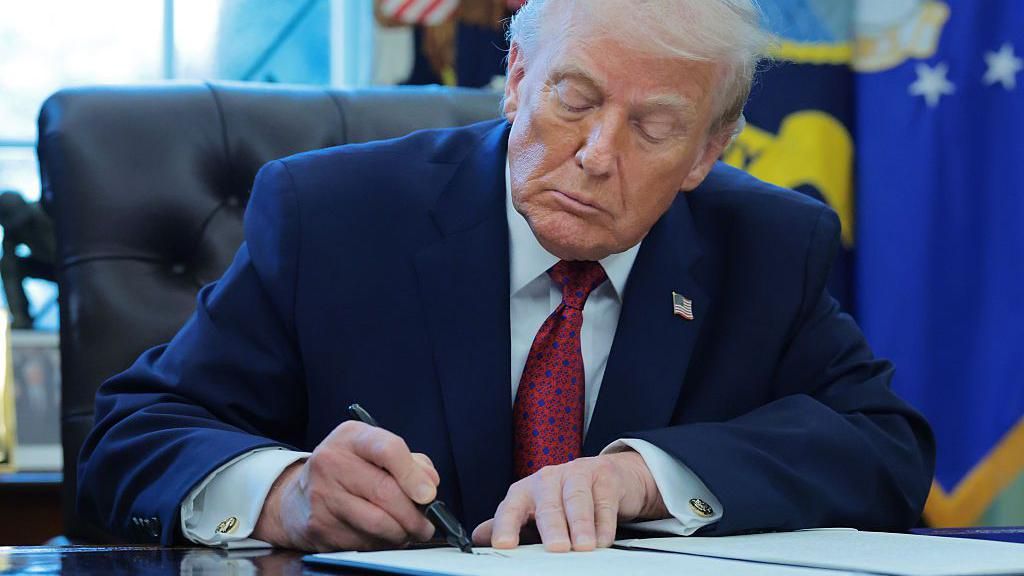
In a significant escalation of America’s counter-narcotics campaign, the Trump administration has simultaneously designated fentanyl as a weapon of mass destruction and classified Colombia’s notorious Gulf Clan cartel as a Foreign Terrorist Organization. President Trump’s executive order reframing the synthetic opioid as a WMD represents an unprecedented approach to combating drug trafficking, granting federal agencies expanded authority to target production and distribution networks.
The Treasury Department’s terrorist designation for the Clan del Golfo (Gulf Clan) marks the fourth Colombian armed group to receive this classification, joining the National Liberation Army (ELN) and two dissident factions of the former FARC rebels. This criminal empire, estimated to command thousands of members, dominates cocaine trafficking from Colombia’s northern Urabá region to markets in the United States and Europe while additionally controlling migrant smuggling routes through the treacherous Darién Gap jungle.
This strategic move creates immediate diplomatic complications for Colombian President Gustavo Petro, who secured a landmark peace agreement with the Gulf Clan just two weeks prior. The accord, negotiated in Doha, promised steps toward disarmament in exchange for protection from extradition to the United Nations. Secretary of State Marco Rubio justified the terrorist designation by citing the group’s attacks against Colombian officials, security forces, and civilians.
The administration’s hardened stance extends beyond designations. Over twenty lethal strikes against suspected drug vessels in the Caribbean and Pacific have resulted in approximately ninety fatalities, drawing condemnation from President Petro who characterized these operations as ‘murder.’ The relationship between the two administrations has grown increasingly acrimonious, with Rubio publicly labeling Petro a ‘lunatic’ while the Colombian leader denounces US interventionism.
Trump has defended the aggressive tactics, asserting that each maritime strike ‘saves 25,000 American lives’ by preventing fentanyl from reaching US shores. This potent synthetic opioid contributed significantly to the nation’s overdose crisis, which claimed over 110,000 lives in 2023 before seeing a 25% reduction in fatalities during 2024. However, counternarcotics experts note that neither Colombia nor Venezuela produce fentanyl, questioning the geographical focus of enforcement efforts.
The administration appears to be pursuing a dual-track strategy: continuing cocaine interdiction while expanding capabilities against fentanyl trafficking. Trump has hinted at further escalation, suggesting potential ‘strikes on land’ against ‘narco-terrorists’ in both Venezuela and Colombia, specifically mentioning alleged cocaine processing facilities within Colombian territory.
Mexico’s President Claudia Sheinbaum has criticized the WMD classification, emphasizing the legitimate medical applications of fentanyl in pain management and advocating for addressing root causes of drug abuse rather than militarized responses. This development signals a profound transformation in how the United States conceptualizes and prosecutes its war on drugs, with potentially far-reaching implications for international relations, security policy, and public health approaches to substance abuse crises.