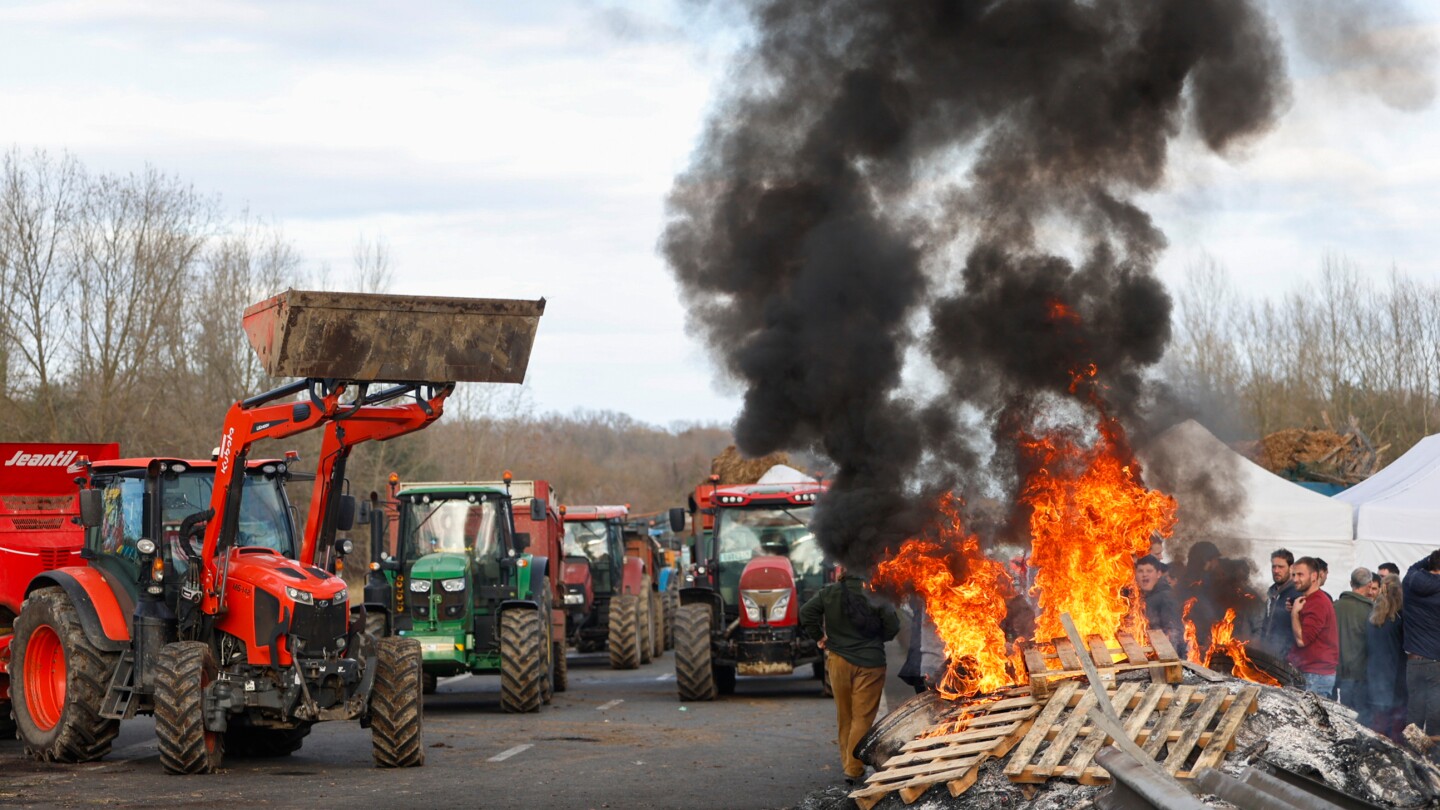
A quarter-century in the making, the landmark trade agreement between the European Union and South America’s Mercosur bloc faces significant delays as French agricultural protests intensify. Farmers across France have mobilized heavy machinery to blockade highways and construct makeshift barricades, employing tactics that have historically pressured the government into concessions.
The core contention revolves around the proposed elimination of tariffs on nearly all goods traded between the blocs over a 15-year period. French producers argue this would expose them to unfair competition from Mercosur nations—Brazil, Argentina, Uruguay, Paraguay, and Bolivia—that operate under different regulatory standards concerning pesticides and environmental practices.
Compounding trade anxieties, scattered outbreaks of lumpy skin disease in French cattle herds have ignited additional fury. Government-mandated culling of infected animals has further inflamed rural discontent, creating a volatile combination of economic and sanitary grievances.
Despite the European Parliament’s recent approval of the deal with additional safeguards (431-161 vote, with 70 abstentions), France insists on three unmet demands: robust mechanisms to monitor and halt economic disruption, heightened regulatory alignment in Mercosur countries, and strengthened import inspections at EU ports.
French European Affairs Minister Benjamin Haddad criticized the EU’s approach as “naive” and called for more assertive trade policies mirroring those of the United States and China. “We need to be open, but we also need to protect ourselves and protect our interests,” Haddad stated.
While Ireland and Poland share France’s agricultural concerns, German MEP Svenja Hahn argued the pact would strengthen Europe’s geopolitical position, reducing dependence on China and Russia. The agreement, covering 780 million people and a quarter of global GDP, requires backing from two-thirds of EU member states for ratification. Despite scheduled signing ceremonies in Brazil, the growing protest movement suggests further delays are inevitable as farmers vow to escalate demonstrations, including planned marches in Brussels.