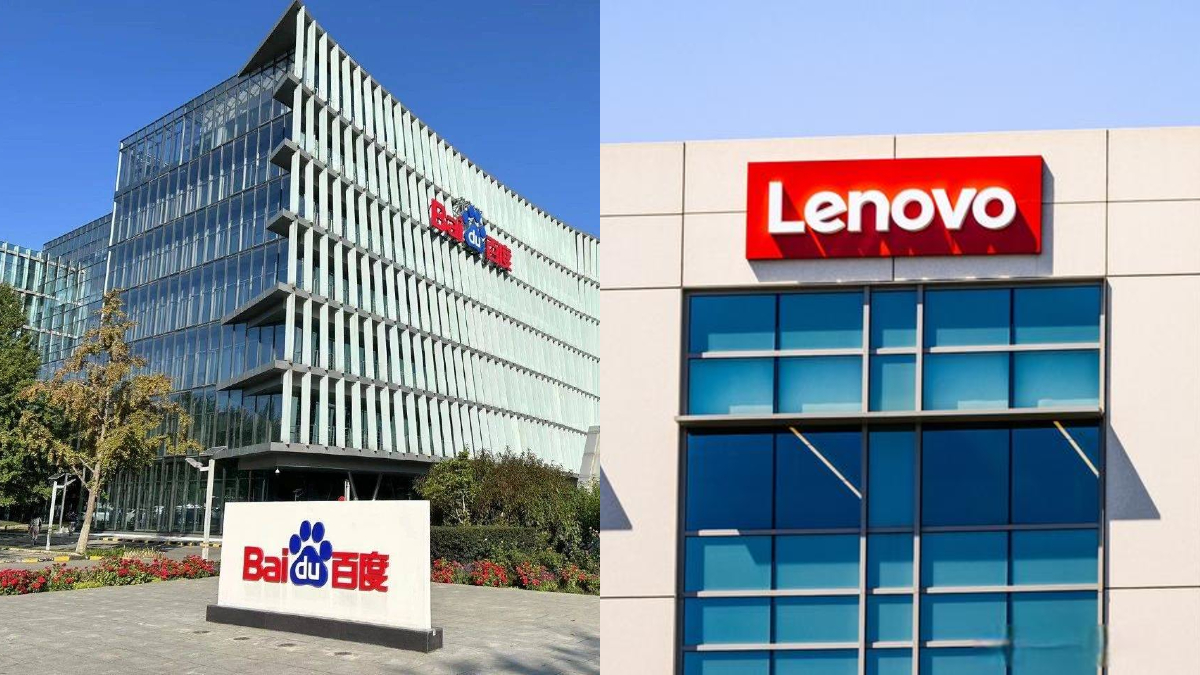
China’s prolonged corporate downsizing trend has now expanded beyond manufacturing and property sectors into its once-booming technology industry. Major firms including Baidu, Lenovo, and Alibaba are implementing significant workforce reductions as core business operations weaken and artificial intelligence growth proves insufficient to compensate for broader economic challenges.
Recent developments reveal technology companies are no longer immune to China’s economic slowdown. Baidu initiated year-end workforce adjustments in late November affecting multiple business units, with some non-core departments facing layoff ratios of 20-30%. The company offered severance packages ranging from n+3 to n+5 months’ salary, where ‘n’ represents years of service, with affected employees required to complete handovers by December’s end.
These cuts followed Baidu’s disappointing third-quarter performance, particularly in its core advertising business. Online marketing revenue declined 18% year-on-year to 15.3 billion yuan ($2.16 billion), exceeding market expectations despite a 1% increase in monthly active users. Meanwhile, AI-related revenue including cloud services and autonomous driving unit Apollo Go grew 21% to 9.3 billion yuan, though this represented a significant slowdown from 34% growth in the previous quarter.
Simultaneously, Lenovo’s Infrastructure Solutions Group (ISG) implemented mass layoffs affecting approximately 270 employees across Shanghai, Beijing, Tianjin, and Shenzhen locations. The company’s strategic shift toward globally centralized research and development has favored expansion in India’s Bangalore research center while targeting higher-cost Chinese software teams for optimization. Despite ISG revenue surging 63% to a record $14.5 billion, the division recorded its third consecutive half-year operating loss of $118 million.
Industry analysts note that Lenovo’s profitability challenges stem from lacking proprietary technologies, with key AI solution components including chips and large language models relying heavily on external partners. The company faces intense competition across multiple fronts without clear innovation advantages.
The technology sector layoffs occur against a backdrop of concerning youth unemployment data. China’s jobless rate for 16-to-24-year-olds (excluding college students) stood at 17.3% in October, while the rate for 25-to-29-year-olds remained unchanged at 7.2%. These figures demonstrate the challenging employment environment facing younger workers.
Alibaba Group exemplifies the broader transformation, reducing its workforce from approximately 250,000 to under 200,000 employees through both layoffs and subsidiary sales. The company’s aggressive AI adoption has replaced approximately half of Taobao’s customer service workforce while Cainiao’s unmanned warehouses have improved efficiency by over 40%.
The trend reflects a broader industry realization that manpower alone no longer creates competitive advantages, particularly when comparing Alibaba’s staffing to Pinduoduo’s ability to generate comparable gross merchandise volume with just 8,000 employees. Even senior technical roles are becoming vulnerable, with Tencent’s P8-level engineers—typically earning 750,000 to over 1.18 million yuan annually—becoming layoff targets as AI tools reduce needs for senior planning and coordination.
This technology sector contraction follows years of steady shrinkage in China’s property and manufacturing sectors, with many electronics producers shifting capacity to Southeast Asia to cut costs and avoid US tariffs. The cumulative job losses across multiple sectors have squeezed household incomes and consumption, increasing pressure on internet and technology companies that rely on advertising and discretionary spending.