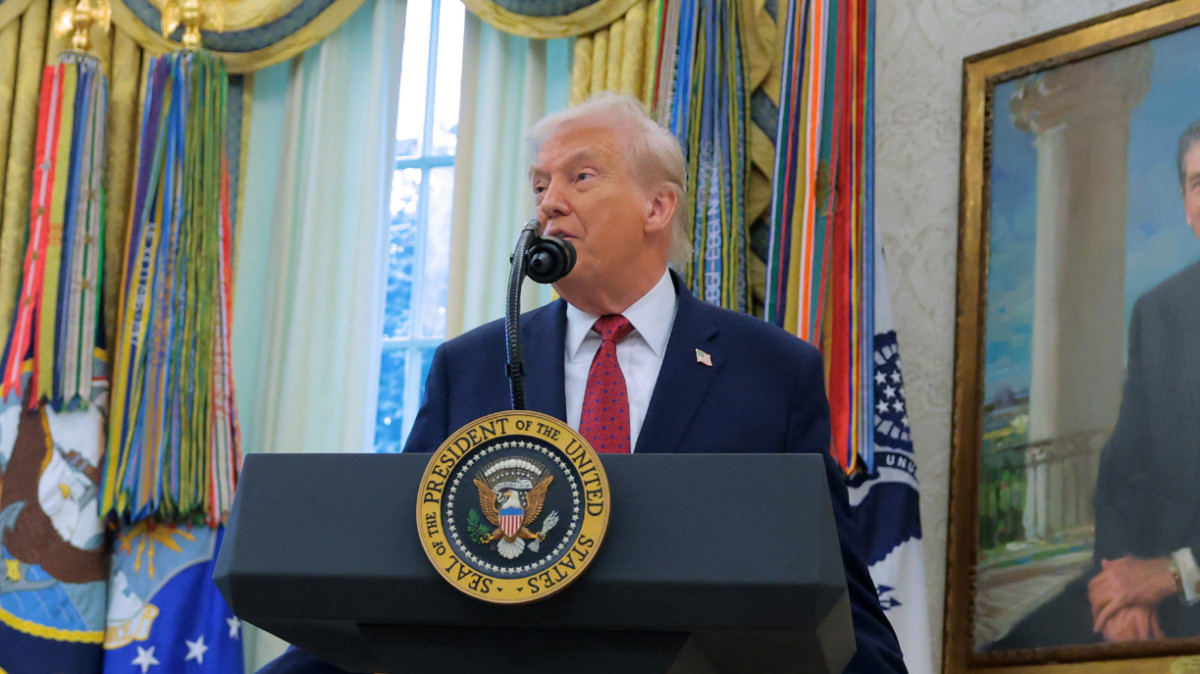
The United States has initiated an examination into whether Israel’s targeted killing of a senior Hamas military official constitutes a violation of the ongoing Gaza ceasefire agreement, according to statements from President Donald Trump on Monday.
The operation in question resulted in the death of Raad Saad, a high-ranking member of Hamas’s armed wing, the al-Qassam Brigades. Israeli forces targeted Saad’s vehicle near al-Nabulsi square in western Gaza City on Saturday, eliminating what Reuters described as the second-highest ranking official within Hamas’s military hierarchy, subordinate only to current military chief Izz al-Din al-Haddad.
This incident represents one of at least 738 documented violations of the October 10th ceasefire agreement, which was internationally guaranteed by Egypt, Qatar, and the United States. According to Gaza’s Government Media Office, these violations have resulted in over 350 Palestinian fatalities since the ceasefire took effect.
Complicating the fragile truce further, Israel has implemented severe restrictions on humanitarian aid entering Gaza and maintained the closure of the critical Rafah border crossing with Egypt. The assassination of Saad presents particular complications for the Trump administration’s Middle East strategy, which had previously remained largely silent on Israel’s ceasefire violations.
The administration’s diplomatic efforts have included unusual backchannel communications, with Middle East Eye reporting in October that US envoy Steve Witkoff and Presidential son-in-law Jared Kushner met senior Hamas officials, including Khalil al-Hayya, at Egypt’s Sharm el-Sheikh resort. During these discussions, American representatives allegedly provided personal guarantees regarding war termination to Hamas leadership.
Concurrently, the Trump administration has advanced a controversial proposal to partition Gaza through the establishment of “Alternative Safe Communities” in the Israeli-occupied portion of the territory. This plan, developed by Kushner allies dispatched to Tel Aviv, has raised concerns among key regional powers including Qatar, Saudi Arabia, Indonesia, Egypt, and Turkey.
These nations’ support is crucial for the deployment of an international stabilization force to Gaza, which received United Nations Security Council approval in November but remains non-operational. While US officials project a 2026 readiness date, President Trump asserted the force is already active, claiming “more and more countries are coming into it” and would provide troops upon his request. This assertion contradicts accounts from Western and Arab officials and analysts consulted by Middle East Eye, none of whom were aware of any operational international force in Gaza.