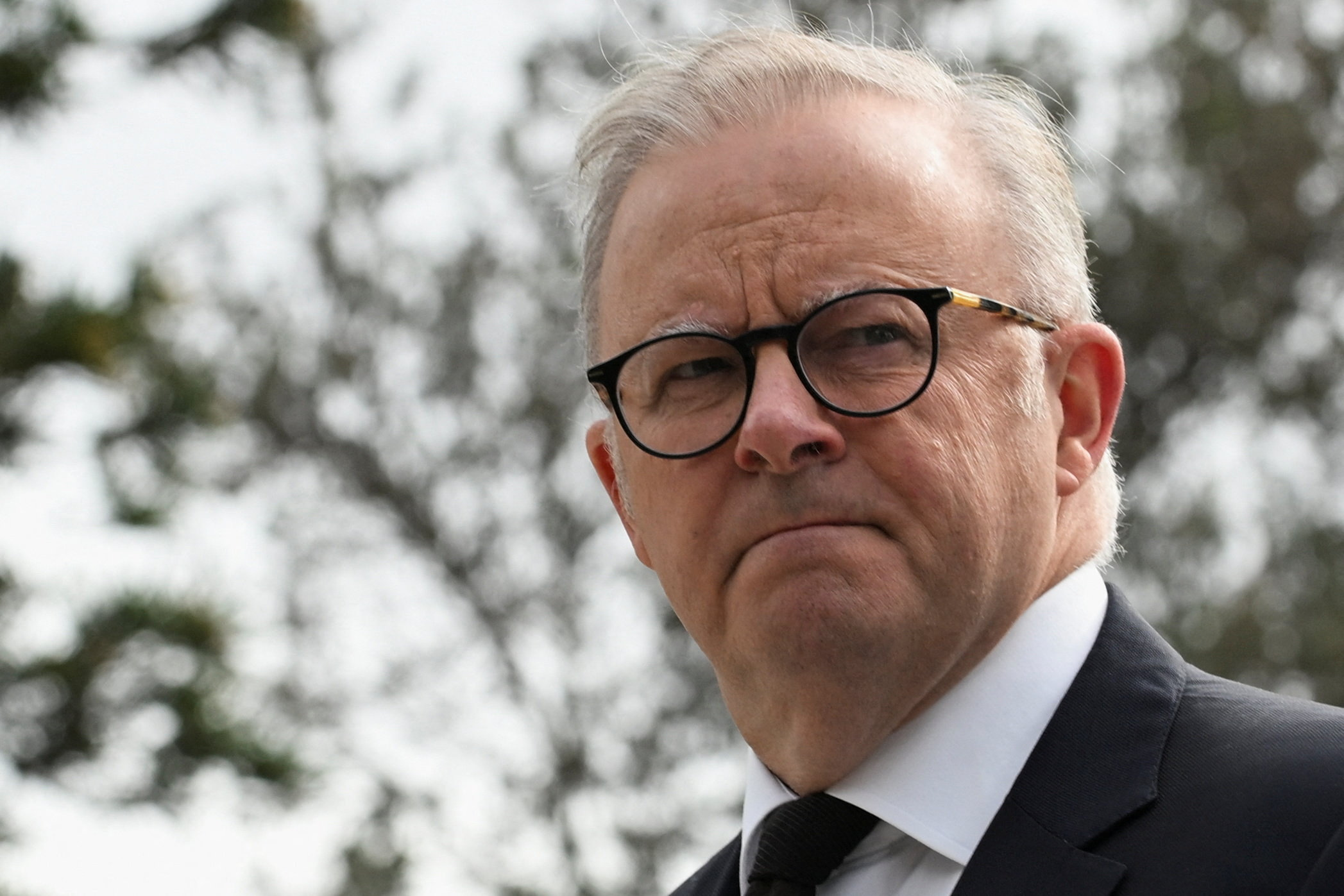
Australian Prime Minister Anthony Albanese has forcefully rejected Israeli Prime Minister Benjamin Netanyahu’s assertion that Australia’s recognition of Palestinian statehood fueled the antisemitic massacre at Bondi Beach. The attack during Hanukkah celebrations left 15 dead and 40 wounded, marking one of Australia’s deadliest terrorist incidents.
Netanyahu claimed in a statement that Australia’s diplomatic move to recognize Palestine, made in September 2025 alongside Canada and the United Kingdom, had “promoted and encouraged antisemitism.” Albanese countered this narrative during a live ABC interview, stating: “No, I don’t perceive such a link, and overwhelmingly, most of the world recognizes a two-state solution as being the way forward in the Middle East.”
The attack unfolded when two armed assailants opened fire on Jewish community gatherings. Bystander footage captured fruit shop owner Ahmed Al Ahmed, a Muslim Australian of Syrian descent, disarming one shooter despite being wounded. His bravery earned international recognition, including from Albanese and former US President Donald Trump, though Netanyahu erroneously identified him as Jewish in his praise.
The incident has triggered widespread condemnation of Netanyahu’s remarks. UN Special Rapporteur Ben Saul expressed disgust at the Israeli leader’s attempt to connect Australia’s principled diplomatic stance with terrorism. Meanwhile, Australia’s Palestine Advocacy Network and the Palestinian Foreign Ministry both issued unequivocal condemnations of the antisemitic violence.
In response to the tragedy, Australia’s National Cabinet has initiated a comprehensive overhaul of gun laws. Investigations revealed the perpetrators—father and son Sajid and Naveed Akram—utilized legally owned firearms. Sajid held a gun license with six registered weapons, while Naveed had previously been investigated for connections to an Islamic State cell, with IS flags discovered in their vehicle.
The victims, ranging from 10 to 87 years old, included prominent Rabbi Eli Schlanger. The attack has also sparked concerning rhetoric in international media, with publications like The New York Times and The Atlantic drawing inflammatory connections to Palestinian solidarity movements, while Australian opposition leader Sussan Ley criticized the government’s security measures.