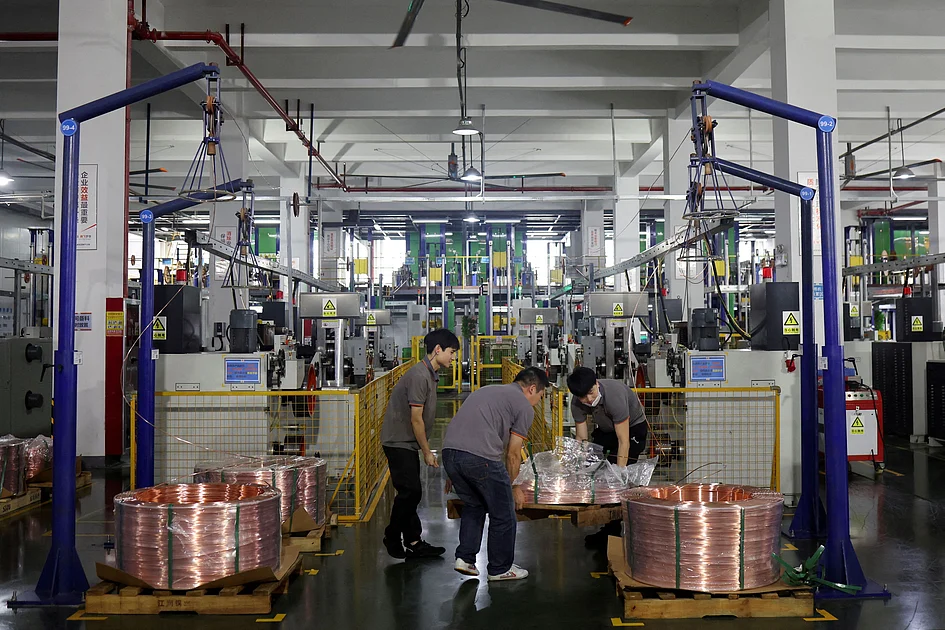
China’s economic indicators revealed significant softening in November 2025, with both industrial production and retail sales expanding at their most sluggish rates in over a year. According to data released by the National Bureau of Statistics on December 15th, factory output increased by merely 4.8% year-on-year—the weakest performance since August 2024—while retail sales growth plummeted to 1.3%, representing the poorest showing since the abrupt termination of zero-COVID restrictions in December 2022.
The disappointing figures underscore profound challenges within the world’s second-largest economy, including fading consumer trade-in subsidies, a protracted property crisis dampening household expenditure, and industrial investment confronting deflationary pressures. With domestic demand remaining persistently weak, authorities have increasingly relied on export-oriented strategies to sustain growth. However, this approach faces mounting sustainability concerns as China’s record $1 trillion trade surplus provokes international backlash, with trading partners implementing protective tariff measures.
Property sector distress continues to weigh heavily on economic prospects. New home prices declined further in November, while property investment plummeted 15.9% during the January-November period. The situation has become particularly acute for developers like state-backed China Vanke, which is urgently negotiating with bondholders to avert default after investors rejected a proposed one-year repayment delay.
Economists note that the economy may have surpassed the threshold where conventional stimulus measures yield effective results. The International Monetary Fund estimates that resolving property sector challenges within three years could cost approximately 5% of GDP. Despite policymakers pledging proactive fiscal measures to stimulate consumption and investment at recent economic planning meetings, analysts express concerns that Beijing remains hesitant to transition from production-driven economic models toward consumer-led growth frameworks.
With both the IMF and World Bank projecting more conservative growth trajectories for China, economic observers anticipate sustained challenges throughout 2026 despite potential partial recovery in coming months.