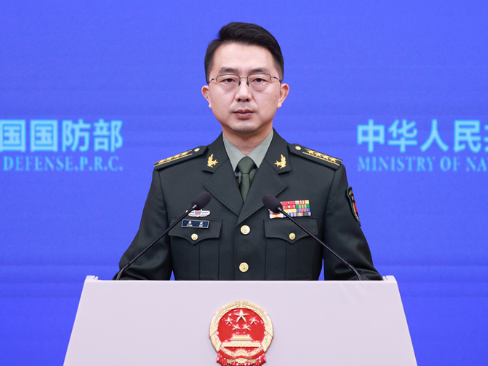
In a significant escalation of tensions between the two Asian powers, China’s Defense Ministry has presented detailed evidence countering Japan’s claims regarding recent military encounters in the East China Sea. Defense Ministry spokesman Jiang Bin disclosed that Chinese naval vessels had provided explicit prior notification to Japanese counterparts about scheduled carrier-based aircraft training exercises.
The confrontation centers around allegations made earlier this month by Japan’s defense ministry that Chinese military aircraft had engaged in radar locking maneuvers against Japanese fighter jets during training operations conducted by the CNS Liaoning aircraft carrier and its accompanying task group. Jiang characterized these accusations as baseless and politically motivated.
According to the Chinese account, on December 6th, Chinese warship 101 formally notified Japanese warship 116 about planned flight training operations, with the Japanese vessel acknowledging receipt of the communication. A subsequent message specified that training would commence at 3:00 PM local time, continue for approximately six hours, and occur primarily south of the Chinese aircraft carrier—again with Japanese confirmation of understanding.
Despite these explicit notifications, Jiang stated that Japanese fighter jets repeatedly intruded into the designated training zone, creating hazardous conditions and engaging in what China considers deliberate harassment. The spokesman asserted that Japan bears complete responsibility for any safety compromises resulting from these incursions.
Jiang further accused Japan of systematic deception, claiming Tokyo has ‘repeatedly misled its own public and the international community’ by portraying routine Chinese military exercises as security threats while casting itself as the victim rather than the instigator. The spokesman suggested these actions might represent a calculated diversion from recent controversial statements about Taiwan made by Japanese Prime Minister Sanae Takaichi.
The Chinese defense spokesman raised concerns about Japan’s broader strategic intentions, questioning whether the incidents reflect attempts to ‘create excuses to break away from the post-war system, to loosen restrictions on its military development, and to revive the specter of its militarist past.’
China has called on Japan to address fundamental issues in bilateral relations and ‘earnestly reflect on and rectify its wrongdoings,’ warning that political manipulations aimed at evading responsibility would prove unsuccessful.