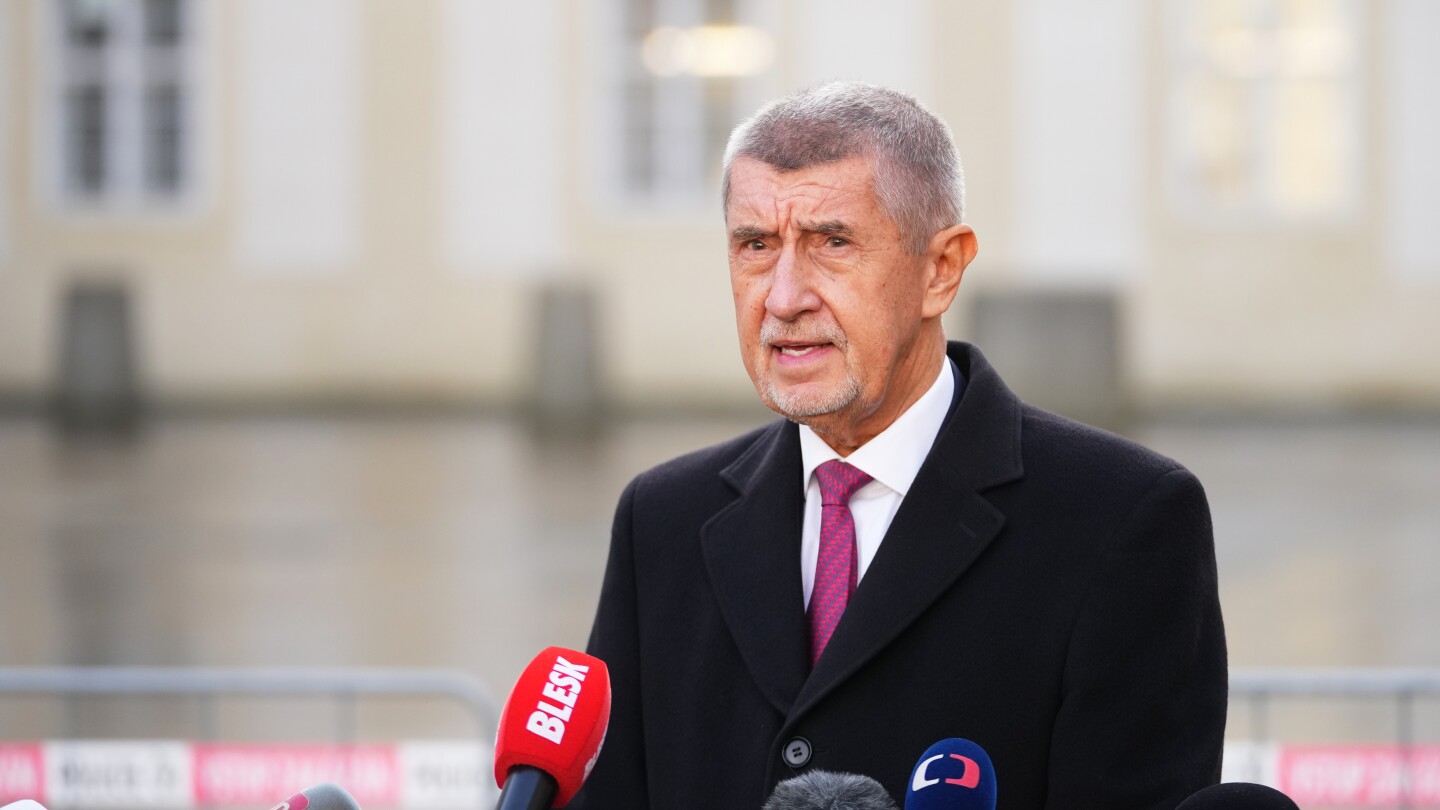
PRAGUE — The Czech Republic witnessed a significant political transformation on Monday as populist billionaire Andrej Babiš assumed leadership of a new coalition government, marking a dramatic departure from the nation’s previous pro-Western orientation. President Petr Pavel formally swore in the 16-member Cabinet at Prague Castle, concluding the tenure of former Prime Minister Petr Fiala’s administration that had established the country as a steadfast supporter of Ukraine and a sanctuary for hundreds of thousands of Ukrainian refugees.
Babiš, who previously served as prime minister from 2017-2021, orchestrated a remarkable political comeback following his ANO (YES) movement’s substantial victory in the October elections. The newly formed majority coalition unites his centrist-populist party with two smaller political entities: the anti-immigrant Freedom and Direct Democracy party and the right-wing Motorists for Themselves group. This alliance signals a fundamental reorientation of Czech foreign and domestic policies.
The emerging government structure allocates eight ministerial positions, including the prime minister’s office, to ANO, while the Motorists secure four portfolios and the Freedom party obtains three. These parties share notable admiration for former U.S. President Donald Trump and are poised to align the Czech Republic with the diplomatic approaches of Hungarian Prime Minister Viktor Orbán and Slovak Prime Minister Robert Fico.
Foreign policy shifts include the anticipated abandonment of military assistance to Ukraine, opposition to European Union sanctions against Russia, and rejection of financial aid packages for Kyiv. Babiš has already collaborated with Orbán to establish the “Patriots for Europe” alliance within the European Parliament, representing hard-right factions across the continent.
Domestically, the coalition partners advocate for controversial measures including the potential expulsion of most Ukrainian refugees, revocation of pension reforms, reduction of electricity prices, and restructuring of public broadcasting financing that critics argue may compromise editorial independence. The government also plans to challenge EU environmental policies, particularly the Green Deal, while seeking to revitalize regional partnerships through the Visegrád Group framework.