The Trump administration’s 2025 National Security Strategy marks a transformative recalibration of American engagement in the Middle East, creating both challenges and opportunities for Israel that extend far beyond the document’s limited direct references to the nation.
While Israeli media has focused on the strategy’s mere six mentions of Israel, the substantial implications lie in its broader philosophical framework. The document explicitly prioritizes disengagement from “forever wars” while maintaining core security commitments—a delicate balancing act that signals reduced day-to-day regional involvement without abandoning fundamental alliances.
This strategic reorientation presents Israel with a dual reality: continued American security guarantees coupled with expectations of greater self-sufficiency. The strategy rationalizes this reduced footprint by asserting that Iranian capabilities have been significantly degraded through both Israeli military actions since October 2023 and the controversial “Operation Midnight Hammer” in June 2025, though these claims remain unverified by independent sources.
The administration’s approach embraces “transactional realism,” accepting regional governments as they exist without demanding democratic reforms while pursuing mutual interests. For Israel, this means expanded Abraham Accords remain a priority, with Saudi-Israeli normalization apparently high on the agenda. A proposed “Core 5” forum including the US, China, Russia, India, and Japan would initially focus on Middle East security and normalization efforts.
However, this transactional approach also suggests American support may become more conditional, requiring Israel to demonstrate concrete benefits for US interests. The strategy emphasizes burden-sharing with allies, expecting wealthier nations to assume greater regional responsibility—likely translating to expectations of increased Israeli defense spending despite already substantial military expenditures.
Perhaps most significantly, the strategy establishes a high threshold for American intervention, rooted in narrowly defined national interests rather than expansive commitments. This creates new constraints for Israeli military planning, as major operations against Hamas, Hezbollah, or Iran cannot assume automatic US support or protection from international consequences.
The document’s harsh criticism of Europe—claiming the continent faces “civilizational erasure”—adds another layer of complexity, potentially affecting Israel’s relationships with European powers and EU positions on Palestinian issues.
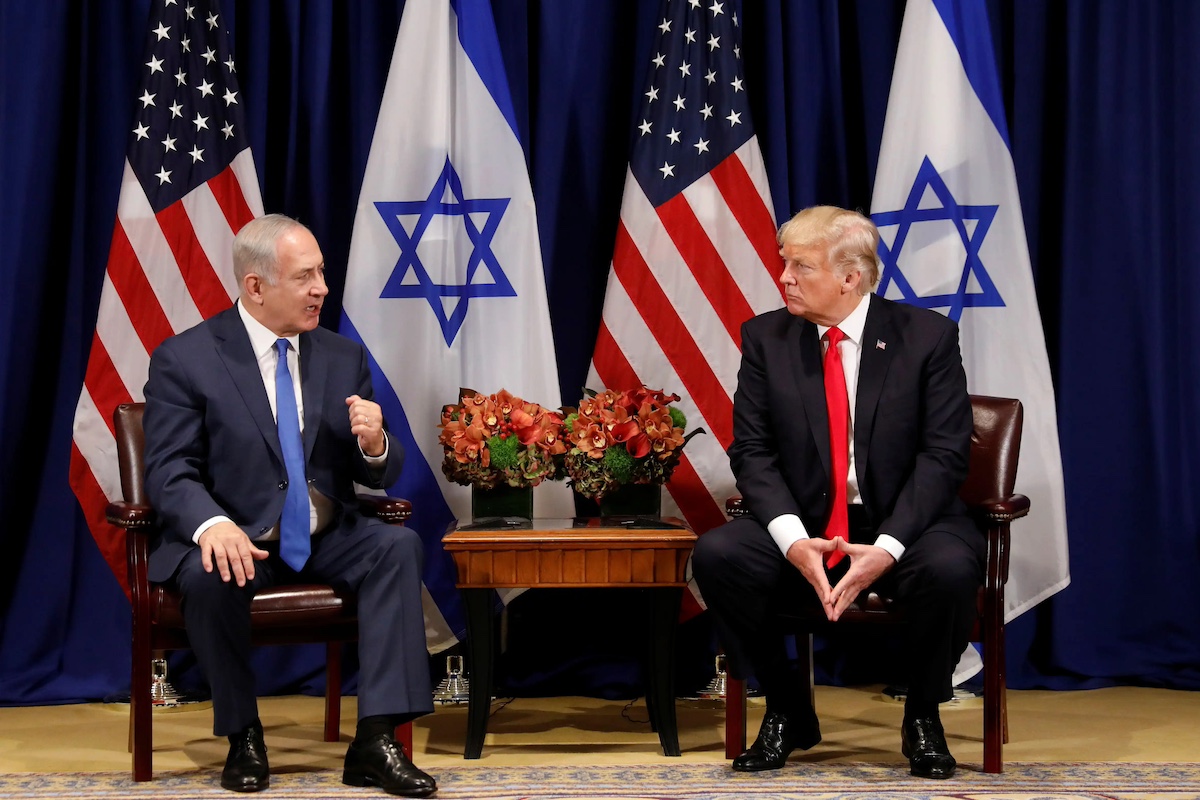
Beneath the surface, personal dynamics between Trump and Netanyahu remain strained, with reported frustration over Netanyahu’s congratulation of Biden after the 2020 election and skepticism about Palestinian negotiations. This suggests Israeli influence in Washington may be less assured than in previous administrations.
The strategy presents Israel with several imperatives: enhancing self-reliance, investing in regional partnerships, emphasizing technological and economic cooperation over aid models, and more effectively articulating how Israeli actions serve American interests. With 69% of Israeli weapons originating from the US, the nation faces limited options if American priorities diverge significantly.
Ultimately, the 2025 strategy maintains Israeli security as a core American interest while fundamentally redefining engagement terms. The transition demands Israeli adaptation to an era of more conditional, transactional support explicitly tied to demonstrable US benefits, marking the end of unconditional commitment—if it ever truly existed.