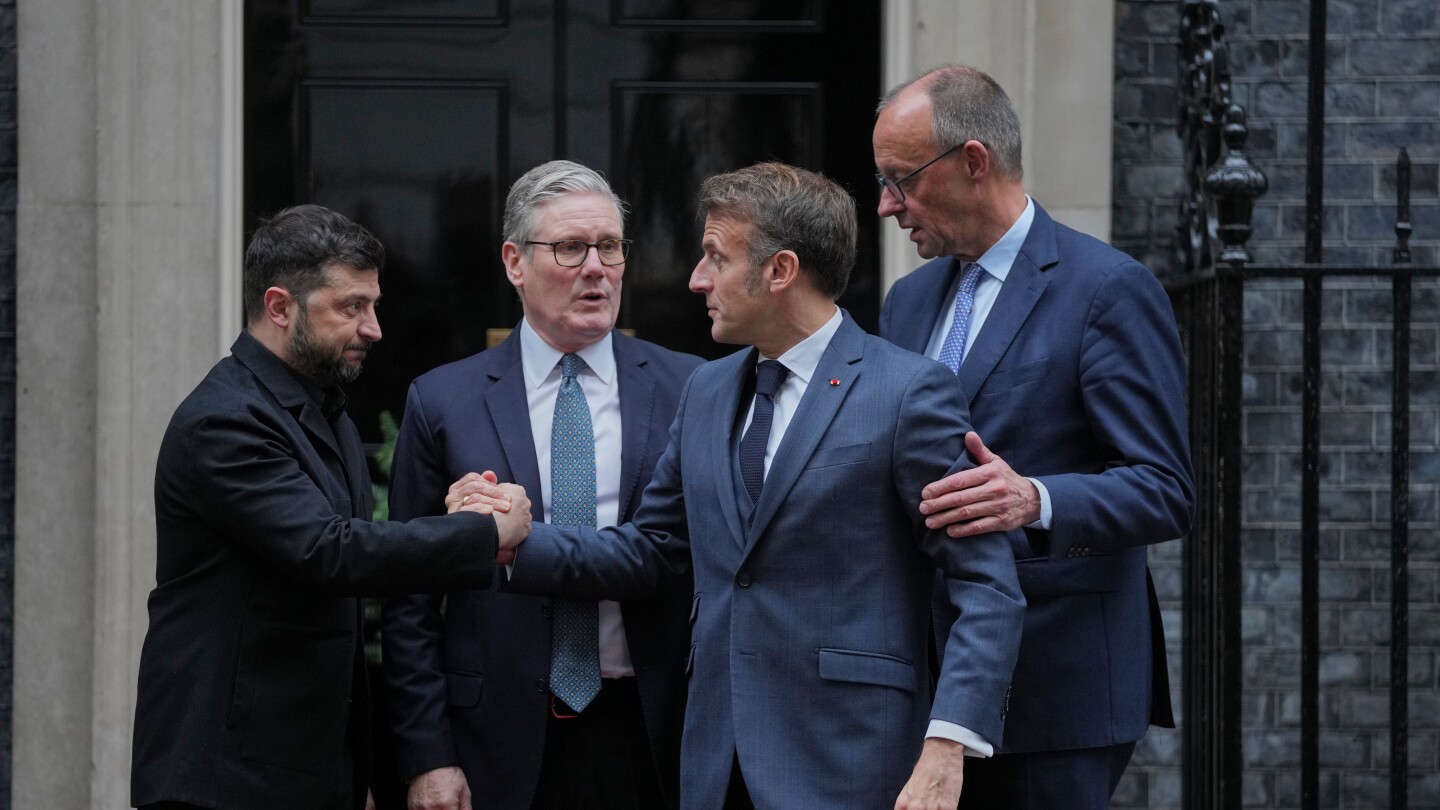
LONDON — In a significant demonstration of European solidarity, Ukrainian President Volodymyr Zelenskyy convened with British Prime Minister Keir Starmer, French President Emmanuel Macron, and German Chancellor Friedrich Merz at 10 Downing Street on Monday. The high-level gathering occurred during what participants described as a pivotal moment in the U.S.-backed initiative to resolve Russia’s ongoing war in Ukraine.
The two-hour diplomatic session focused on strengthening Ukraine’s negotiating position amid growing concerns about wavering American support under President Donald Trump’s administration. Following their discussions, the leaders issued a collective call for European allies to maintain pressure on Russian President Vladimir Putin, emphasizing the urgent need to intensify both military assistance to Ukraine and economic sanctions against Russia.
Prime Minister Starmer’s office released a statement characterizing the meeting as essential, noting that “the leaders all agreed that now is a critical moment and that we must continue to ramp up support to Ukraine and economic pressure on Putin to bring an end to this barbaric war.” The discussions specifically addressed how European nations could enhance the U.S. peace proposal through additional security guarantees and financial commitments.
President Zelenskyy revealed that the current American peace framework has been refined from 28 to 20 points after the removal of what he termed “obvious anti-Ukrainian elements.” The Ukrainian leader highlighted that central to the security negotiations remains the question of international response mechanisms should Russia launch future aggression after any ceasefire agreement.
The London meeting occurred against a backdrop of diplomatic tension, with President Trump expressing frustration publicly about Zelenskyy’s engagement with the peace process. European leaders have grown increasingly concerned about the new U.S. National Security Strategy, which suggests warming relations with Russia and criticizes NATO expansion—a document that Kremlin officials have openly praised.
Despite these challenges, the European leaders affirmed their commitment to a “just and lasting peace” that includes robust security guarantees for Ukraine. National security advisers from the four countries were instructed to continue technical discussions in the coming days, with Chancellor Merz noting that “the coming days could be a decisive time for all of us.”
As diplomatic efforts intensified, Russia continued its aerial assaults on Ukrainian cities, with overnight drone attacks reported in Okhtyrka and Chernihiv that resulted in civilian injuries and significant infrastructure damage, underscoring the ongoing urgency of the diplomatic negotiations.