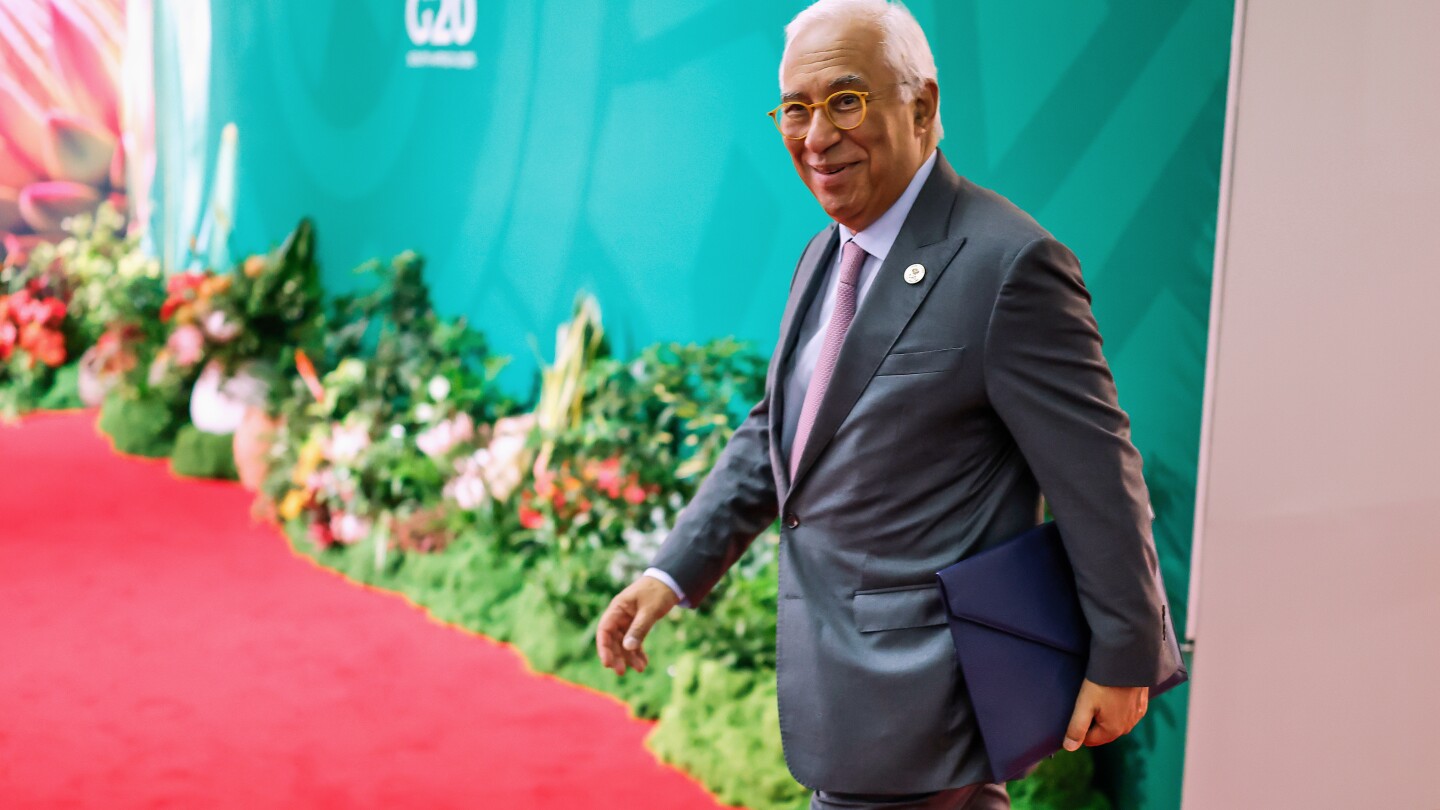
BRUSSELS — European Council President António Costa issued a stern admonition to the United States on Monday, cautioning against external interference in European political affairs while asserting that only European citizens possess the right to determine their governing parties. The remarks came in direct response to the Trump administration’s newly published national security strategy, which characterizes European allies as weakened entities while extending implicit endorsement to far-right political movements across the continent.
Speaking at the Jacques Delors Institute in Paris, Costa acknowledged the strategy’s classification of European nations as allies but emphasized that “allies don’t threaten to interfere in the domestic political choices of their partners.” The former Portuguese prime minister articulated Europe’s firm position: “The United States cannot replace European citizens in choosing what the good or the bad parties are.”
The security document, which marks the Trump administration’s first formal policy framework since returning to office in January, has drawn praise from Russian officials while provoking consternation among European leaders. The strategy notably breaks from the approach of the previous Biden administration, particularly regarding Russia relations and European policy assessments.
European Policy Centre Chief Executive Fabian Zuleeg characterized the document as potentially emboldening nationalist parties within Europe, warning that “Trump’s America is not an ally, but an adversary to Europe’s freedoms and fundamental values.” The strategy further criticizes European free speech and migration policies, suggesting allies face “civilizational erasure” that undermines their reliability as American partners.
Costa countered these assertions by invoking historical lessons: “Our history has taught us that you can’t have freedom of speech without freedom of information.” He additionally cautioned against sacrificing informational freedom “for the aims of the tech oligarchs in the United States.”
German government spokesperson Sebastian Hille, speaking in Berlin, reaffirmed the historical, economic and cultural bonds between Europe and the U.S. while rejecting the strategy’s critical tones. Hille maintained that political freedoms, including expression rights, constitute fundamental EU values, and dismissed accusations regarding their suppression as “more ideology than strategy.”
The document’s approach to Russia has generated particular concern among European officials. While the strategy identifies ending the Ukraine conflict as a vital U.S. interest to “reestablish strategic stability with Russia,” Costa noted that Moscow’s approval signals problematic alignment: “The objective in this strategy is not a fair and durable peace. It’s only about the end of hostilities, and the stability of relations with Russia.”
European intelligence assessments suggest Russia could be positioned to attack elsewhere in Europe within three to five years if it prevails in Ukraine. Hille emphasized Germany’s divergence from the U.S. assessment, noting: “The strategy doesn’t classify Russia as a threat; we don’t share this assessment. We are sticking with NATO’s joint analysis.” Despite these differences, Hille affirmed that trans-Atlantic cooperation remains “of central significance for our common security.”