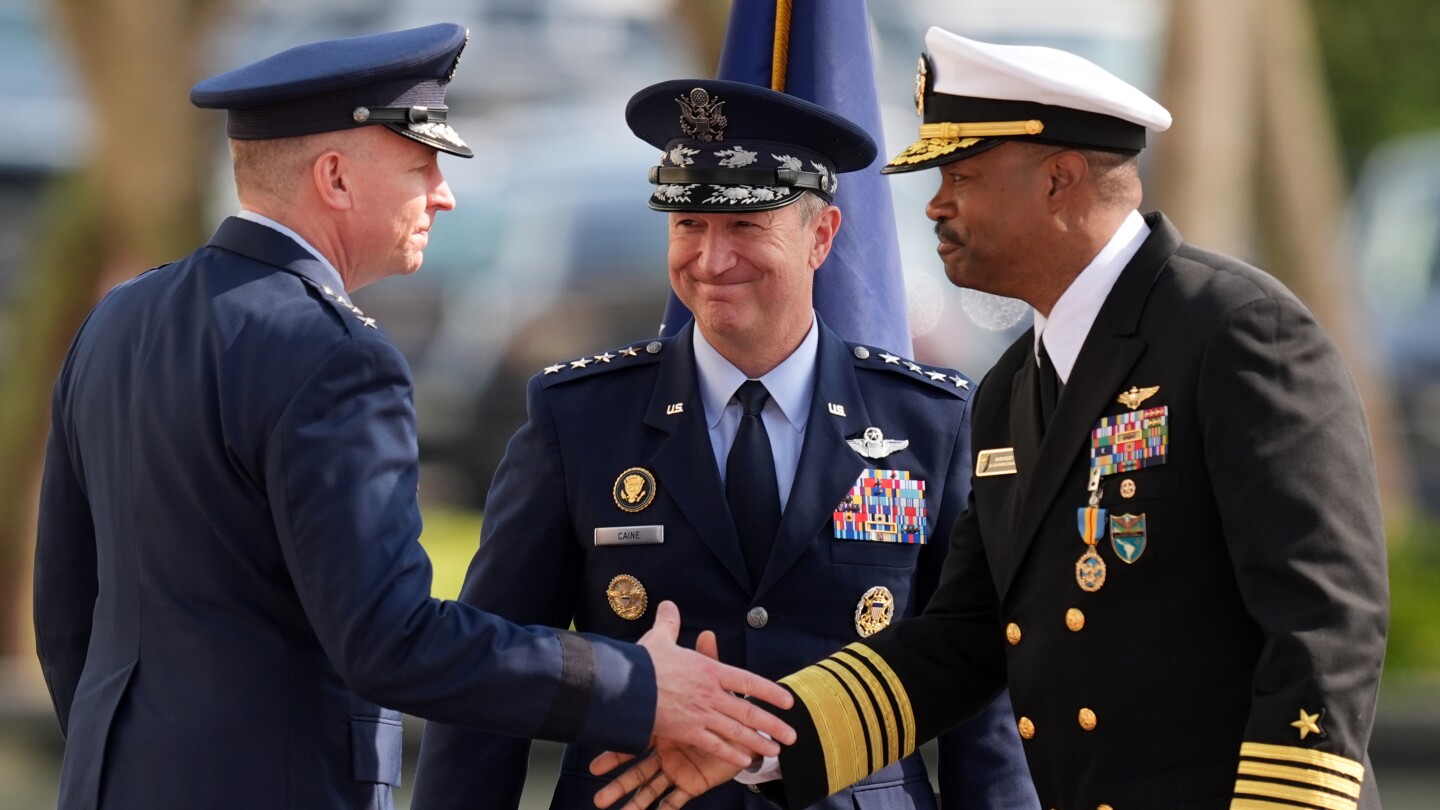
A senior U.S. Navy admiral overseeing military operations across Latin America has unexpectedly relinquished command amid escalating congressional scrutiny of the Trump administration’s controversial maritime strikes targeting alleged drug trafficking vessels. Admiral Alvin Holsey formally transferred leadership responsibilities to his deputy, Air Force Lieutenant General Evan Pettus, during a subdued ceremony at U.S. Southern Command headquarters near Miami on Friday.
Holsey’s retirement comes merely one year into a posting that typically spans three to four years, generating questions about the timing as Congress intensifies its examination of deadly naval operations that have resulted in at least 87 fatalities. The Pentagon announced Holsey’s departure in October, shortly after the administration initiated its aggressive campaign against suspected drug smugglers in Caribbean and eastern Pacific waters.
In his farewell address, Holsey conspicuously avoided referencing the military operations or his premature retirement rationale. Instead, he emphasized the importance of maintaining regional partnerships through steadfast adherence to democratic principles and rule of law. “To be a trusted partner, we must be credible, present and engaged,” Holsey stated during the ceremony.
The change-of-command event occurred without Defense Secretary Pete Hegseth’s presence, as President Trump has yet to nominate a permanent replacement. General Dan Caine, Chairman of the Joint Chiefs of Staff, praised Holsey’s 37-year service record, characterizing him as a “stoic leader” and “quiet professional” who consistently prioritized collective success over individual recognition.
Holsey’s departure coincides with heightened congressional inquiries into the legality of maritime strikes, including one incident where survivors clinging to wreckage from an initial attack were subsequently killed. Secretary of State Marco Rubio and Defense Secretary Hegseth have delivered classified briefings to lawmakers this week, while Holsey himself participated in a classified video conference with key congressional oversight figures.
Senator Jack Reed, the top Democrat on the Senate Armed Services Committee, noted that while Holsey responded to senators’ questions, “there remain many unanswered questions” regarding both the operations and his retirement decision, which the admiral characterized solely as “personal.”
The administration’s tactical approach has drawn criticism from warfare legal experts, human rights organizations, and even some congressional allies. The operations represent a significant departure from decades-long precedent where suspects were typically arrested at sea and brought to the United States for criminal prosecution.
Current operations involve 22 confirmed strikes against alleged drug-smuggling vessels, supported by an extensive flotilla of warships, attack helicopters, thousands of personnel, and even the nation’s most advanced aircraft carrier. The administration justifies its tactics by designating several Latin American drug cartels as foreign terrorist organizations, employing legal arguments developed post-9/11 to declare the U.S. in “armed conflict” with these criminal networks.
This campaign has simultaneously increased pressure on Venezuelan President Nicolás Maduro, who faces narcoterrorism charges in the U.S. and alleges the military operations aim to force his ouster. The escalation intensified recently with U.S. forces seizing a sanctioned oil tanker accused of smuggling illicit crude—a critical revenue source for Maduro’s government.
Holsey’s unexpected retirement continues a pattern of sudden departures among military leadership since Hegseth assumed control of the Pentagon. The Georgia native, whose family has deep military roots including Vietnam service, transferred command to Pettus—an experienced combat pilot—while the administration’s nominee awaits Senate confirmation.