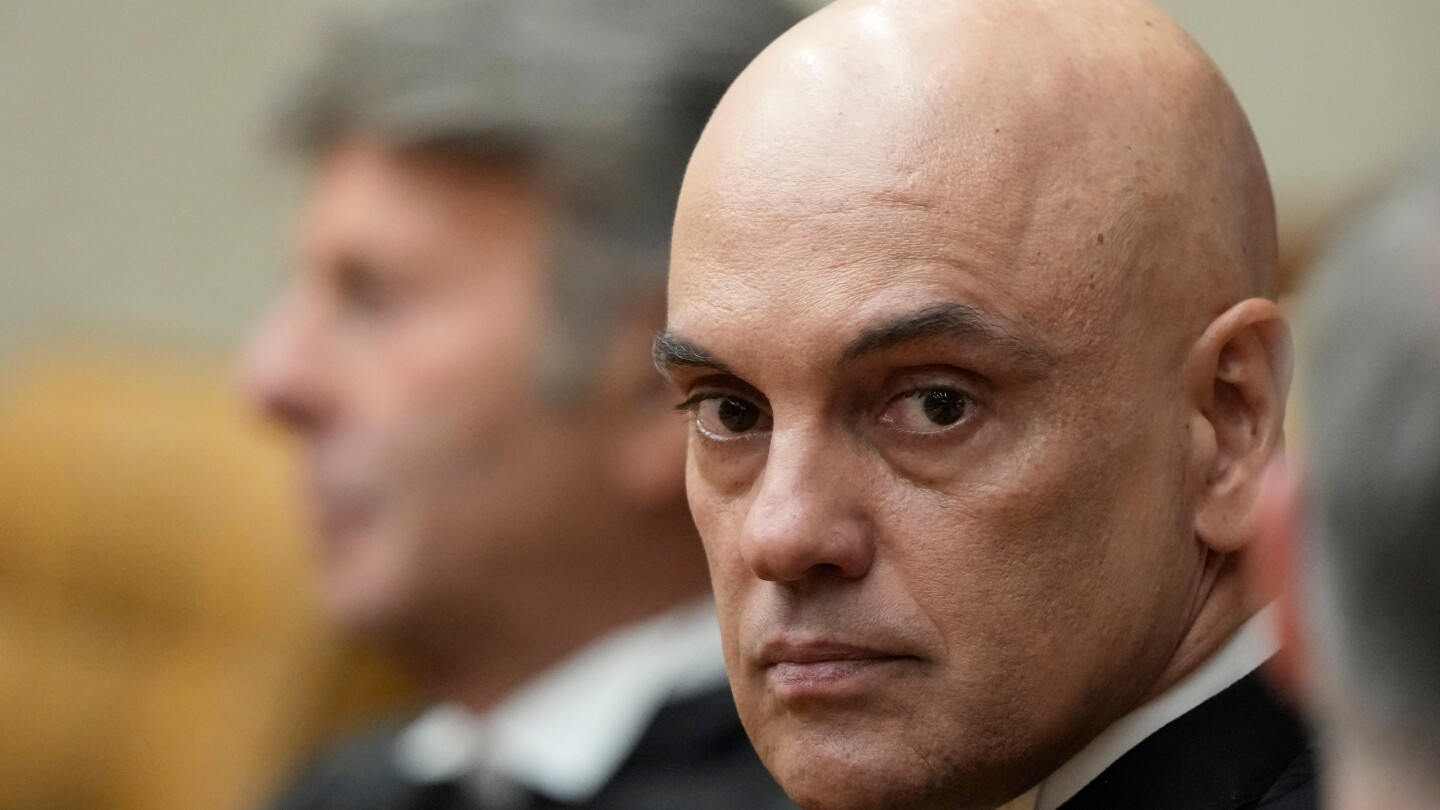
In a significant diplomatic shift, the United States has formally removed Brazilian Supreme Court Justice Alexandre de Moraes from its sanctions list, marking a notable de-escalation in previously strained relations between the two nations. The decision, confirmed through official documentation from the Treasury Office of Foreign Assets Control on Friday, also extends to de Moraes’ wife and the Lex Institute which she leads.
This development follows a weekend telephone discussion between U.S. President Donald Trump and Brazilian President Luiz Inácio Lula da Silva, which Brazilian authorities have celebrated as a victory for judicial sovereignty. The Trump administration had initially imposed sanctions against de Moraes in July, alleging his involvement in authorizing arbitrary pretrial detentions and suppressing freedom of expression.
According to a senior Trump administration official speaking under condition of anonymity, the sanctions withdrawal recognizes Brazil’s recent legislative progress—specifically referencing the passage of an amnesty bill by Brazil’s lower house as indicative of improving judicial conditions. The move represents a substantial warming in relations between the two governments, which had grown increasingly frosty during the tenure of Lula’s predecessor, Jair Bolsonaro, whom Trump previously regarded as a close ally.
Justice de Moraes characterized the decision as “a victory of Brazil’s judiciary” during a public address in São Paulo, emphasizing that “Brazil’s judiciary did not bow to threats, coercion and it will never do so. It carried on with unbias, seriousness and courage.”
The political context surrounding this development remains complex. Bolsonaro, currently serving a 27-year prison sentence for allegedly masterminding a plot to retain power after his 2022 electoral defeat to Lula, continues to wield political influence ahead of next year’s elections. Brazil’s current government has framed the sanctions removal as a “big defeat” for Bolsonaro’s family, with Institutional Relations Minister Gleisi Hoffmann characterizing the outcome as the result of “dignifying and sovereign dialogue” between presidents.
The resolution also addresses broader economic concerns. Last month, Trump signed an order eliminating additional import tariffs on certain Brazilian agribusiness products, reversing previous measures that had imposed a 40% tariff atop an existing 10% duty. According to U.S. Census Bureau data, the United States maintained a $6.8 billion trade surplus with Brazil last year.
Political analyst Thomas Traumann, author of a recent work on Brazil’s political divisions, interprets these developments as evidence that “the U.S. government wants a normal relationship with Brazil’s, even though it is a leftist administration,” noting that discussions have shifted from political matters to security and trade priorities.
The diplomatic reconciliation process began during the United Nations General Assembly in September, followed by a private meeting in Malaysia in October and subsequent telephone conversations between the two leaders.