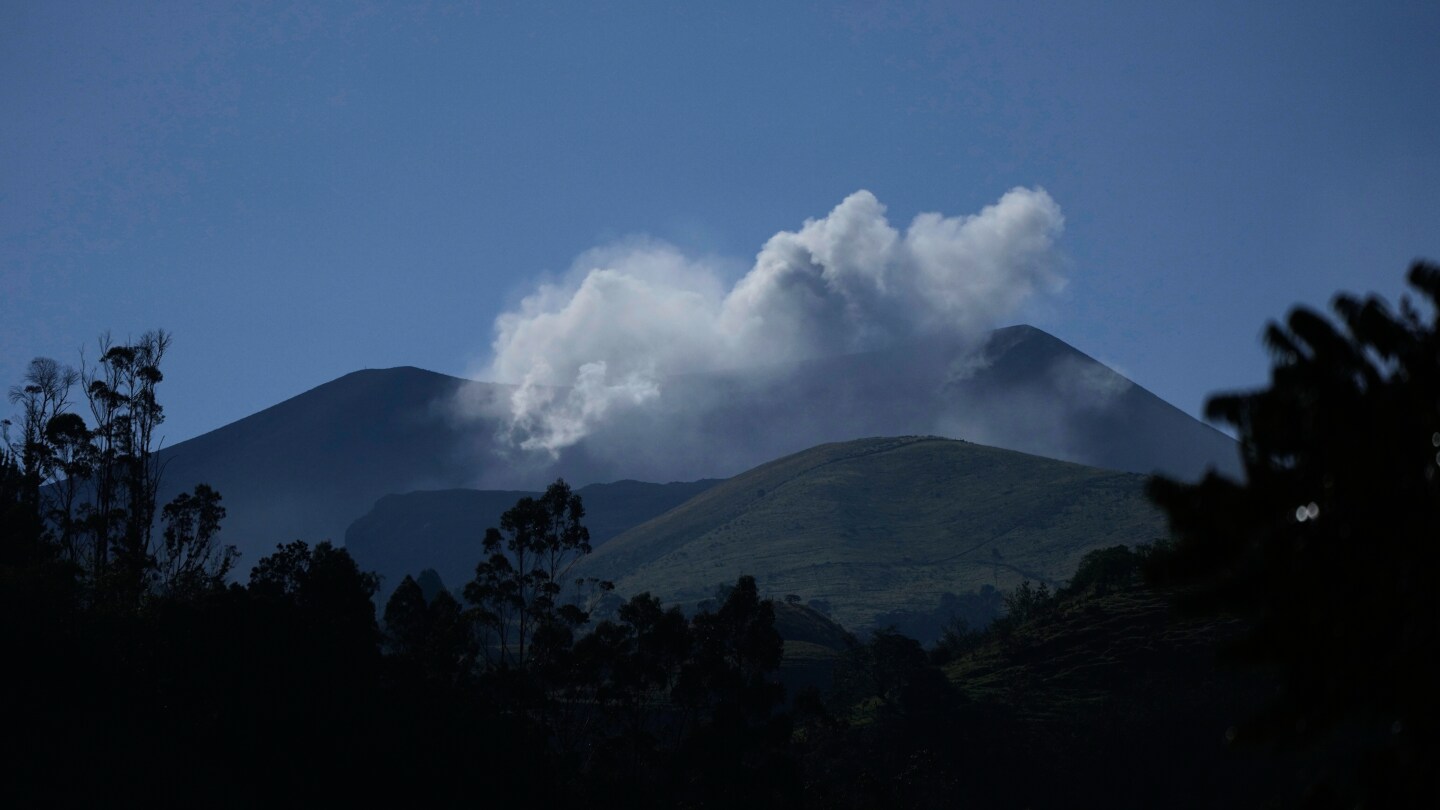
PUROCÉ, Colombia — Against the backdrop of an increasingly active Puracé volcano, local residents demonstrate a remarkable coexistence with the geological giant that defines their existence. Oliverio Quira, a 65-year-old indigenous farmer, continues his daily routine of tending cattle mere miles from the crater despite official warnings of potential eruption.
Colombian geological authorities elevated alert levels on November 29th following significant seismic activity and ash emissions reaching 900 meters (approximately 3,000 feet) into the atmosphere. The 4,640-meter (15,200-foot) stratovolcano, one of Colombia’s most active with at least 51 documented eruptions since 1400, last experienced major activity in 1977.
For the Coconuco Indigenous people who inhabit the Puracé Indigenous Reserve, the volcano represents far more than geological phenomena. “The volcano is our master; we have no reason to fear it,” explained Alfredo Manquillo, deputy governor of the reserve. “We respect it and perform rituals in its name.”
These spiritual practices include offerings of corn, sweet plants, and guarapo—a traditional alcoholic beverage—to appease the mountain they consider both sacred entity and territorial protector. Community elders interpret the current activity as the volcano’s message requesting greater environmental stewardship, referencing past sulfur extraction and current tourism pressures.
While emergency preparations advance, with authorities planning evacuation protocols for approximately 800 peripheral residents, many indigenous community members express reluctance to abandon their homes and livelihoods. Reinaldo Pizo, 75, who witnessed the 1977 eruption as a child, stated he would only evacuate if poisonous gases emerged, echoing sentiments shared by neighbors concerned about abandoning livestock and agricultural assets.
Local officials acknowledge infrastructure challenges for potential mass evacuations, with Mayor Humberto Molano Hoyos coordinating temporary shelter arrangements. Community leaders emphasize the need for comprehensive emergency support including water storage, food supplies, and livestock protection measures to ensure viable evacuation compliance.