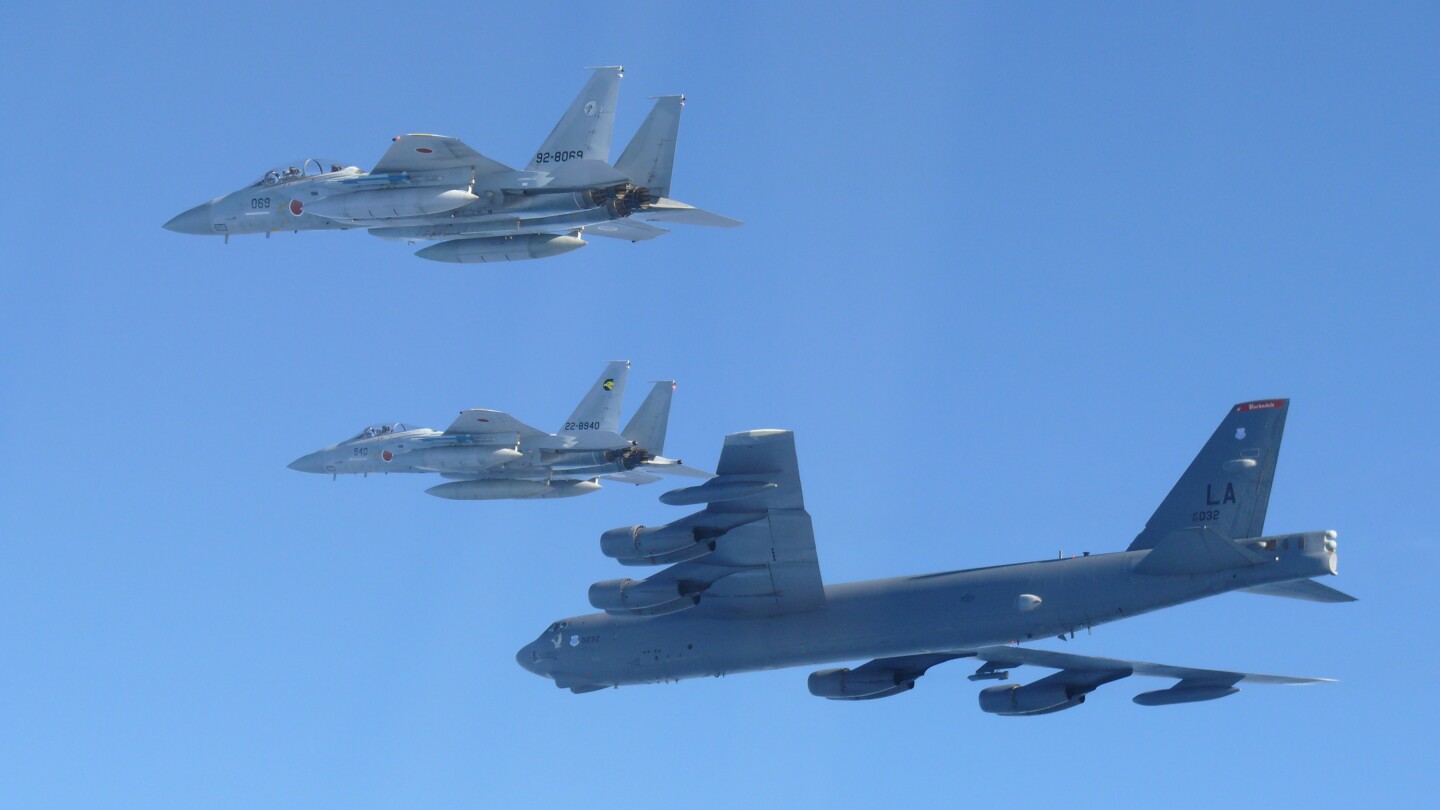
In a significant display of military cooperation, United States strategic bombers and Japanese fighter jets conducted joint aerial exercises near Japan’s western airspace on Wednesday. The drills involved two U.S. B-52 strategic bombers alongside three Japanese F-35 stealth fighters and three F-15 jets, operating above waters between Japan and South Korea.
The exercises occurred amidst escalating regional tensions, coming just one day after Chinese and Russian strategic bombers conducted coordinated flights around western Japan. While no airspace violations occurred during these flights, the incident prompted Tokyo to scramble fighter jets in response.
Japanese defense officials characterized the joint drills as demonstrating the “strong resolve” between allied forces to “prevent unilateral attempts to change the status quo by force.” The Joint Staff statement emphasized that Japan’s security environment is “becoming even severer,” though they denied the exercises were a direct response to any specific incident.
Tensions further intensified over the weekend when Japanese authorities reported that Chinese military aircraft had locked radar on Japanese jets—an action considered potential preparation for weapons deployment. Tokyo has formally protested to Beijing, demanding explanations and preventive measures, while China denied the allegations and instead accused Japanese aircraft of interfering with Chinese exercises.
The situation prompted a high-level telephone discussion between Japanese Defense Minister Shinjiro Koizumi and U.S. counterpart Pete Hegseth early Friday. Both ministers expressed “serious concern” over actions increasing regional tensions, specifically noting that “China’s actions are not conducive to regional peace and stability.”
Koizumi reaffirmed Japan’s commitment to maintaining robust surveillance and monitoring activities in surrounding airspace and waters. Washington concurrently emphasized its “unwavering” alliance with Japan amid the deteriorating security situation in the Indo-Pacific region.
The geopolitical friction follows recent remarks by Japanese Prime Minister Sanae Takaichi suggesting possible military involvement if China were to take action against Taiwan—a self-governing island that Beijing claims as its territory.