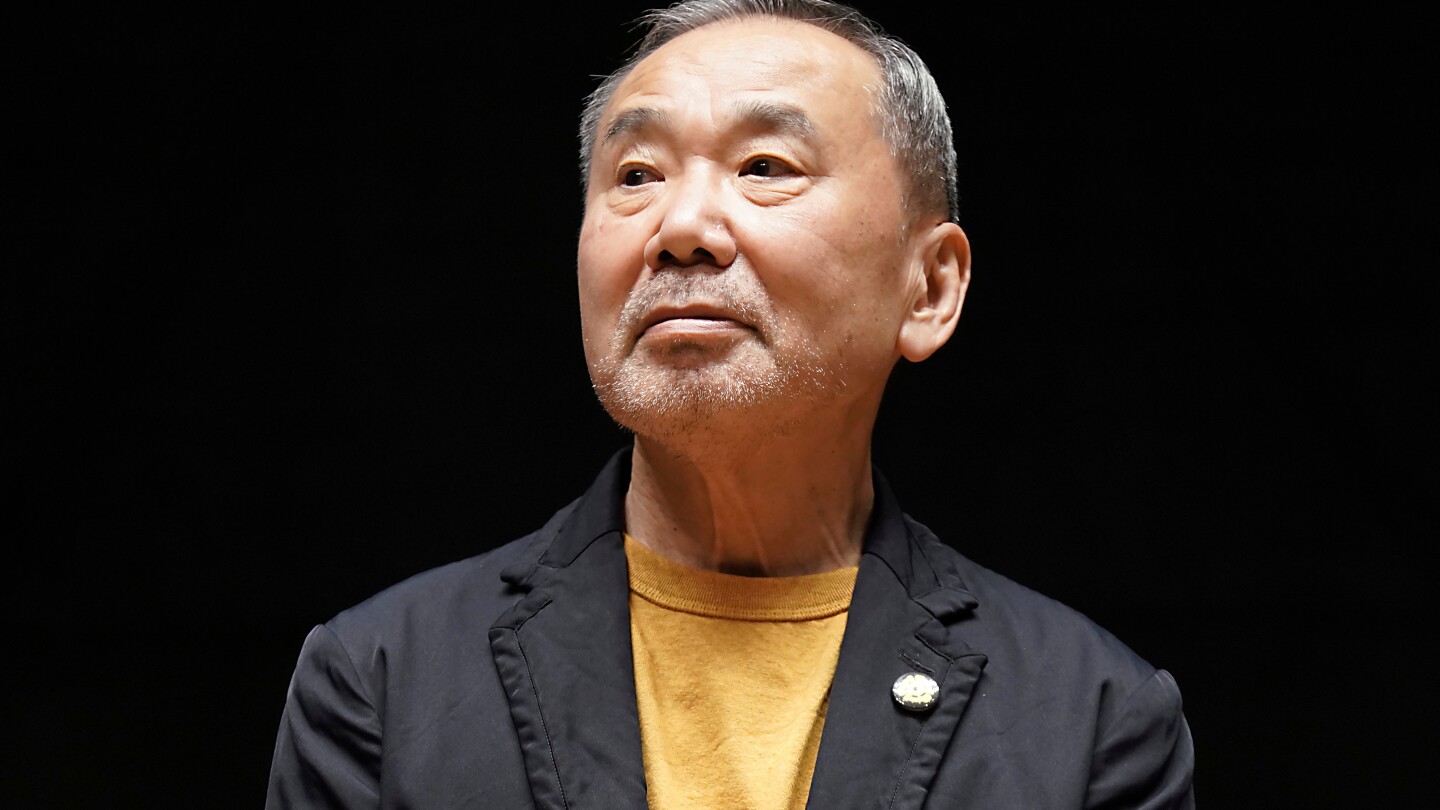
NEW YORK — The literary world converged in Manhattan last week to celebrate Haruki Murakami, the renowned 76-year-old Japanese author, through a series of events blending music, literature, and cross-cultural recognition. The acclaimed novelist, a perennial contender for the Nobel Prize in Literature, received dual honors highlighting his profound impact on global fiction and US-Japan relations.
The Center for Fiction bestowed upon Murakami its prestigious Lifetime of Excellence in Award during a gala at Cipriani 25 Broadway. This distinction places him alongside previous recipients including Nobel laureates Toni Morrison and Kazuo Ishiguro. The ceremony featured a poignant tribute by legendary musician Patti Smith, who performed her ballad “Wing” and shared her personal connection to Murakami’s work, holding aloft his debut novel Hear the Wind Sing and reciting its iconic opening line about the imperfection of both writing and despair.
Two days later, the Japan Society co-hosted “Murakami Mixtape” at The Town Hall—a sold-out, bilingual celebration that merged literary readings with jazz performances. The event honored Murakami with its annual award recognizing individuals like Yoko Ono and Caroline Kennedy who have strengthened US-Japan ties. Jazz pianist Jason Moran, translator Motoyuki Shibata, and scholar Roland Kelts curated an evening that explored both Murakami’s famous works and lesser-known pieces, including the short story “The 1963/1982 Girl from Ipanema” and early essays about New York written before the author had ever visited.
The program delved into Murakami’s deep connection with jazz, which began in 1963 when he first heard Art Blakey and the Jazz Messengers perform in Japan. This musical thread culminated in a special appearance by 88-year-old bassist Reggie Workman, the last surviving member of Blakey’s band, who joined Moran for an improvisational jam session.
Murakami himself reflected on his complex relationship with America, recalling his first visit in 1991 during a period of intense “Japan bashing” when protesters would encourage destroying Japanese cars. He described feeling culturally isolated during those early years, noting the absence of contemporary Japanese literature in American bookstores. However, he expressed optimism about Japan’s emerging cultural identity, celebrating how young Japanese creators across literature, film, and anime are now gaining international recognition—marking what he sees as Japan’s true cultural emergence despite economic challenges.