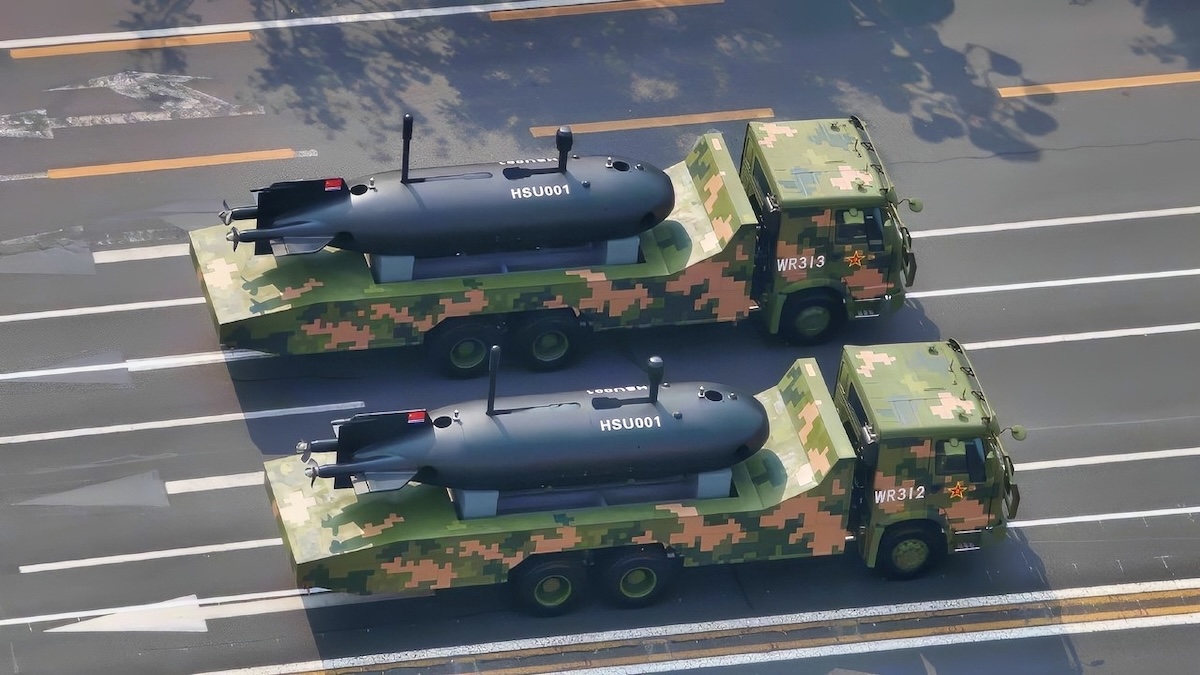
China’s testing of colossal uncrewed underwater vehicles (UUVs) represents a transformative development in maritime warfare with far-reaching implications for global security. Recent reports indicate Beijing is conducting secret trials of two distinct extra-extra-large UUV (XXLUUV) models in the South China Sea, with these systems comparable in size to conventional submarines.
According to naval analysts, these diesel-electric powered drones possess operational ranges exceeding 18,500 kilometers and can carry diverse payloads including torpedoes, sea mines, and smaller underwater vehicles. Their design incorporates advanced battery banks and diesel generators, enabling extended submerged transit capabilities that could potentially bypass existing anti-submarine defenses across the Pacific theater.
The strategic implications are profound. These autonomous systems could execute minelaying operations, port blockades, or critical infrastructure attacks at unprecedented ranges. Particularly vulnerable are undersea communications cables, with Taiwan’s 24 internet cables representing a primary target that could paralyze the island’s banking, emergency services, and critical infrastructure during potential conflict scenarios.
Beyond Taiwan, the Trans-Pacific Cable network connecting Japan, Guam, and Hawaii faces similar vulnerabilities. The modular nature of these XXLUUVs allows for specialized equipment, including cable-cutting tools capable of operating at 4,000-meter depths using diamond-coated grinding technology.
Additionally, these systems threaten US underwater sensor networks like the ‘Fish Hook’ array designed to detect Chinese submarine movements through the First Island Chain. Neutralizing these sensors would enable Chinese naval forces greater freedom of movement into the open Pacific.
The Indian Ocean represents another strategic theater where these drones could operate, potentially securing China’s sea lines of communication and supporting alternative trade routes bypassing the vulnerable Malacca Strait. This expansion could bring China into direct competition with India and other regional powers.
While theoretically capable of nuclear delivery missions similar to Russia’s Poseidon system, analysts question the strategic value of such applications given their slow transit times compared to ballistic missiles. China’s existing nuclear arsenal, including DF-41 ICBMs capable of reaching the US mainland in approximately 30 minutes, provides more credible deterrent options.
The scale of production and existence of competing designs suggest these are not mere research projects but part of a serious procurement program that could fundamentally alter the strategic balance across the Pacific and Indian Oceans.