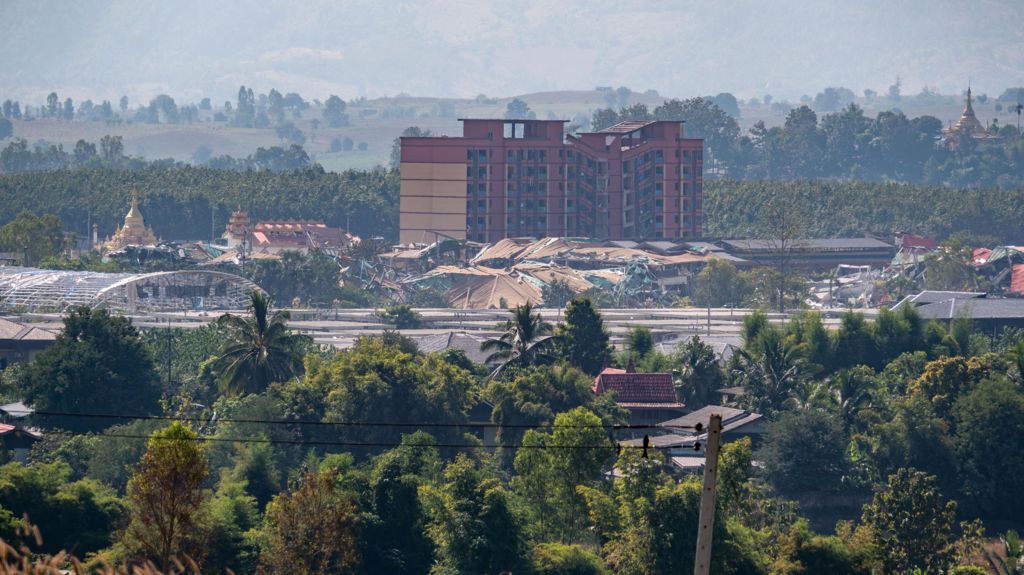
Thunderous explosions shattered the tranquility of the Moei River bordering Thailand and Myanmar as military forces deployed explosives to demolish structures within the infamous KK Park scam compound. The operation marks an unprecedented convergence of Myanmar’s protracted civil conflict and its multi-billion dollar cybercrime epidemic that has plagued Southeast Asia.
Myanmar’s junta, reinforced by Russian and Chinese military equipment including drones, has launched counter-offensives against insurgent groups ahead of controversial elections scheduled later this month. In Karen State, the military successfully pushed back the Karen National Union (KNU), which has resisted military rule for eight decades. The October assault on KK Park represented a dramatic shift in policy toward the scam operations that authorities had previously ignored.
Videos released by state media showed soldiers confiscating thousands of electronic devices and satellite equipment before systematically destroying buildings. Yet skepticism surrounds these actions, as the military has long benefited from alliances with local warlords who protect and profit from Chinese-led criminal syndicates operating these facilities.
The global impact of these scam centers is staggering. Billions of dollars have been stolen through sophisticated romance scams, fraudulent cryptocurrency schemes, and fake investment opportunities targeting vulnerable populations worldwide. The industry’s darkest aspects involve human trafficking, forced labor, and systematic abuse of workers lured into the compounds.
International pressure, particularly from China whose citizens comprise both perpetrators and victims, has intensified. While the KK Park operation appears responsive to these concerns, evidence suggests the demolition was largely performative. Many buildings remain functional, and Starlink satellite dishes visible on rooftops indicate ongoing operations. Most scam bosses have simply relocated to more remote border areas, with new compounds already emerging near contested border crossings.
The KNU’s unexpected capture of two additional scam compounds in Minletpan provided rare insight into the industry’s workings. Unlike the military’s evidence destruction, the KNU documented operations and invited international scrutiny before junta shelling forced abandonment of the sites.
This borderland drama underscores the junta’s desperate attempt to gain legitimacy through elections while continuing to profit from criminal enterprises that remain deeply embedded in Myanmar’s conflict economy.