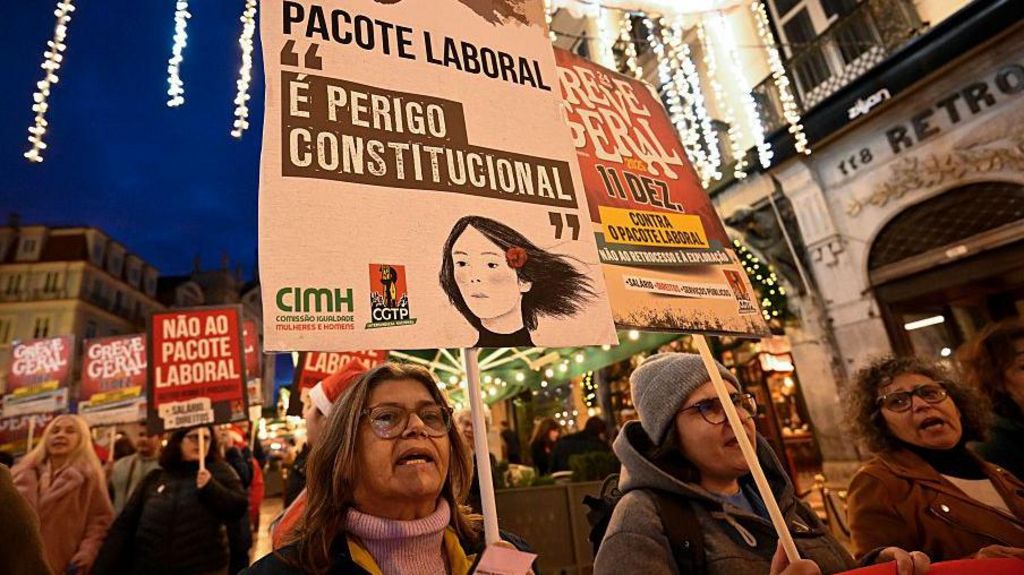
Portugal experienced widespread disruption across its transportation networks, healthcare facilities, educational institutions, and public services on Thursday as the nation’s two primary labor federations launched a coordinated general strike. This unprecedented joint action between the traditionally more militant CGTP and the typically moderate UGT represents the first such collaboration since the eurozone debt crisis of 2013.
The strike protests the center-right government’s proposed labor reforms that would significantly alter worker protections. Among the most contentious measures are provisions allowing employers to repeatedly renew temporary contracts indefinitely, eliminating bans on immediately rehiring dismissed workers through outsourcing arrangements, and removing requirements to reinstate unfairly terminated employees.
Prime Minister Luís Montenegro’s administration argues these changes are necessary to address labor market “rigidities” and ultimately boost both corporate profitability and worker wages. “I will not give up on having a country with the ambition to be at the forefront, to be at the vanguard of Europe,” Montenegro stated ahead of the strike.
However, the government appears to have underestimated the strength of opposition, with even a Social Democrat MP serving on the UGT executive voting in favor of the strike. Despite last-minute modifications to the proposals, the concessions failed to appease union leaders.
The reforms particularly impact Portuguese workers in their twenties, creating divided opinions among younger citizens. While some support the modernization efforts, others express concern about already precarious employment conditions.
The political landscape complicates the situation, with Montenegro’s minority government seeking support from both the free-market Liberal Initiative and the hard-right Chega party—a move that has drawn criticism given his pre-election pledge to avoid deals with Chega.
The controversy has spilled into January’s presidential campaign, with several candidates arguing the reforms violate Portugal’s 1976 constitution. Under Portugal’s semi-presidential system, the president could potentially delay or block the legislation through constitutional challenges.
Unlike typical public sector strikes, this action garnered support across industries, including near-unanimous backing from nearly 1,000 employees at Volkswagen’s Autoeuropa plant, Portugal’s largest factory.