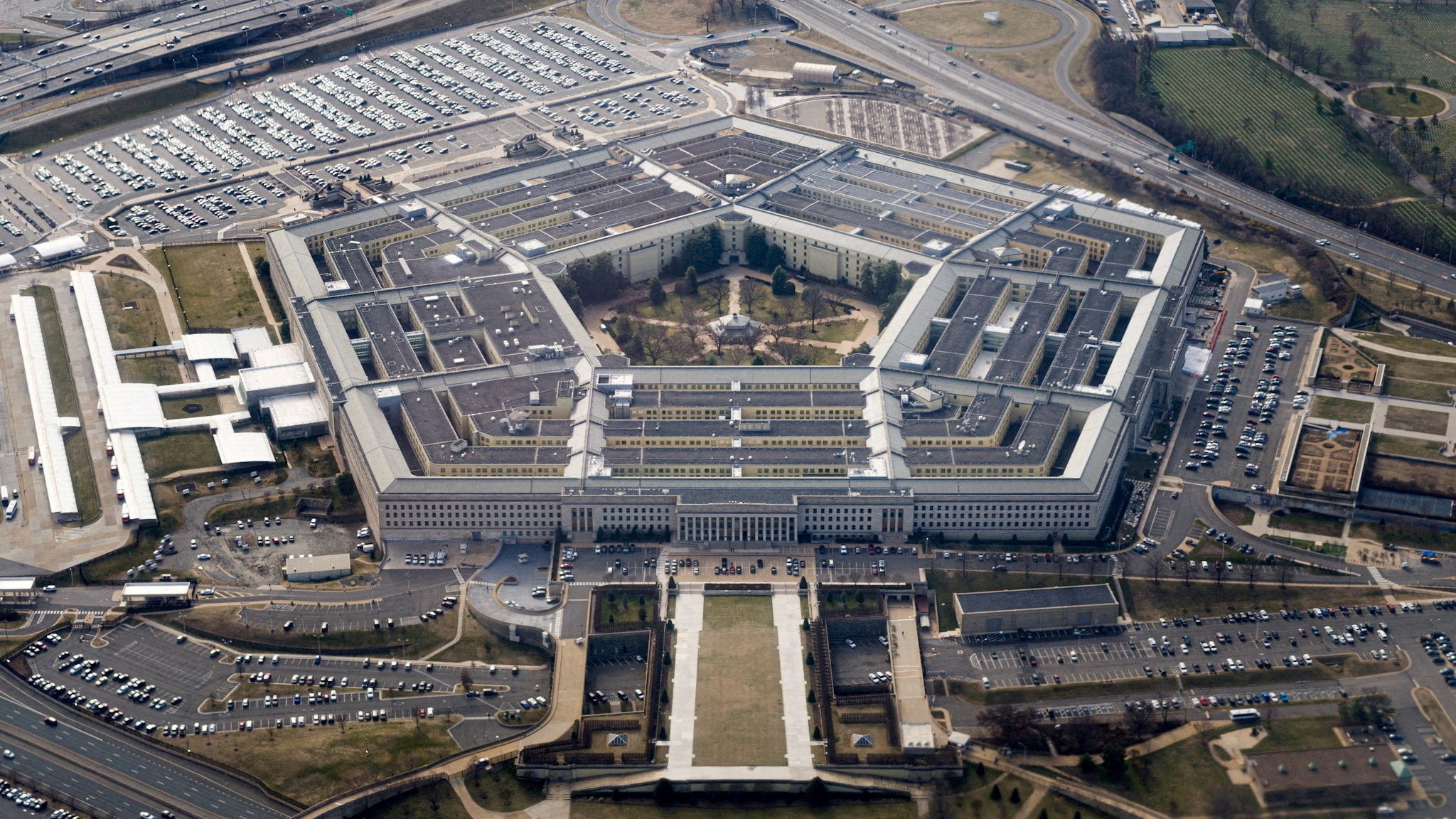
The United States Congress is preparing for a decisive Wednesday vote on the National Defense Authorization Act (NDAA), the comprehensive annual legislation that sets the Pentagon’s budget and military policy for the upcoming fiscal year. This year’s bill, spanning over 3,000 pages, authorizes a historic discretionary spending level of $900.6 billion, marking a significant increase from the previous year’s $883.7 billion allocation. The funding encompasses a vast spectrum of defense priorities, including military operations, troop compensation, recruitment initiatives, technological innovation, and the modernization of the nation’s nuclear arsenal.
A substantial portion of the NDAA is dedicated to security cooperation and policy in the Middle East and North Africa (MENA) region. The House Armed Services Committee has explicitly described the budget as providing “unprecedented levels of support for the security of Israel.” While the precise total for all Israel-related projects is not fully itemized, the bill mandates continued substantial funding, including $200 million for the Iron Dome, David’s Sling, and Arrow missile defense systems. An additional $80 million is allocated for the US-Israel Anti-Tunnel Cooperation Program, and $70 million is designated for countering drone attacks and other aerial threats. Furthermore, a new $35 million emerging-technology cooperative program will be established between the US, Israel, and other G7 allies to advance development in artificial intelligence, quantum computing, cybersecurity, robotics, and automation.
The legislation also aims to bolster Israel’s defense industrial base, establishing a working group to deepen technological integration and consider including Israel in the exclusive US National Technology and Industrial Base (NTIB), a status currently held only by Canada, the UK, and Australia. In a significant policy directive, the bill prohibits the Department of Defense from participating in any international event where Israel is banned due to the Boycott, Divestment, and Sanctions (BDS) movement.
Beyond Israel, the NDAA frames Iran as the “key driver of regional insecurity” and mandates intensified Pentagon monitoring and reporting to Congress on a range of threats. This includes details on Iran’s conventional weapons purchases from Russia, the status of its proxy forces like the Houthis and Hezbollah, its drone supply chain, and advancements in its ballistic missile and nuclear programs. The US intelligence community is specifically ordered to notify Congress if Iran enriches uranium beyond 60 percent or decides to produce a nuclear weapon.
The bill extends US support for the Iraqi military through 2026 but attaches a critical condition: 75% of the funds will be withheld until the Pentagon certifies that the Iraqi government has taken credible, verifiable steps to disarm and demobilize Iran-aligned militia groups not integrated into the official security forces. An allocation of $212.5 million is specified for the Counter-ISIS Train and Equip Fund (CTEF) in Iraq, with continued funding assured for Peshmerga forces in the Kurdistan Region.
A landmark provision within the NDAA is the repeal of the 2019 Caesar Act sanctions on Syria, which had devastating humanitarian consequences for the civilian population. The bill also requires the Pentagon to report on the status of ISIS detention camps, US force posture in Syria, and the feasibility of reopening the US embassy in Damascus.
Conversely, the legislation has drawn criticism from refugee advocates for omitting funding for the Enduring Welcome Act, which was removed from the draft by House Republican leadership. Advocacy group #AfghanEvac condemned the move as an “abdication of responsibility” for Afghan allies awaiting relocation to the US.
Finally, the NDAA repeals the 1991 and 2002 Authorizations for Use of Military Force (AUMFs) related to the Gulf War and Iraq invasion, which had been used to justify prolonged military operations. However, the 2001 AUMF underpinning the global war on terror remains in effect. The bill also explicitly prohibits the closure of the Guantanamo Bay detention facility, where 15 men remain held indefinitely without charge.