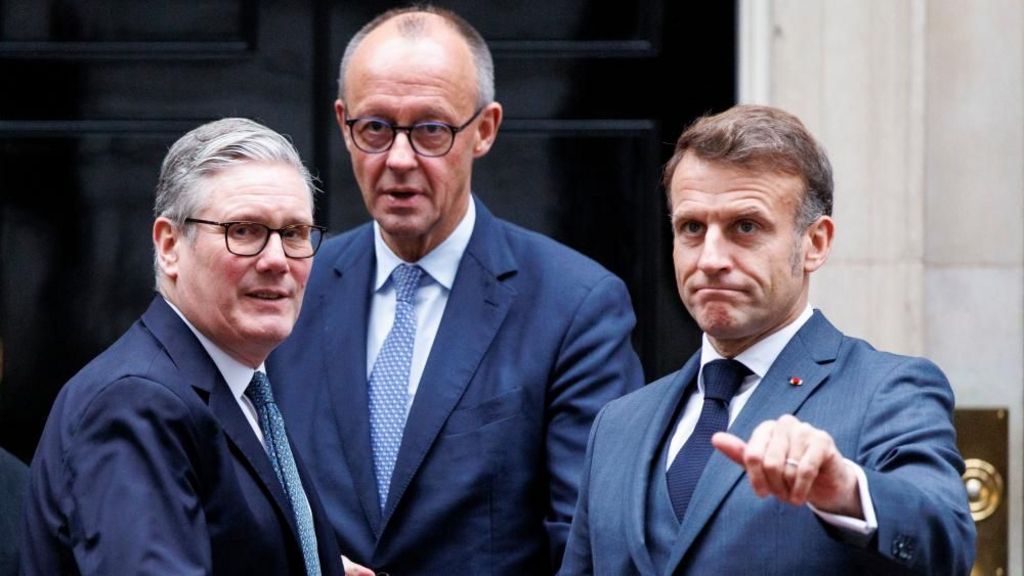
Top European leaders have committed to intensifying diplomatic efforts following a pivotal 45-minute phone conversation with U.S. President Donald Trump regarding a proposed peace plan for the Russia-Ukraine conflict. The discussion, initiated by American officials on Wednesday, brought together UK Prime Minister Keir Starmer, French President Emmanuel Macron, and German Chancellor Friedrich Merz, who collectively characterized this juncture as critical for Ukraine’s future and Euro-Atlantic security.
The dialogue occurred amidst heightened tensions following Trump’s recent comments criticizing European allies as ‘weak’ and suggesting potential reductions in U.S. support for Ukraine. In a Politico interview published Tuesday, the American president further claimed Ukraine was ‘using war’ to avoid elections—a statement that prompted President Volodymyr Zelensky to publicly declare his readiness for electoral processes.
According to sources familiar with the negotiations, progress is gradually being made toward a potential agreement, though significant complexities remain. The most contentious issue centers on territorial concessions, particularly whether Kyiv could reasonably be expected to surrender land currently occupied by Russian forces. This aligns with the longstanding British position that decisions about Ukraine must ultimately be made by Ukraine itself.
European governments are reportedly conveying this perspective to Washington while simultaneously acknowledging Trump’s commitment to ending the conflict. Behind the scenes, National Security Advisers from across Europe, including the UK’s Jonathan Powell, are maintaining regular contact with Ukrainian officials, with summaries of these discussions being shared with American counterparts.
The diplomatic push comes as Russian forces continue their gradual advance in southeastern Ukraine despite sustaining heavy casualties. Kremlin spokesman Dmitry Peskov noted that Trump’s statements regarding Ukraine’s need to concede territory and NATO membership restrictions ‘align with our understanding,’ highlighting the geopolitical divisions complicating negotiations.
Zelensky, currently engaged in a European diplomatic tour, faces mounting pressure from the U.S. administration to accept a peace deal that would involve territorial compromises. The Ukrainian leader has consistently rejected such concessions, instead advocating for an immediate ceasefire and robust security guarantees against future Russian aggression. His government is simultaneously working to prevent European allies from supporting an agreement that might leave Ukraine vulnerable to subsequent attacks.
Meanwhile, Putin has reiterated demands for complete Ukrainian withdrawal from the Donbas region, dismissing any potential compromises. As diplomatic efforts intensify, all parties acknowledge the delicate balance between achieving peace and preserving Ukrainian sovereignty in any potential settlement.