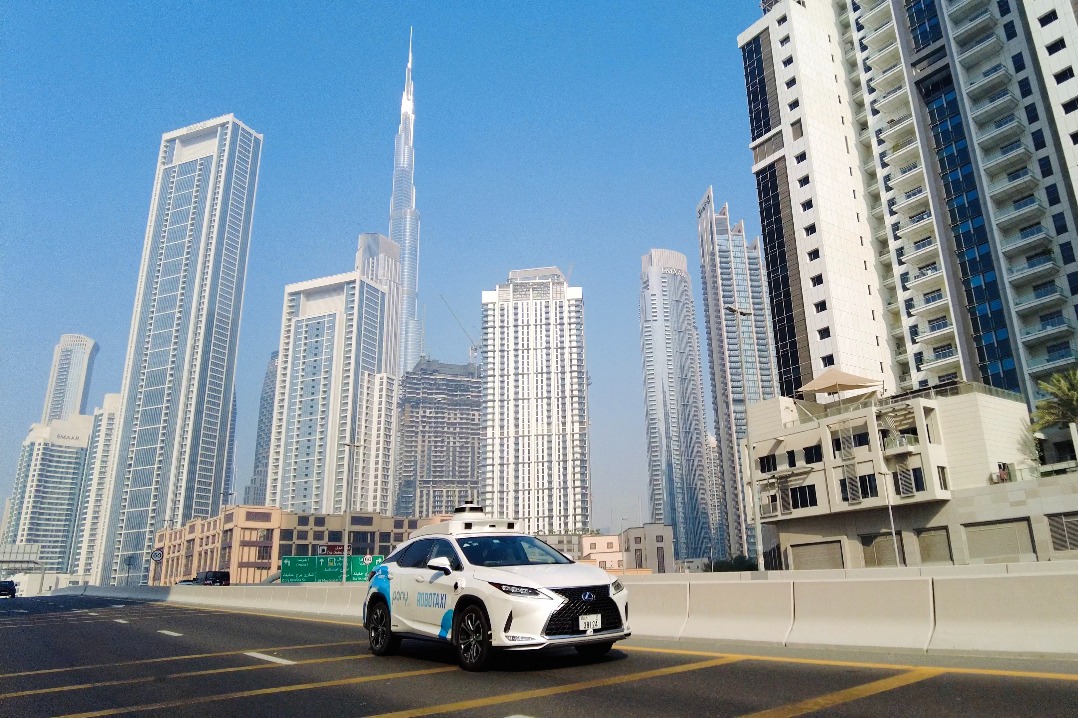
In a strategic move reshaping urban mobility landscapes, leading Chinese autonomous vehicle firms are accelerating their presence across Middle Eastern markets through government-sanctioned testing and commercial deployment initiatives. This expansion represents a significant technological export from China to a region actively pursuing smart city transformations.
Dubai’s Roads and Transport Authority (RTA) has granted inaugural autonomous driving permits to three Chinese mobility pioneers—Pony.ai, WeRide, and Baidu’s Apollo Go—enabling extensive urban testing of their self-driving fleets. This regulatory milestone aligns with Dubai’s ambitious target of converting 25% of all transportation to autonomous modes by 2030.
RTA Director General Mattar Al Tayer emphasized the transformative potential: “Autonomous taxis will enhance quality of life for residents and visitors, improve road safety, and provide greater mobility convenience while supporting our first and last mile strategy for public transport integration.”
The robotaxi operational model mirrors conventional ride-hailing services: users within designated zones access vehicles through mobile applications, confirm destinations, verify vehicle identification, and initiate journeys through app controls. In-vehicle experiences include real-time route visualization and entertainment options.
Regional enthusiasm for the technology is palpable. UAE engineer Ibrahem Al Mohammedy observed: “Chinese technology is game-changing, having surpassed European and American counterparts in making advanced technology accessible to broader populations earlier than many developed nations.”
Market projections underscore the sector’s potential. NVIDIA founder Jensen Huang identifies robotaxis as a paramount growth segment for the coming decade, while Goldman Sachs anticipates global market valuation reaching $40-45.7 billion by 2030, representing 60% compound annual growth.
Pony.ai CEO James Peng cited Dubai’s “robust infrastructure, supportive policies, and public technological acceptance” as catalysts for confidence in large-scale autonomous technology adoption. The company demonstrated its seventh-generation Level 4 autonomous platform in Dubai, utilizing AI-driven sensor fusion (lidar, radar, cameras) for diverse environmental navigation.
Cost reduction breakthroughs are enabling accelerated expansion. Pony.ai’s Ann Shi revealed nearly 70% reduction in autonomous kit material costs, partly driven by China’s electric vehicle industry scale. This efficiency facilitates plans deploying 1,000 robotaxis across the Middle East within three years.
The UAE’s comprehensive self-driving adoption strategy extends beyond Dubai. Abu Dhabi has established partnerships with WeRide for autonomous taxi testing on Yas and Saadiyat islands, targeting 25% smart driverless transportation by 2040. WeRide recently launched the Middle East’s first fully driverless commercial robotaxi service on Yas Island using its van-type GXR vehicle without onboard safety supervisors.
Ryan Zhan, WeRide’s Middle East and Africa regional manager, identified multiple driving factors: “The UAE faces high labor costs and driver shortages while pursuing smart urban upgrades across tourism, logistics, and public transport sectors. Autonomous addressing addresses practical needs while supporting strategic green transportation goals.”
Regional expansion continues across borders. Saudi Arabia’s Vision 2030 initiative mandates 15% autonomous public transport by 2030, with WeRide conducting tests in Riyadh and Al-Ula ahead of anticipated commercial services. The company has additionally introduced robobus deployments and the region’s first monetized autonomous sanitation project.
Pony.ai’s September partnership with Qatar’s Mowasalat “Karwa” transport service provider further demonstrates regional momentum. Qatar-based consultant Thaha Muhammed Abdul Kareem noted: “The Middle East possesses the infrastructure, capital, and ambition essential for rapid adoption, creating competitive positioning among technology providers.”
Integration with global platforms provides additional scaling pathways. All three Chinese firms have established partnerships with Uber, enabling their autonomous vehicles to be accessed through Uber’s platform boasting 171 million monthly active users across 500 cities worldwide.
China Institute of New Economy founding director Zhu Keli concluded: “Overseas demand, supportive regulatory environments, and open markets provide ideal testing grounds and development space for Chinese companies. Their global expansion will accelerate autonomous technology maturation, deepen global industrial chain integration, optimize resource allocation, and inject fresh momentum into worldwide self-driving development.”