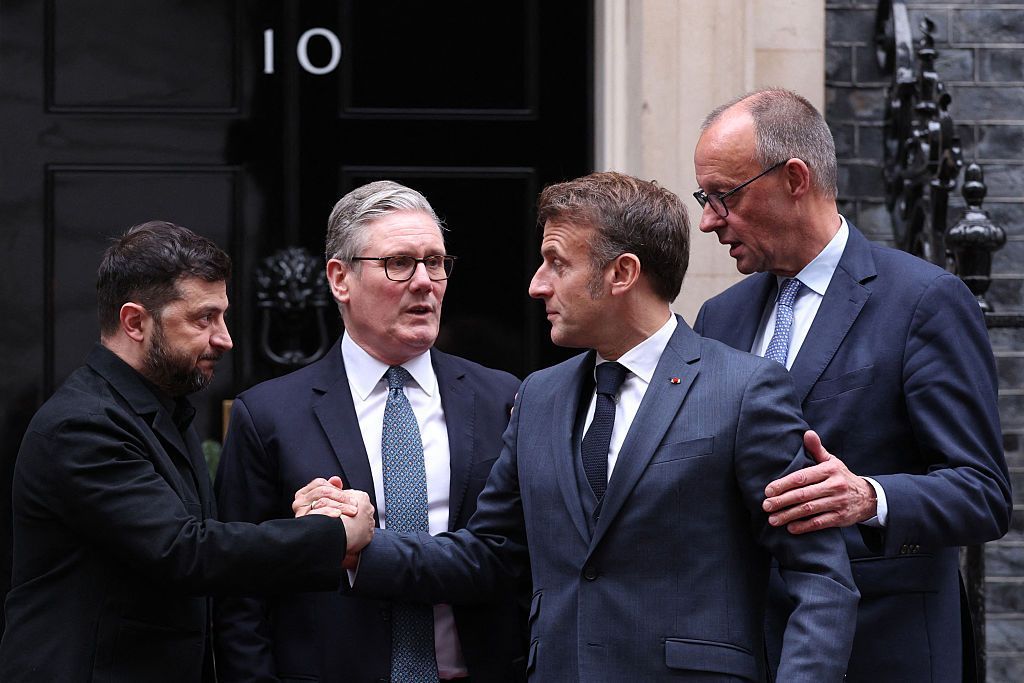
Ukrainian President Volodymyr Zelensky convened with key European leaders in London on Monday amid growing American pressure to accelerate peace negotiations with Russia. The high-stakes meetings with British Prime Minister Sir Keir Starmer, French President Emmanuel Macron, and German Chancellor Friedrich Merz occurred against a backdrop of significant geopolitical tensions regarding Ukraine’s future.
The discussions centered on two critical challenges: potential territorial concessions to Russia and obtaining ironclad security guarantees to prevent future Russian aggression. Prime Minister Starmer reiterated Britain’s position that Ukraine must determine its own future without external impositions, emphasizing the necessity of “hard-edged security guarantees” for any viable peace agreement.
This show of European solidarity contrasts sharply with recent developments from Washington. The newly published US National Security Strategy explicitly criticizes European allies for harboring “unrealistic expectations” about the conflict’s resolution. European leaders privately express concerns that the Trump administration seeks a rapid settlement to redirect attention elsewhere, potentially at the expense of lasting peace.
The security situation across Europe has intensified these apprehensions. Recent destabilizing incidents—including drone disruptions at civilian airports in Germany, Denmark, and Belgium, railway sabotage in Poland, and widespread cyber-attacks—have been attributed to Russian operations. These events have made the distant conflict feel increasingly immediate to European citizens and governments alike.
Despite fundamental differences in approach to Moscow, European leaders maintain diplomatic caution in their public statements. Chancellor Merz acknowledged skepticism regarding certain US proposal details while emphasizing the need for continued dialogue. Prime Minister Starmer notably credited President Trump with advancing peace negotiations “the furthest we’ve got in the four years” within just weeks of his administration.
The underlying reality remains Europe’s military dependence on the United States. Decades of defense underinvestment have left European nations incapable of supporting Ukraine independently or ensuring continental security without American intelligence, command capabilities, and air support. Even recent NATO commitments to increase defense spending cannot overcome immediate budgetary constraints faced by governments like France, which has allocated merely €120 million for Ukrainian aid in next year’s draft budget.
This delicate balancing act—supporting Ukrainian sovereignty while avoiding alienation of their most powerful ally—represents the central diplomatic challenge for European leadership as they navigate increasingly divergent transatlantic approaches to Russian relations.