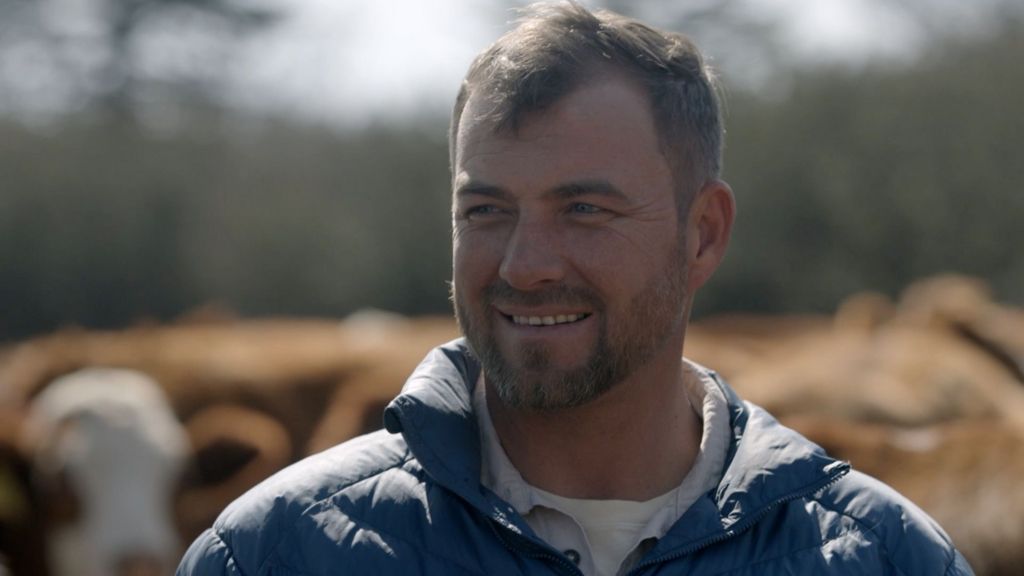
In South Africa’s rural Free State province, a white Afrikaner farmer identified only as Marthinus navigates daily life behind 4-meter electric steel gates topped with spikes, surrounded by barbed wire and surveillance cameras. This fortress-like environment reflects the pervasive fear driving his family’s decision to seek refugee status in the United States.
Marthinus’s personal history fuels his anxiety: both his grandfather and his wife’s grandfather were murdered in farm attacks. He lives just two hours from where 21-year-old farm manager Brendan Horner was found dead five years ago, tied to a pole with a rope around his neck. “I will give my whole life just so that my wife and my kids can be safe,” Marthinus states, expressing a sentiment shared by thousands of Afrikaners applying for US refugee status since President Donald Trump signed an executive order prioritizing their resettlement.
Contrary to claims of targeted racial persecution, the reality of farm violence appears more complex. The latest crime statistics reveal South Africa’s enduring security crisis, with an average of 63 daily murders in the first quarter of 2025. While showing improvement from 2024, this maintains the country’s position among the world’s highest homicide rates.
Black farmer Thabo Makopo, tending 237 acres on the outskirts of Ficksburg, shares similar security concerns. “It’s all of us. I could be attacked today – it could happen to any of us,” he acknowledges, emphasizing the universal vulnerability of farmers regardless of race. This perspective is reinforced by official data: between October 2024 and March 2025, Police Minister Senzo Mchunu reported 18 farm murders nationwide, with 16 black victims and only 2 white.
The term ‘white genocide’ promoted by some international figures faces strong rejection from within the farming community. White farmer Morgan Barrett, protecting his six-generation family farm with nightly patrols, challenges this narrative: “I don’t buy that narrative that in this area the attacks are against whites only. If they thought that the black guy had 20,000 rand sitting in his safe, they’d attack him just as quickly.”
South Africa’s historical context adds complexity to current tensions. Despite apartheid ending in 1994, racial inequalities persist, with white farmers still controlling 72% of private farmland despite constituting just 7.3% of the population. The government’s land reform programs have shown limited progress, while new expropriation powers remain constrained to rare circumstances according to legal experts.
Beyond farms, violence affects all communities. In Meqheleng township, Nthabiseng Nthathakana mourns her husband Thembani Ncgango, murdered during a robbery at their small store. With no arrests made, she now solely provides for their four children, representing the broader human cost of South Africa’s security challenges.
As Marthinus prepares for relocation following his successful refugee application, he maintains his belief in targeted persecution: “A lot of people believe that it’s a political thing to get rid of us as white farmers.” Yet the evidence suggests a more nuanced reality—a nation grappling with widespread criminal violence that transcends racial boundaries, compounded by historical inequalities and inadequate police response that has driven millions to rely on private security forces now outnumbering the national police and army combined.