The unraveling of the BlueChip investment scandal, which defrauded UAE residents of approximately Dh400 million ($109 million), demonstrates a paradigm shift in how global authorities now pursue digital financial crimes once considered untraceable. The case took a dramatic turn with the November 30 arrest of founder Ravindra Nath Soni in Dehradun, India, ending an 18-month international manhunt that began when his Dubai-based operation collapsed abruptly in March 2024.
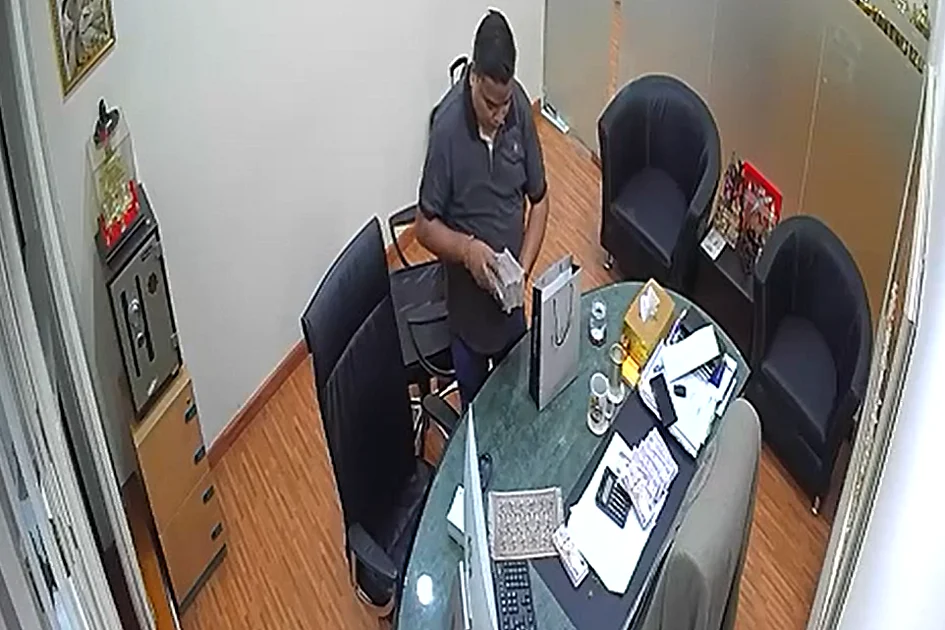
Newly emerged CCTV footage from the company’s final operational days depicts Soni systematically removing substantial cash volumes from office drawers, stacking currency bundles on tables, and concealing them within suitcases and carry bags. This visual evidence has become crucial for investigators quantifying capital extraction during the scheme’s terminal phase.
The investigation has revealed sophisticated financial maneuvering, including a previously documented $41.35 million transfer to an unidentified cryptocurrency wallet immediately preceding the company’s shutdown. According to Rayad Kamal Ayub, Managing Director of Rayad Group Technology, this case exemplifies how blockchain intelligence tools have revolutionized financial crime investigations. “Modern forensic capabilities can map relationships across thousands of wallets, flag suspicious movements in real-time, and identify connections to darknet operations and sanctioned entities,” Ayub explained.
Indian authorities report the scam’s financial scope continues expanding beyond initial estimates. Forensic accounting has identified over ten domestic bank accounts operated by Soni across multiple cities, with transactions suggesting coordinated movement through both hawala channels and cryptocurrency conversions. Kanpur Police Commissioner Raghubir Lal confirmed the operation now exhibits clear characteristics of cross-border financial crime, with twelve international associates—including individuals in Dubai—implicated in the money movement network.
The case reflects broader advancements in global regulatory cooperation, with platforms like Chainalysis, Elliptic, and TRM Labs enabling investigators to trace funds across blockchain networks with unprecedented speed. “What previously required months now takes hours,” Ayub noted. “Blockchain anonymity is largely mythological—every transaction creates permanent forensic evidence that regulators can reconstruct.”
For affected investors, many of whom have traveled to India to join the expanding criminal case, the sophisticated investigation offers renewed hope for potential asset recovery after months of financial uncertainty and losses.