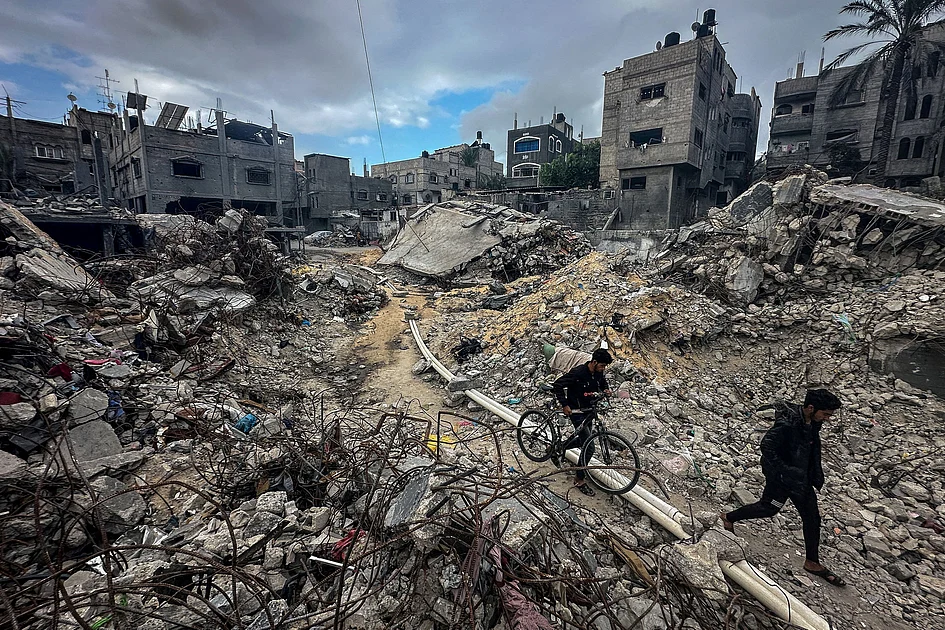
Qatari Prime Minister Sheikh Mohammed bin Abdulrahman al-Thani declared on Saturday that negotiations to solidify the U.S.-backed truce in Gaza have entered a critically sensitive phase. Speaking with measured urgency, the Qatari leader emphasized that current conditions cannot yet be classified as a complete ceasefire, noting that a genuine cessation of hostilities requires full Israeli military withdrawal and restored stability enabling free civilian movement throughout Gaza.
The Prime Minister, whose nation has served as a pivotal mediator in the conflict, confirmed ongoing diplomatic efforts to advance the next phase of the truce arrangement. These efforts specifically focus on establishing unimpeded civilian movement within the besieged territory, a fundamental requirement for sustainable peace.
Despite the overall reduction in violence since the October 10 truce implementation, hostilities have not fully ceased. Palestinian health authorities reported seven fatalities in northern Gaza communities on Saturday, including a seventy-year-old woman allegedly killed in a drone strike. Israeli military officials countered these claims, stating their forces—positioned behind established withdrawal boundaries—engaged and eliminated three militants who crossed demarcation lines in separate incidents. The military explicitly denied conducting any drone strikes in the area.
Parallel negotiations continue regarding the implementation of former U.S. President Donald Trump’s conflict resolution proposal. This plan envisions establishing an interim technocratic Palestinian administration in Gaza, supervised by an international ‘board of peace’ and supported by a multinational security force. However, discussions concerning the composition and mandate of this proposed force have encountered significant obstacles.
The initial phase of Trump’s proposal nears completion following recent developments. Hamas has released all twenty surviving hostages and returned twenty-seven bodies in exchange for approximately 2,000 Palestinian prisoners and detainees. An Israeli delegation met with mediators in Cairo to negotiate the return of the final remaining deceased hostage, after which Israel committed to opening the Rafah Crossing for both exit and entry operations.
Both conflicting parties continue to exchange allegations of truce violations, with Israel maintaining targeted operations against what it identifies as Hamas infrastructure, underscoring the fragile nature of the current arrangement.