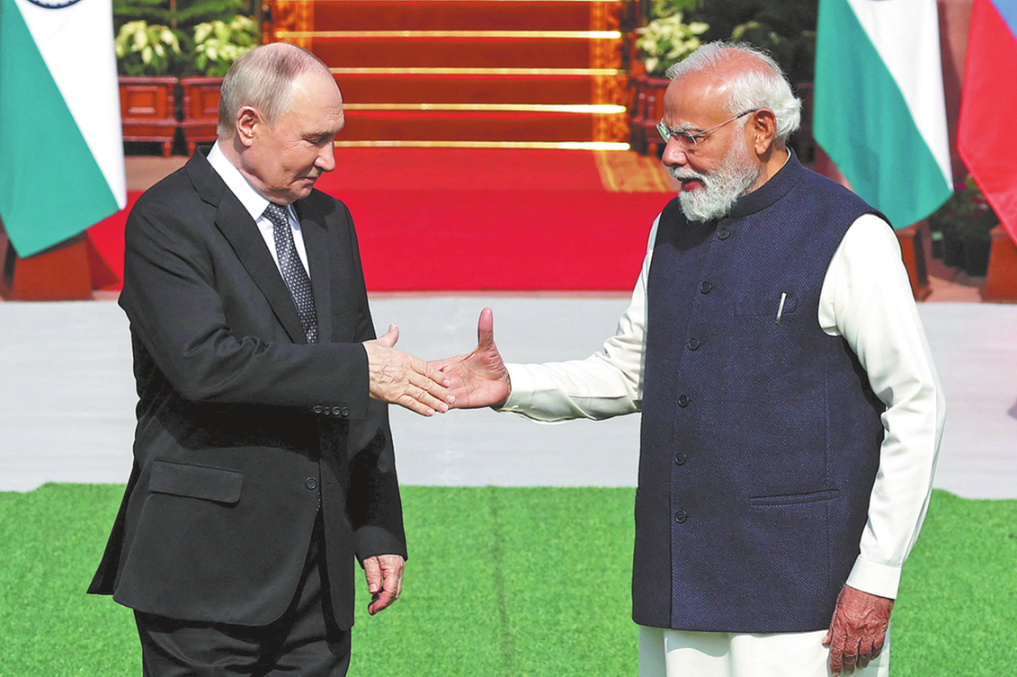
In a significant diplomatic engagement, Russian President Vladimir Putin received a ceremonial welcome in New Delhi on Friday, marking his first visit to India in four years. The meeting between Putin and Indian Prime Minister Narendra Modi at Hyderabad House focused on critical issues including Ukraine peace initiatives, energy security, and defense cooperation.
Prime Minister Modi explicitly stated India’s position on the Ukraine conflict, declaring: “India is not neutral—India has a position, and that position is for peace. We support every effort for peace, and we stand shoulder to shoulder with every initiative taken for peace.” President Putin acknowledged India’s mediation efforts, noting the detailed discussions about potential peaceful settlement of the crisis involving multiple partners, including the United States.
The energy partnership formed a cornerstone of the bilateral talks, with Putin committing to “uninterrupted shipments” of fuel for India’s rapidly growing economy. “Russia is a reliable supplier of oil, gas, coal, and everything that is required for the development of India’s energy,” the Russian leader affirmed. This commitment comes despite ongoing pressure from US tariffs imposed due to India’s Russian oil purchases.
In a pre-meeting interview with India Today, Putin challenged US criticism of India’s energy imports, questioning: “If the US has the right to buy our fuel, why shouldn’t India have the same privilege?” He highlighted that the United States continues to purchase nuclear fuel from Russia for its own power plants.
The defense relationship, traditionally a pillar of India-Russia relations, is undergoing transformation. Both nations agreed to reorient their defense partnership toward joint research, development, and production of advanced defense platforms, aligning with India’s push for self-reliance in defense manufacturing.
The summit yielded multiple agreements across sectors including employment, healthcare, shipping, and chemicals. Notably, Russia’s Uralchem signed a memorandum of understanding with three Indian firms to establish a joint venture for constructing a urea plant in Russia.
Both leaders expressed commitment to expanding bilateral trade to $100 billion by 2030, addressing the current trade imbalance skewed by India’s substantial energy imports from Russia.