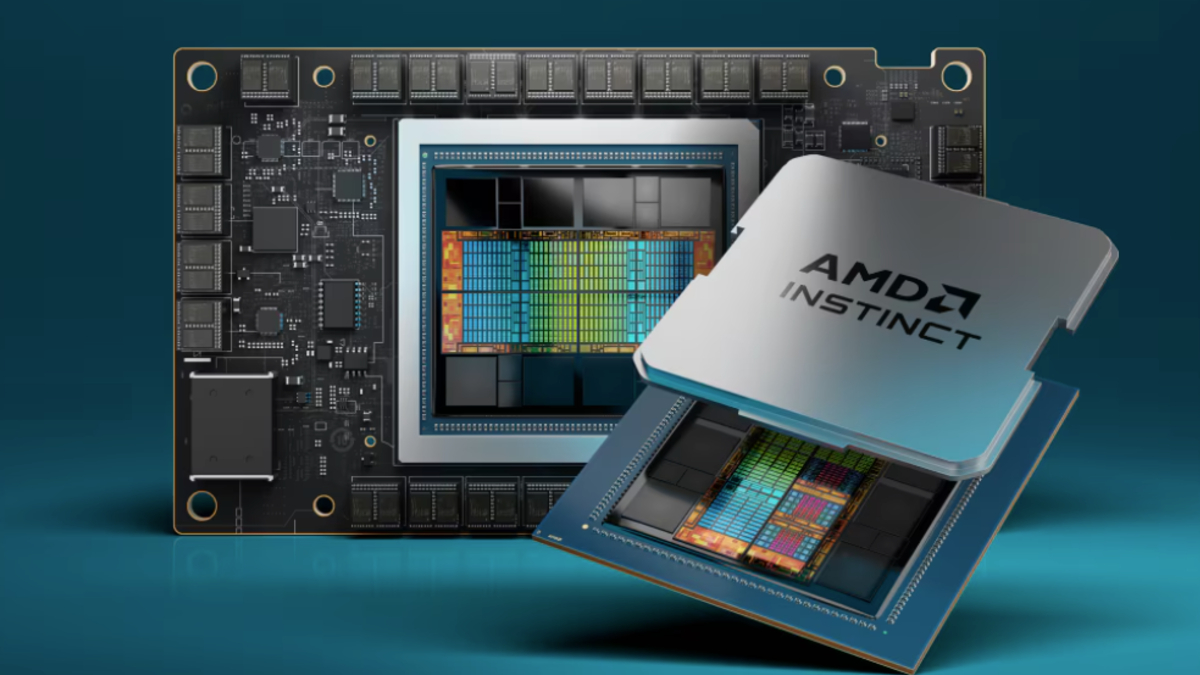
Advanced Micro Devices (AMD) has received official authorization from U.S. authorities to export its MI308 AI accelerators to China, with CEO Lisa Su confirming the company’s readiness to comply with Washington’s revised licensing framework, including payment of a mandatory 15% tariff. This development enables AMD to re-enter the strategically sensitive Chinese semiconductor market despite ongoing security investigations targeting Nvidia’s comparable H20 chip for potential vulnerabilities.
The approval emerges alongside remarkable investor enthusiasm for China’s domestic chip manufacturers, highlighted by Moore Threads Technology’s extraordinary market debut. The company’s shares skyrocketed 425% during its Friday listing in Shanghai, following a successful ¥8 billion (approximately $1.13 billion) capital raise—the most substantial first-day performance for a major IPO since China’s 2019 financial market reforms. Retail investor demand reached unprecedented levels, with subscriptions exceeding available shares by nearly 2,750 times even after activating clawback provisions.
This market phenomenon eclipsed Semiconductor Manufacturing International Corp’s (SMIC) 2020 debut performance of 202%, establishing a new benchmark for offerings surpassing the $1 billion threshold. The simultaneous occurrences highlight the growing divergence between U.S. export-compliant hardware and China’s rapidly advancing domestic semiconductor capabilities.
Chinese officials maintained their consistent position regarding U.S. chip export policies. Foreign Ministry spokesperson Lin Jian reiterated Beijing’s opposition to American restrictions when questioned about China’s potential acquisition of AMD’s newly approved MI308 processors. “China has repeatedly clarified its stance regarding U.S. chip exports to China. We urge the United States to demonstrate concrete actions toward maintaining global industrial and supply chain stability,” Lin stated during a regular press briefing.
Despite regulatory clearance, industry analysts express skepticism regarding AMD’s potential market success. Chinese experts contend that MI308 shipments will encounter identical policy constraints faced by Nvidia’s H20, operating within an environment that increasingly prioritizes domestic AI chip development while limiting foreign suppliers’ long-term commercial prospects.
A Jiangsu-based technology columnist (identifying as a software engineer at robotics firm Fortucky) noted that AMD’s MI308 chips operate under explicit performance limitations that render them unsuitable for training large language models like ChatGPT. According to this analysis, the chips will primarily serve inference tasks, specialized vertical AI applications, and limited research environments, as U.S. regulations continue blocking technology transfers that could significantly advance China’s frontier AI capabilities.
This development occurs within broader geopolitical tensions surrounding semiconductor technology. Washington initially banned exports of both Nvidia’s H20 and AMD’s MI308 chips to China in April citing national security concerns, with both products specifically engineered to meet U.S. Commerce Department export control thresholds. The restrictions positioned these chips as inferior alternatives rather than strategic computational assets for advanced AI development.
Following June negotiations between U.S. and Chinese officials in London, Washington agreed to resume Nvidia H20 shipments in exchange for Beijing restoring rare earth mineral exports to the United States. However, this détente proved temporary, as China’s Cyberspace Administration subsequently summoned Nvidia regarding H20 security risks and issued advisories discouraging domestic adoption.
Chinese commentators have employed increasingly vivid metaphors to describe the perceived risks of foreign hardware dependency. Multiple analysts recently compared using Nvidia’s H20 to “drinking poisoned wine”—addressing immediate needs while causing long-term damage. Similarly, proposed exports of Nvidia’s more powerful H200 chips were characterized as “sugar-coated bullets” that might appear beneficial while ultimately hindering domestic chip development.
Market observers note that during the April-July suspension of Nvidia chip exports, Huawei’s Ascend 910B chips dramatically increased market share from 12% to 37%. Some analysts suggest Washington’s approval of AMD exports might constitute a strategic effort to slow Huawei’s accelerating adoption rates and provide alternatives to domestic options from Kunlun, MetaX, and Moore Threads.
Industry segmentation appears increasingly likely, with cloud service providers potentially favoring Nvidia for its CUDA ecosystem, while financial institutions and government entities prioritize domestic chips for compliance reasons. Large corporations might employ hybrid approaches using foreign chips for performance and local chips for regulatory compliance, while smaller firms could opt exclusively for domestic solutions to avoid future uncertainty.