In response to heightened security threats following Russia’s invasion of Ukraine, multiple European NATO members are implementing voluntary national service programs to bolster their military capabilities. This strategic shift marks a significant evolution from Cold War-era conscription models that diminished after the Soviet Union’s collapse.
Currently, nine European NATO states maintain compulsory conscription systems: Denmark, Estonia, Finland, Greece, Latvia, Lithuania, Norway, Sweden, and Turkey. Turkey, hosting NATO’s second-largest military after the United States, requires male citizens aged 20-41 to serve 6-12 months. Norway has adopted gender-neutral conscription with typically 12-month service periods.
Several nations are introducing innovative voluntary approaches. Belgium’s defense ministry recently contacted 17-year-olds with monthly €2,000 incentives to join a new reservist program aiming to expand forces from 6,000 to 20,000. Similarly, France is launching a 10-month paid ‘national service’ program offering €800 monthly, targeting 18-19-year-olds with planned participation growing to 50,000 by 2035.
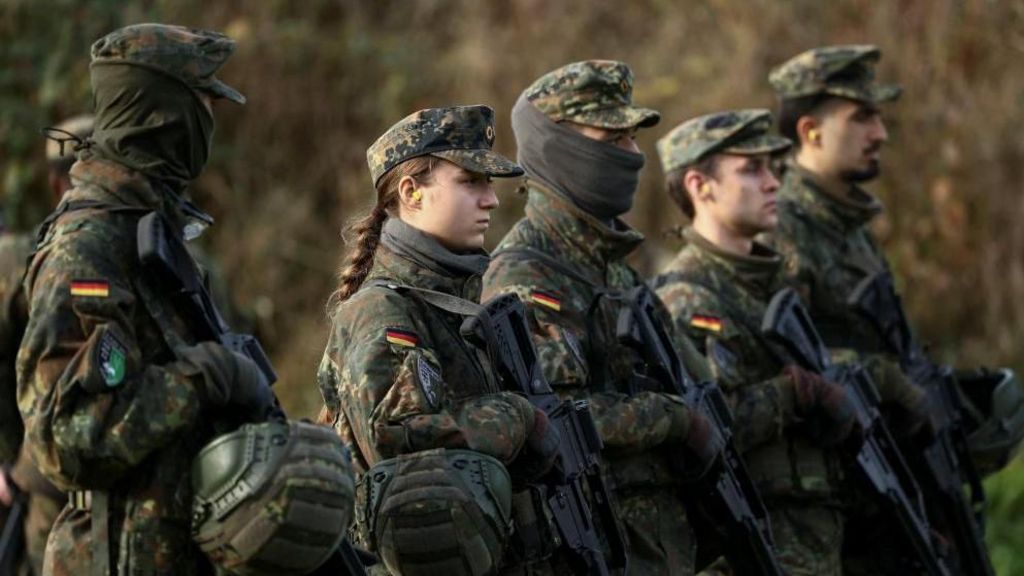
Germany’s parliament approved a voluntary military service system requiring all 18-year-old men to complete questionnaires assessing their willingness and capability to serve. Chancellor Friedrich Merz aims to develop Europe’s ‘strongest conventional army,’ expanding active personnel from 183,000 to 260,000 by 2035 alongside 200,000 reservists. Despite government support, recent protests saw students in 90 German cities demonstrating against the initiative.
Poland, possessing one of NATO’s largest armies, introduced one-month voluntary basic training in 2024, with Prime Minister Donald Tusk announcing plans for ‘large-scale military training for every adult male’ to build a 500,000-strong force including reservists.
The United Kingdom maintains a professional military force comparable to France and Germany in conventional strength, uniquely permitting 16-year-olds to enlist with parental consent. Other NATO members with professional armies include Albania, Czechia, Hungary, Italy, Luxembourg, Montenegro, North Macedonia, Portugal, Slovakia, Slovenia, and Spain.
Non-NATO European states demonstrate varied approaches: Austria maintains compulsory service for men aged 18-35, Cyprus mandates military service for male citizens over 18, while Switzerland requires male citizens aged 18-30 to serve in military or civilian capacities, recently rejecting a proposal to extend this obligation to women.