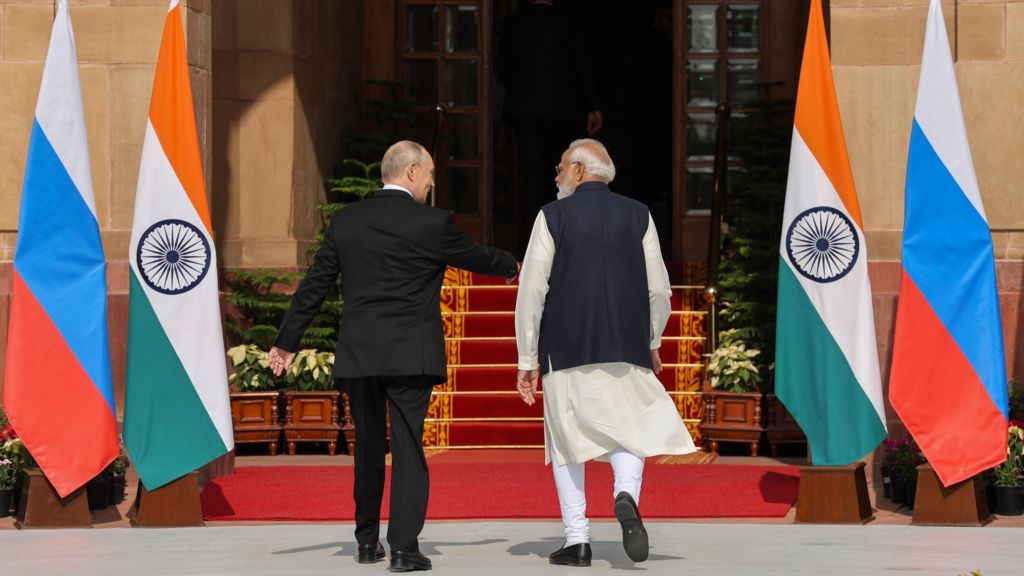
Russian President Vladimir Putin concluded a highly symbolic visit to New Delhi, marking his first trip to India since the commencement of the Ukraine conflict in 2022. The carefully orchestrated event featured full ceremonial honors, including a military guard reception and a presidential banquet, signaling India’s continued diplomatic engagement despite Western pressure.
During the intensive one-day itinerary, President Putin engaged in substantive discussions with Prime Minister Narendra Modi, participated in a bilateral business forum, and officially launched the India operations of RT (Russia Today), the Kremlin-funded media network. The visit’s ceremonial aspects—particularly Prime Modi’s unusual airport reception—demonstrated the enduring strength of Russo-Indian relations amid global geopolitical tensions.
The bilateral meetings yielded several significant agreements, though falling short of anticipated major defense contracts. Both nations announced enhanced cooperation through a new economic partnership program covering critical minerals and pharmaceutical manufacturing, with plans to establish a Russian-Indian pharmaceutical facility in Russia’s Kaluga region. The leaders also advanced discussions on a potential free trade agreement between India and the Eurasian Economic Union.
Energy security emerged as a central theme, with President Putin reaffirming Russia’s commitment to maintaining “uninterrupted oil shipments” to India. This pledge comes amid substantial pressure from the Trump administration, which has imposed heavy tariffs on Indian goods to discourage continued energy purchases from sanctioned Russian entities. Current bilateral trade has surged to $68.72 billion from $8.1 billion in 2020, primarily driven by India’s procurement of discounted Russian crude.
Notably absent were expected announcements regarding major defense acquisitions, including advanced fighter jets and air defense systems. This omission reflects India’s delicate balancing act between its historical defense partnership with Moscow and its strategic relationship with Washington. However, officials emphasized that Russia remains India’s primary defense partner, with ongoing negotiations regarding delayed deliveries of the S-400 air defense systems and potential future acquisitions.
The visit established an ambitious five-year framework aiming to achieve $100 billion in bilateral trade, emphasizing diversification beyond energy into sectors including shipbuilding, polar navigation training, civil nuclear energy, and visa-free travel arrangements.