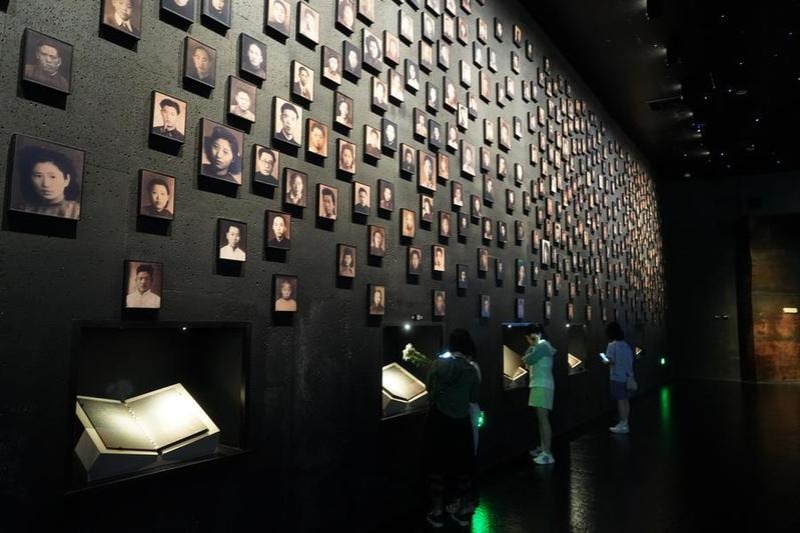
In a significant development for historical documentation, the Memorial Hall of the Victims in Nanjing Massacre by Japanese Invaders has publicly revealed thirteen previously undisclosed sets of cultural artifacts and archival materials. This revelation coincides with the 88th anniversary commemorations of the tragic events that unfolded in Nanjing during 1937-1938.
The comprehensive collection includes multiple categories of evidentiary materials: personal correspondence from Japanese military personnel, photographic documentation of post-occupation Nanjing, archival records of a Chinese military physician killed during the defense operations, an Imperial Japanese Army photographic album, and international publications in English and French detailing wartime atrocities.
Among the most compelling evidence are two letters written by Japanese soldiers that provide firsthand perpetrator accounts of systematic executions. One particularly disturbing document, dated January 8, 1938, describes in graphic detail the daily execution of Chinese prisoners at a riverside location, with bodies disposed of in the Yangtze River. The soldier’s casual description of these acts as ‘very interesting’ and ‘so satisfying’ offers chilling insight into the psychological mindset of the perpetrators.
Historical researchers have verified the authenticity of these documents through cross-referencing with previously published materials, including address information matching records in Japanese historical publications. According to Wang Weixing, research fellow at the Jiangsu Provincial Academy of Social Sciences, these letters constitute ‘ironclad evidence’ of Japanese military operations during the massacre period.
The collection also features eight photographic images donated by Chinese citizens from Henan province, documenting key locations and events during the occupation period. These include images of architectural damage from artillery bombardment, the Japanese military’s formal entry ceremony, and engineering operations conducted during the siege.
International perspectives are represented through publications including the November 22, 1938 edition of American magazine LOOK, which featured a exposé titled ‘Killing for Fun’ with photographic evidence of Japanese military conduct. Additional evidentiary value comes from French and English publications that document demographic information contradicting revisionist claims about Nanjing’s population at the time of occupation.
Academic experts emphasize that these materials provide crucial third-party verification of historical events, particularly significant given ongoing attempts by certain factions to deny or minimize the scale of atrocities. The evidence directly counters arguments regarding population figures that have been used to question the established historical record.
The memorial hall’s expanded collection strengthens the historical narrative through multiple evidentiary streams, ensuring that the memory of victims is preserved with factual accuracy and that future generations may access comprehensive documentation of these historical events.