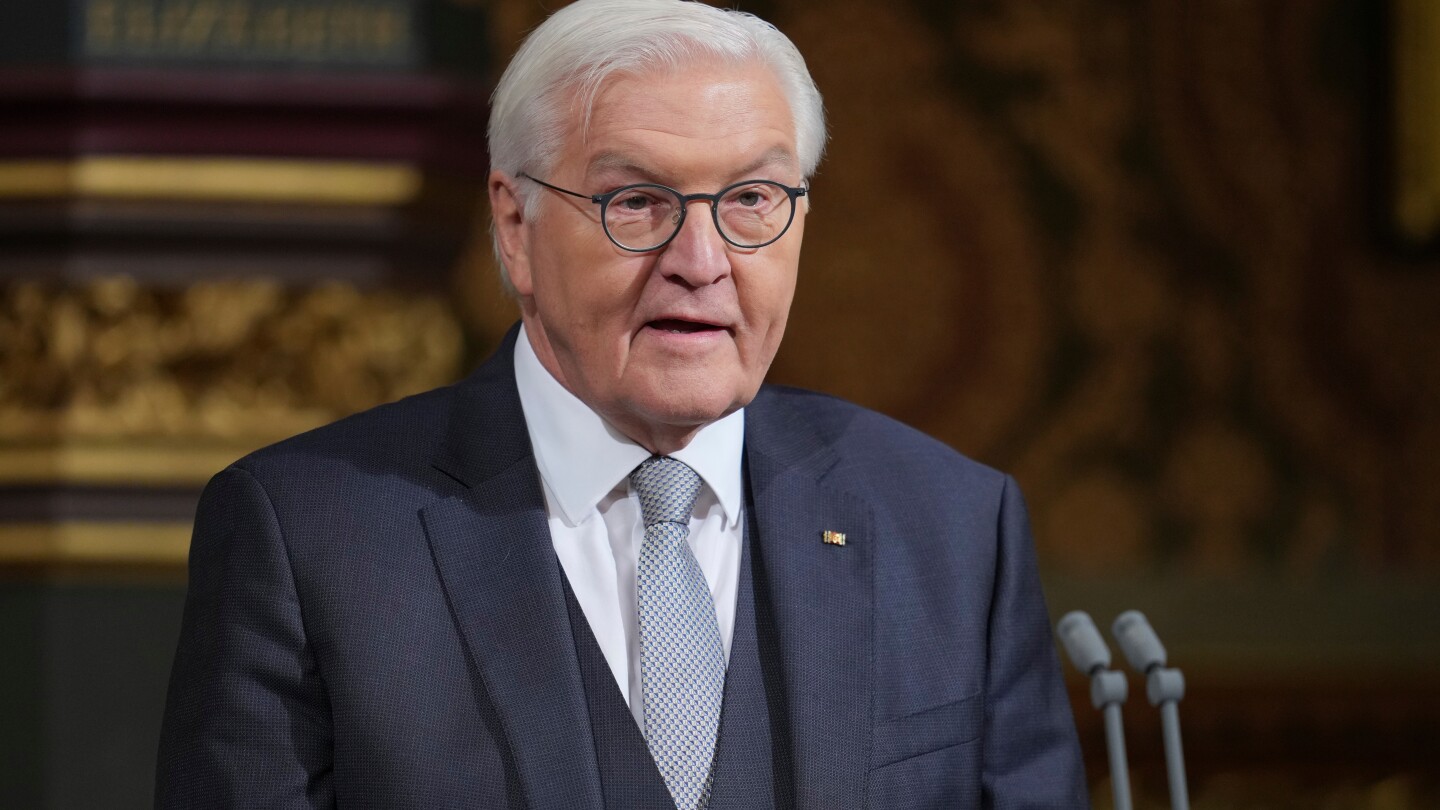
In a profound gesture of historical reconciliation, German President Frank-Walter Steinmeier concluded his landmark three-day state visit to Britain with a solemn ceremony at Coventry Cathedral on Friday. This visit, the first by a German head of state in 27 years, carried significant symbolic weight as Steinmeier laid a wreath at the site devastated by Nazi bombing in November 1940.
The Coventry bombing, which killed at least 568 people and destroyed the medieval cathedral, represented one of the most concentrated attacks on Britain during World War II. The preserved ruins now stand as a permanent memorial to war’s devastation. Britain was represented at the ceremony by the Duke of Kent, a longstanding advocate for British-German reconciliation who previously served as royal patron of the Dresden Trust, dedicated to healing wounds from the Allied bombing that devastated the German city in 1945.
Steinmeier’s visit culminated in extensive diplomatic engagements, including meetings with King Charles III and Prime Minister Keir Starmer. The ceremonial highlight featured an elaborate state banquet at Windsor Castle where both leaders emphasized the transformation from wartime enemies to modern allies. ‘Flourishing cities grew out of the ashes. Enemies became friends,’ Steinmeier declared in his toast. ‘That is our common history—and it shows what is possible when people have the courage to pursue reconciliation.’
The visit occurs against the backdrop of renewed European unity in response to Russia’s invasion of Ukraine. Steinmeier addressed Parliament, characterizing the conflict as an attack on the rules-based international order established after World War II. ‘We are seeing the resurgence of imperial ambitions, the attempt by destabilizing forces to divide us and pit us against one another,’ he warned. ‘That is precisely why we must stand united.’
Historical experts note the visit’s profound symbolism. Martin Farr, modern British history specialist at Newcastle University, observed that European nations are collaborating more closely than at any time since the 1815 Concert of Europe, with current security concerns driving this renewed cooperation.
The extensive ceremonial aspects—including carriage processions, military honors, and royal banquets attended by Queen Camilla and the Princess of Wales in formal attire—demonstrated Britain’s use of soft power to strengthen international partnerships. This diplomatic effort follows the recent UK-Germany treaty deepening cooperation on defense, migration, and climate policy, reflecting European nations’ increased military spending and enhanced coordination amid concerns about international reliability.